I Am Ready is a personal development magazine exploring the inner shifts that shape real transformation. We spotlight thinkers, guides, and leaders in personal growth — not merely to celebrate achievement, but to illuminate the moments of awareness, discipline, and choice that precede it. This magazine is for those who understand that true change begins within, often long before it becomes visible.
We also celebrate those who have completed their transformation journey and are building meaningful lives and businesses. We honor the courage, resilience, and quiet dedication of real people who have worked for years, often unseen, overcoming fear, judgment, and rejection. These individuals create, uplift, and inspire through their authenticity and commitment to others.
Our mission is to share their stories — their challenges, achievements, and contributions — so the world can learn from, appreciate, and celebrate them. By presenting these real journeys, I Am Ready empowers readers to see that everything is possible, offering space for clarity, intentional growth, and courageous living.
I AM READY — Editorial Manifesto
I Am Ready is a personal development magazine for those who know that change begins long before results appear.
It is for individuals standing at the threshold of transformation — not chasing motivation, but cultivating readiness. Readiness to let go of old identities. Readiness to choose discipline over comfort. Readiness to step into responsibility, purpose, and self-leadership.
Each edition brings together powerful perspectives from global speakers, coaches, mentors, and business owners — not to glorify success, but to explore the internal shifts that made it inevitable. Through reflective guidance, practical frameworks, and deeply human conversations, I Am Ready invites readers to slow down, look inward, and make the quiet decisions that reshape a life.
This is not a magazine about who you could become.
It is about who you are ready to be.
I Am Ready Magazine — © 2026
Hello,
I’m Indre Ratkele, Editor-in-Chief & Founder of I Am Ready Magazine. Welcome to the second edition — a continued journey of authenticity, courage, and transformation, where new voices, fresh perspectives, and inspiring stories come together to empower and uplift.
What began as an idea — a space where voices could be heard, authenticity embraced, and readers could discover comfort in knowing they are not alone — has evolved into something deeply meaningful. This second edition stands as a reflection of the beautiful growth, connection, and shared purpose that followed our very first release.
When I created I Am Ready Magazine, it was never simply about producing pages filled with stories. It was about creating a platform that reminds people of the power within their own voice. A place where vulnerability is not weakness, where transformation is honoured, and where courage is found not only in extraordinary achievements, but also in the quiet decision to keep moving forward despite uncertainty.
This edition carries that spirit even further.
Within these pages, you will meet individuals who have chosen to share not only their successes, but also the lessons, struggles, healing, and resilience that shaped them along the way. Their stories remind us that growth is rarely linear, and that becoming the person we are meant to be often begins in moments the world never sees.
As this magazine continues to grow, so does the community surrounding it. What has touched me most since the launch of our first edition is witnessing how deeply people long for genuine connection. In a world that often encourages perfection, these stories offer something far more valuable — honesty, humanity, and hope.
This second edition is filled with voices that inspire action, reflection, and self-belief. From powerful personal journeys to meaningful conversations around purpose, identity, healing, and ambition, every contribution within this issue has been chosen with intention. Each page invites you to pause, reflect, and reconnect with the version of yourself that may have been waiting to be seen, heard, or rediscovered.
I believe readiness is not about having all the answers. It is about choosing to trust yourself enough to take the next step, even when the path ahead is uncertain. It is about embracing growth, allowing transformation, and understanding that your story — exactly as it is — holds value.
To every contributor, reader, supporter, and individual who has believed in this vision, thank you for becoming part of this journey. Your support continues to shape I Am Ready Magazine into something far greater than I could have imagined.
May this edition leave you inspired, encouraged, and reminded that you are never alone in your journey of becoming.
I Love You,
Indre Ratkele
Editor-in-Chief
YOUR MOVEMENT. YOUR PURPOSE. YOUR MOMENT TO STEP IN.
By Catherine Gallacher, Professional Writer
I Am Ready isn’t a feeling you wait for, it’s the moment you choose to step forward, take ownership, and lead what matters.
Professional Writer | Catherine Gallacher
Professional Writer | Catherine Gallacher
“You don’t need to feel ready to begin.
You need enough clarity to take the next step.”
- Catherine Gallacher 💚
There are times when everything looks fine on the outside,
but internally, things feel unclear.
You are still showing up. Still doing what needs done.
But your thinking feels heavier than it should.
Slower. Harder to trust.
And it is not always obvious why.
Because nothing has necessarily gone wrong.
But something has shifted.
This is not about ability.
It is about what happens when pressure builds.
Over time, both in my own life and in the people, I have worked with, I have seen the same pattern again and again:
When pressure increases, clear thinking becomes harder.
Not because people do not know what they are doing,
but because the way they are trying to think… is not working in that state.
RECOGNITION
There is a point most people reach, whether they talk about it or not.
You are managing things. Keeping everything moving.
But when it comes to making a decision, even a small one, something slows you down.
You hesitate.
You go back over the same thought more than you need to.
You question yourself more than usual.
You tell yourself you just need a bit more time.
A bit more clarity.
A bit more certainty.
And underneath that, there is often a quieter thought:
“I’m not quite ready yet.”
It does not sound dramatic.
But it is enough to keep you where you are.
© I Am Ready Magazine
© I Am Ready Magazine
WHAT’S ACTUALLY HAPPENING
Most people assume this means something is missing.
More confidence.
More information.
More preparation.
But that is not usually the issue.
What is happening is more subtle than that.
When pressure builds, your system shifts.
Your focus narrows.
Your thinking speeds up but becomes less useful.
You start scanning for what might go wrong.
You lose a sense of what matters most.
And without realising it, you start to trust yourself less.
So, you try to compensate.
You think more. Analyse more. Push harder.
But that does not create clarity.
It often creates more noise.
WHERE THE SHIFT HAPPENS
The turning point is not when everything becomes clear.
It is when you stop trying to force clarity in a state that cannot hold it.
Clarity needs a different starting point.
It needs steadiness.
Even a small amount.
When you allow things to settle, even briefly,
your thinking changes.
It becomes simpler.
More focused.
More useful.
Not perfect.
But clearer than it was before.
And that is enough.
Because clarity does not need to be complete.
It just needs to be enough to take the next step.
© I Am Ready Magazine
© I Am Ready Magazine
WHAT READINESS REALLY LOOKS LIKE
Readiness is often misunderstood.
People think it means feeling confident.
Certain. Fully prepared.
But in reality, it rarely looks like that.
More often, it looks like this:
You are still unsure.
Still aware of the risks.
Still thinking things through.
But you are no longer waiting for everything to line up perfectly.
You recognise that waiting has not moved things forward.
And you make a quiet decision:
I will take the next step anyway.
That is where readiness begins.
Not as a feeling —
but as a choice.
BUILDING FROM THERE
Once you take that step, something shifts.
Not dramatically.
But enough.
You see things a little more clearly.
You trust yourself a little more.
You move again.
And over time, that builds.
Clarity.
Confidence.
Direction.
Not all at once.
But steadily.
© I Am Ready Magazine
© I Am Ready Magazine
THE POWER OF CONNECTION
And there is something else that makes a real difference.
You do not have to do this on your own.
There is strength in finding people you connect with.
People who understand or at least take the time to listen.
When you are around the right people, something shifts.
The pressure feels lighter.
Your thinking feels less crowded.
Your steps feel more possible.
Not because someone is telling you what to do,
but because you are no longer carrying everything on your own.
Your movement is still yours.
Your purpose is still yours.
But shared in the right space,
it becomes easier to take the next step.
A SIMPLE STORY
I remember someone I worked with who had been holding off making a decision for months.
On paper, they knew what they needed to do.
But every time they came close to acting, something held them back.
They told themselves they needed more time.
More certainty.
A clearer sign.
When we spoke, nothing dramatic changed.
We did not map everything out.
We did not remove every doubt.
We simply slowed things down.
Looked at what was actually in front of them.
And brought it back to one question:
What is the next step — not the whole plan?
There was a pause.
And then they said quietly,
“I think I already know.”
That was it.
No big moment.
No sudden confidence.
Just enough clarity to take the next step.
And once they did, everything else started to move.
© I Am Ready Magazine
© I Am Ready Magazine
GENTLE DIRECTION
What I have come to understand is this:
Feeling ready is not what moves you forward.
Most of the time, that feeling comes after you have already started.
Readiness builds as you go.
As you take one step.
Then another.
As you realise you do not need everything figured out…
just enough clarity to move.
The Step into Action makes it Happen.
Maybe I Am Ready does not mean everything is in place.
Maybe it does not mean certainty, or confidence, or having all the answers.
Maybe it simply means…
you have stopped waiting.
You have stopped looking for the perfect moment.
And you are willing to trust yourself, even slightly more than before.
Because readiness is not something you find.
It is something you build.
And part of that is learning to lead yourself.
Not by waiting for someone else to tell you what to do,
but by paying attention to what you already know.
Be self-led.
Listen to your own thinking, not the noise around you.
And at the same time,
allow yourself to be supported.
To connect.
To share the journey.
Because when you do,
those steps forward do not feel as heavy.
And sometimes…
that is all “I Am Ready” really means.
If you are ready to take the next step, you will find practical tools and support in my Viewing Room and newsletter - designed to help you think clearly and move forward.
I would love to hear your next step and let us be part of the journey into readiness…...
Catherine Gallacher 💚
Certified Empowerment Result Coach™
www.realisedcatherinegallacher.net
© I Am Ready Magazine
Everybody Is Somebody
Don’t Wait for Someone Else to Tell Your Story
By Wade Simmons, Writing Contributor
We live in a world that often seeks validation, and while it is wonderful to have others appreciate what we do, it is equally important not to wait for it.
I have been in the funeral business for almost sixteen years, and recently I had the privilege of meeting a 91-year-old man with a truly impressive life story. While attending a funeral service, he stopped by the desk and shared something profound with me. His exact words were:
“If I don’t tell the story, who will?”
Such a simple statement, yet one carrying an incredibly powerful message.
Everybody has a story. It may not always seem significant to others, but there are people who need your story and who may find inspiration through it. Human beings are fascinating because every individual carries unique experiences, challenges, memories, and chapters that shape their lives. In many ways, each person is like a walking series filled with moments that could encourage someone, bring joy, or even move another person to tears.
We all have people who inspire us, but I encourage everyone to focus on becoming inspiring themselves. Do not be afraid to share your story. The things we experience and overcome are not only for us, but also for others who may be walking through similar situations.
Don’t wait for someone else to tell your story.
© I Am Ready Magazine
Laziena Hodge
When I received an email from Laziena regarding I Am Ready Magazine, it did not feel like an ordinary inquiry. There was something deeply warm, intentional, and authentic within her words that immediately stayed with me.
As the founder and editor-in-chief of this magazine, I receive many messages and submissions, but this one felt different from the very beginning. Laziena was not reaching out for visibility or recognition. She simply wanted to acknowledge the authenticity of the magazine itself — and that is something truly rare.
She told me that after reading the first edition, she felt a calling to contact me because something within the publication resonated deeply with her own lived experiences. She described the magazine as real, honest, and emotionally authentic, and I remember feeling genuinely moved by that message. Even though we had never met, I felt an immediate human connection.
Over time, that connection developed into something deeply meaningful. Laziena is, without doubt, one of the most emotionally honest and authentic souls I have encountered in my life, and I feel deeply honoured to witness and share her story through these pages.
This is not simply a story about trauma.
It is a story about survival, emotional truth, accountability, motherhood, grief, healing, forgiveness, and the courage required to break generational cycles that many families never speak about openly.
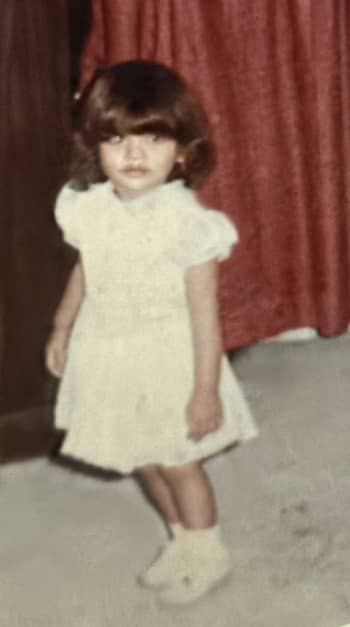
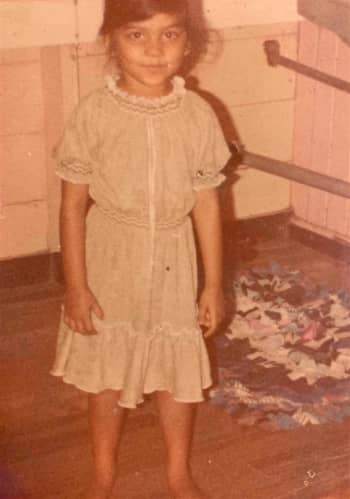
Laziena was born and raised in Guyana, South America. During our conversation, she reflected emotionally on growing up within a family environment shaped by both love and instability, care and survival. While there were moments of warmth, connection, and belonging, there were also deep emotional wounds, silence, and painful experiences that would later shape her understanding of safety, identity, self-worth, and relationships.
Much of her early childhood was spent living with her grandparents within a large multigenerational family community. While many parts of her childhood would later require significant healing, she speaks with deep gratitude about the influence her grandparents had on her life.
Her grandparents raised twelve children and created a home that welcomed not only family members but often anyone in need. During our conversation, Laziena described their home as a place where compassion was lived daily. People were fed, offered shelter, and cared for regardless of their circumstances. It was through witnessing this generosity and service to others that she first learned the values of kindness, empathy, community, and humanity.
Listening to her speak about them, it became clear that while trauma shaped part of her story, love shaped it too.
In many ways, the compassion that Laziena now extends to her own children, her clients, and the people she supports through her work can be traced back to those early years spent observing her grandparents care deeply for others. Throughout our conversation, I found myself reflecting on this often. We frequently speak about trauma and the wounds that shape us, but we rarely acknowledge the people who plant seeds of goodness within us. For Laziena, her grandparents were among those people.
Even amidst difficult circumstances, they gave her something incredibly valuable: a living example of compassion, generosity, and unconditional care.
One of the most emotionally significant parts of our conversation was hearing Laziena speak about her father.
She shared that her father struggled with alcoholism and was often absent throughout much of her childhood. When he was present, there were experiences of emotional instability and abuse within the home environment. As a little girl, this created a deep sense of insecurity and a lack of emotional safety. At the same time, she witnessed her mother enduring suffering and sacrifice, often placing herself between her children and harm in an effort to protect them.
When Laziena was eight years old, her father was murdered.
What deeply affected me while listening was the honesty with which she spoke about the emotional complexity surrounding that loss. As a child, she believed she did not care about his death because he had not been emotionally present in the way she desperately needed him to be. Yet later in adulthood, through therapy, reflection, and deep inner healing work, she came to realise something profoundly important: no child is ever truly unaffected by losing a parent.
She reflected on how, from a very young age, she unconsciously attached her self-worth to the belief that her father did not truly want or love her. Those early emotional wounds quietly followed her into adulthood and later influenced many of her relationships, attachment patterns, fears of rejection, emotional responses, and sense of identity as a woman.
At the same time, Laziena also spoke with remarkable compassion and maturity about understanding her father differently later in life. Through her healing journey, she began to see not only the father she experienced, but also the wounded man behind him — someone who had grown up without emotional stability, healthy examples of parenting, or the support needed to heal his own pain.
Eventually, she found herself able to grieve him not only as the father she lost, but as a human being carrying unresolved wounds of his own. That part of our conversation stayed deeply within me because it demonstrated how childhood loss, emotional abandonment, grief, and silence can quietly shape an entire lifetime until they are finally acknowledged, understood, and healed.
One of the most moving reflections Laziena shared with me was the evolution of her relationship with her mother.
Growing up, Laziena witnessed her mother endure physical abuse at the hands of her father. As a child, she struggled to understand the complexity of what her mother was experiencing. During her teenage years, there were times when she distanced herself, believing she was angry with her. Looking back now, she recognises that those feelings were rooted in a lack of understanding rather than a lack of love.
As life unfolded, Laziena experienced her own challenges and found herself, in many ways, walking in her mother's shoes. That journey transformed her perspective. It brought a profound sense of compassion, empathy, and respect for everything her mother had endured while raising three children on her own.
Laziena spoke openly about the importance of forgiveness—not only as a gift to her mother, but also as part of her own healing journey. Through that process, their relationship was rebuilt on a foundation of love, understanding, and appreciation.
Today, Laziena describes herself as her mother's "baby girl," and says she could never have wished for a better mum. Their relationship is now filled with warmth, gratitude, and unconditional love.
Listening to Laziena speak about her mother was incredibly moving. There was no bitterness in her words—only admiration for a woman whose strength, resilience, and unconditional love shaped the person Laziena has become. Hearing her speak with such appreciation warmed my heart and served as a beautiful reminder that understanding can transform even the most difficult chapters of our lives into stories of forgiveness, healing, and love.
Laziena also spoke openly about experiencing sexual abuse and inappropriate touching from an extremely young age, beginning around the age of three and continuing in different forms throughout her upbringing. She described growing up in environments where boundary violations, secrecy, and silence became normalised within family and social dynamics.
Listening to her describe those experiences, what struck me most was not only the pain itself, but the long-term emotional consequences she carried because of it. She explained how childhood abuse disconnected her from her body, affected her sense of safety, and deeply impacted her self-worth as she grew older. She often struggled to feel emotionally secure, protected, desired, or fully seen.
She also reflected on how silence itself becomes part of generational survival within many families and communities. Many people are taught not to speak openly about abuse because of shame, fear, judgement, or the desire to preserve the image of the family. During our conversation, I realised how often silence itself becomes part of the cycle.
Yet despite the heaviness of her experiences, Laziena does not tell her story only through pain.
She speaks from awareness.
Again and again throughout our conversation, she returned to one central truth: cycles can be broken, healing is possible, and emotional honesty is necessary if future generations are to feel truly safe.
Later in life, Laziena entered adulthood carrying emotional wounds and unresolved pain that had followed her since childhood. She became a mother at a very young age and shared during our conversation that she married only ten days after turning eighteen. Soon afterwards, she welcomed her oldest daughter into the world.
She spoke honestly about how both she and her former husband entered the relationship carrying deep histories of childhood pain, abuse, emotional neglect, and unresolved suffering. During the conversation, Laziena explained that her former husband had also experienced severe trauma and violence during his own childhood. Looking back now, she reflected that neither of them fully understood at the time how deeply unhealed childhood experiences can shape emotional regulation, attachment, communication, relationship dynamics, and self-worth in adulthood.
From the outside, there were periods where life appeared normal, functional, or even beautiful. But internally, she described the relationship as emotionally unstable, painful, and deeply affected by unresolved emotional wounds and survival patterns carried by both individuals.
One of the most powerful moments in our conversation was hearing Laziena speak with such honesty about her own self-awareness. She openly acknowledged that after years of carrying emotional pain, suppression, and unresolved childhood experiences, she eventually recognised moments where she herself became emotionally reactive and carried anger in ways that reminded her of the environments she grew up in.
Listening to her speak with such openness about this was deeply impactful because many people avoid confronting uncomfortable truths within themselves. Laziena did not.
Rather than speaking only from blame, she consistently returned to accountability.
She explained that accountability is not about condemning yourself forever for painful experiences or mistakes. It is about becoming conscious enough to stop unconsciously repeating cycles of pain within future relationships and future generations.
One of the strongest themes throughout our conversation was this understanding: pain is not only about what happened to us. It is also about the emotional survival patterns, fears, coping mechanisms, attachment wounds, and emotional reactions we develop because of what happened to us.
Without awareness, healing, and emotional responsibility, those patterns can quietly continue passing from one generation to the next.
For Laziena, healing was never about pretending to be perfect.
It was about becoming honest enough to finally break the cycle instead of continuing it.
A defining moment in her life came when her daughter was sexually abused by her ex-husband.
This moment became a clear boundary in her life: silence was no longer an option.
She described immediate action — prioritising safety, initiating therapeutic support for herself and her children, and restructuring her entire life under extreme emotional and financial pressure. She worked multiple jobs, often surviving on very little sleep, while simultaneously carrying the emotional collapse of her family system.
And yet, through all of it, she held onto one unwavering truth:
Her children would know their mother fought for them.
That sentence stayed deeply within me because I realised how many children grow up not only carrying painful experiences, but also carrying the pain of not feeling protected, believed, or emotionally supported afterwards.
Laziena chose differently.
She spoke openly about taking her children to therapy immediately and doing everything she possibly could to create emotional safety within the family after the disclosure. She explained how important it was to her that her children understood they were not alone, that they mattered, and that the truth would never be hidden simply to protect appearances.
This part of our conversation deeply challenged me as both a human being and an editor.
We often speak about protecting children in theory, but life itself is not built from perfect homes, perfect circumstances, or perfect people. Life contains pain, mistakes, abuse, betrayal, grief, silence, and uncomfortable truths. The question is not only how to prevent every painful experience from happening — because sadly we cannot control everything in life — but how we choose to respond when those moments do happen.
Listening to Laziena shifted something within my own understanding.
Not because I do not believe in protecting children — I absolutely do — but because she spoke about something many people avoid completely: forgiveness.
One of the most emotionally complex parts of our conversation was hearing her describe the journey towards forgiving both herself and her daughter’s abuser.
Initially, she resisted the idea entirely. She spoke honestly about feeling rage, devastation, disbelief, and anger. But over time, through therapy, self-reflection, emotional processing, and inner-child work, her understanding slowly changed.
Forgiveness, for Laziena, did not mean excusing harm.
It did not mean denying what happened.
And it did not mean abandoning accountability.
Instead, she described forgiveness as releasing herself from carrying permanent emotional imprisonment within her nervous system and spirit. She explained that eventually she was able to recognise not only the man who caused harm, but also the wounded child within him — someone who himself had experienced severe abuse, violence, and emotional suffering during childhood.
This was one of the most uncomfortable, honest, and transformative parts of our conversation.
Because while Laziena remained unwavering in protecting her daughter and standing firmly in truth, she also came to understand that carrying hatred forever would continue emotionally trapping everyone inside the pain itself.
Hearing her explain this shifted something deeply within me.
Forgiveness is often misunderstood as weakness. But listening to Laziena, I understood it differently. Sometimes forgiveness becomes part of survival. Sometimes it becomes part of healing. Sometimes it becomes the moment where a person chooses peace within themselves after unimaginable pain.
Therapy became one of the most transformative parts of her healing journey.
She spoke openly about inner-child work and learning how to finally witness herself with compassion instead of judgement. She explained that emotional breakdowns are not failures — they are messages. Signals pointing toward unmet emotional needs that have often existed quietly for years.
What I found beautiful was the way she described healing not as a final destination, but as a lifelong process.
Some days are heavy.
Some days are soft.
Some days still hurt.
But healing, in her understanding, is learning how to remain emotionally present with yourself through all of it instead of abandoning yourself emotionally the moment pain appears.
Today, Laziena uses her lived experiences to support others through workshops, conversations, podcasts, emotional repair frameworks, and relational healing work. Her mission is deeply rooted in helping people understand emotional safety, unmet needs, attachment patterns, communication, accountability, and healing within relationships and families.
And what moved me most is that her work does not feel performative.
It feels lived.
There are many people in the world speaking about healing, trauma, coaching, and transformation. But with Laziena, you immediately feel that her wisdom was not learned only through books or theories.
It was lived.
It was survived.
It was earned through grief, motherhood, accountability, heartbreak, courage, emotional honesty, and truth.
Honouring Tasiyah
Within this story, there is one presence that must be acknowledged directly and with deep respect — Tasiyah, Laziena’s daughter.
This magazine wishes to pause here and honour her courage, her lived experience, and her impact within this journey. What Tasiyah has endured is not something that can ever be reduced to a simple narrative. It is a deeply human experience of pain, violation, survival, healing, and truth.
Her voice, even when unspoken in certain moments of this article, is present throughout the entire conversation. And it is because of that presence that this story carries such emotional weight and importance.
To Tasiyah, I want to express something clearly on behalf of I Am Ready Magazine:
You matter.
Your experience matters.
Your story is not invisible, and it will never be treated as something that can be erased, minimised, or dismissed.
Your courage — even in moments of silence, vulnerability, pain, or fear — has already created impact far beyond what you may currently realise.
You are not defined by what happened to you. You are recognised for your strength in surviving it, for your honesty in speaking about it, and for the light that continues to exist within you despite everything you were forced to carry at such a young age.
Listening to you, I did not only hear someone speaking about trauma. I saw a young woman with compassion, emotional depth, courage, honesty, and extraordinary inner strength.
I truly believe your willingness to speak openly about your experiences will help many other children, families, mothers, and survivors around the world feel less alone.
Another child may hear your voice one day and finally feel safe enough to speak.
And sometimes, that single moment of courage can change the course of an entire life.
Another mother may find the courage to protect her child. Another family may finally break silence because of the honesty you chose to share with the world.
For that reason, your experiences are not wasted.
Your story carries meaning, purpose, and healing far beyond these pages.
We honour you not as a symbol, but as a human being — with dignity, complexity, softness, pain, courage, and a future that is not defined by what happened to you, but by everything that is still possible for your life ahead.
This conversation became more than an interview for me.
When I first received Laziena’s email, I felt something rare — authenticity without agenda. Over time, that feeling deepened into respect, gratitude, and genuine connection.
As I listened to her story unfold, I realised this feature was never only about pain.
It was about truth.
It was about emotional responsibility.
It was about motherhood.
It was about breaking silence.
It was about choosing honesty instead of appearances.
And ultimately, it was about healing.
Not healing as perfection.
But healing as presence.
Perhaps healing is not becoming someone entirely new, but finally learning how to remain present with yourself, your truth, and your humanity.
Connect with Laziena Hodge
🌐 Website
laziena.com
📖 Book
Relationship Repair & Emotional Safety
🎙 Hosted Podcasts
laziena.com/podcasts
✨ Relationship Repair Language™ Quiz
laziena.com/quizzes
Continue the conversation. Explore meaningful podcasts, emotional healing resources, and the Relationship Repair Language™ framework.
Written by Indre Ratkele, Editor-in-Chief/© I Am Ready Magazine
Grief taught me something I didn’t expect.
That I am ultimately responsible for my life.
By Laziena Hodge
At first, that felt like accountability.
Over time, it became ownership.
Not in a way that blames me,
but in a way that returns me to myself.
Because while there were many moments I wanted to place blame,
I also had to face the truth that I was the one who stayed.
The one who accepted what didn’t honor me.
And at times, what didn’t honor others.
That realization was my wake-up call.
Not to punish myself,
but to begin healing.
Because when we blame others, we want accountability from them.
We want remorse.
We want acknowledgment.
So what happens when we see our own part?
Do we punish ourselves?
Or do we allow ourselves to grieve?
Grieve the little girl who just wanted to be loved by her father.
Grieve the relationships that cannot be repaired.
Grieve the life we thought we were building.
Grieve the parts of ourselves we lost along the way.
For me, grief didn’t begin in adulthood.
It began when I was 8 years old.
I remember walking out of my room and hearing cries.
I saw my family, and I asked, “Is daddy dead?”
And someone said yes.
In that moment, I didn’t understand what I had lost.
I told myself it was for the best.
That my mother would no longer be hurt.
That he wasn’t around anyway.
But what I didn’t realize then
was that I lost something deeper.
I lost my sense of worth.
I lost the possibility of being chosen by my father.
And in many ways, I left myself.
For years, I lived in survival.
I got married at 18 and learned how to perform roles
without understanding myself.
I became a mother, and my daughter gave me something to fight for.
I found the strength to leave a toxic marriage.
But I was still operating from that same place:
Fear.
Abandonment.
Disconnection from myself.
I entered another relationship that lasted 12 years,
until everything shattered again.
My daughter was harmed by someone I trusted.
I had to walk through another devastating loss
fighting for my children
and working to repair what was broken between us.
Then I experienced love again
only to feel the brutal and gut-wrenching sting of betrayal that went unacknowledged.
These experiences were painful.
But they also gave me something.
They gave me awareness.
And with that awareness came a deeper truth:
Yes, I am responsible for my life.
But I was never meant to carry that responsibility alone.
Because responsibility without support
turns into self-punishment.
And healing requires something different.
It requires safety.
It requires compassion.
It requires space to process grief without abandoning yourself in it.
Because we are going to grieve.
And grief doesn’t just look like sadness.
It looks like anger.
Resentment.
Overwhelm.
Disconnection.
And in those moments, we don’t need to be fixed.
We need to be met.
In all of this, I found my way back to her
the 8-year-old girl who lost her sense of worth
who just wanted to be loved
who didn’t feel chosen
I didn’t leave her there.
I returned.
And I began giving her the life she always deserved.
The kind of connection that feels safe, seen, and valued.
The kind of relationships that honor the sacredness of consciously co-creating with another person.
Not from survival
but from presence
from truth
from choice
This is what my work is rooted in.
Because awareness alone isn’t enough.
We need language.
We need support.
We need a way to stay connected to ourselves and each other when it matters most.
That is where Relationship Repair Language™ was born.
It gives people the ability to stay with themselves
and be supported by others
in the moments that matter most.
I believe:
Redemption is possible.
Repair is possible.
And relational loyalty is possible.
By Laziena Hodge/© I Am Ready Magazine






LYNDAL SCHULTZ
Coming Home to Yourself
Lyndal Schultz's Journey Through Loss, Healing, Self-Authority and Finding Her Way Back
Written by Indre Ratkele, Editor-in-Chief
Some people arrive in our lives for a season.
Others arrive and quietly become part of our foundation.
Lyndal Schultz is one of those people for me.
When the vision for I AM READY Magazine first arrived in my heart, there were only a handful of people I felt comfortable sharing it with. Dreams are fragile in their early stages. They exist somewhere between possibility and uncertainty, and not everyone is able to see them before they become reality.
Lyndal was one of the first people I told.
Not only did she believe in the vision, but she supported it from the very beginning.
What started as a connection within the Brainz Magazine community quickly became something far deeper than a professional relationship. As fellow contributors, we initially connected through our shared passion for writing and serving others. Yet it did not take long before our conversations moved beyond articles, projects, and business.
Since that first connection, there has hardly been a day that has passed without us speaking.
Some conversations have lasted hours.
Some have been filled with laughter.
Others have been uncomfortable, challenging, emotional, and deeply honest.
That is one of the things I admire most about Lyndal.
She does not offer comfort at the expense of truth.
In a world that often encourages us to avoid difficult conversations, Lyndal understands that growth sometimes requires us to hear what we need to hear rather than what we want to hear.
True support is not always agreement.
Sometimes true support is someone brave enough to hold up a mirror.
Over the years, Lyndal has supported me in countless ways. Through her wisdom, her intuitive gifts, her tarot readings, her guidance, and her unwavering honesty, she has helped me see situations from entirely different perspectives.
In many ways, the success of this publication carries traces of her influence.
That is one of the reasons it felt so important to feature Lyndal on our cover.
Not simply because of what she does.
But because of who she is.
Before our interview, Lyndal gifted me access to her audiobook autobiography.
I intended to listen to it over several weeks.
Instead, I finished it in three days.
I simply could not stop listening.
What I discovered was not only the story of a counsellor, intuitive guide, and creator of the Proactive Needs and Boundaries Method™.
I discovered the story of a woman who had been forced to rebuild herself more than once.
A woman who experienced profound loss.
A woman who faced cancer while simultaneously watching her mother face the same battle.
A woman who lost parts of herself and somehow found a way to return home again.
And perhaps that is what Lyndal's work has always been about.
Not becoming someone new.
But remembering who you were before life convinced you to forget. One of the most moving parts of Lyndal's story is the relationship she shared with her mother.
As she spoke about her, I could immediately feel the love.
They were not simply mother and daughter.
They were best friends.
The kind of relationship many people dream of having.
A relationship built on trust, understanding, honesty, and unconditional support.
Throughout her childhood, her mother became one of her greatest champions.
From an early age, Lyndal experienced the world differently. She sensed things, knew things, and experienced life through a deeply intuitive lens.
While others may have questioned those experiences, her mother never did.
She listened.
She believed her.
She reassured her that there was nothing wrong with her.
Looking back, Lyndal recognises how important that gift was.
Long before she became a counsellor, guide, and teacher for others, her mother had already taught her one of life's greatest lessons:
Trust yourself.
That lesson would become invaluable because life would eventually ask more of Lyndal than she could ever have imagined.
The bond they shared became even more significant during one of the most difficult chapters of their lives.
Cancer.
For many people, a cancer diagnosis is overwhelming enough on its own.
For Lyndal, the experience carried an additional layer of heartbreak.
While navigating her own diagnosis and treatment, she was also watching someone she loved deeply face the same battle.
As I listened to her story, I found myself reflecting on how difficult that must have been.
It is one thing to worry about yourself.
It is another to watch someone you love suffer.
Someone who has been your guide, your supporter, and your best friend.
There was deep love in every memory she shared.
There was gratitude.
There was admiration.
And there was grief.
The kind of grief that only exists when we have loved deeply.
Yet even in loss, Lyndal speaks about her mother with appreciation.
With gratitude for the years they shared.
With gratitude for the values she inherited.
With gratitude for the strength her mother unknowingly passed on to her.
Although cancer eventually took her mother's life, it never took her influence.
That influence remains visible today in the way Lyndal supports others, the way she listens, and the way she encourages people to trust themselves.
In many ways, her mother's legacy continues through every person Lyndal helps.
And perhaps that is one of the most beautiful reminders hidden within her story.
The people we love never truly leave us.
They continue shaping who we become long after they are gone. When Lyndal was just one year old, her father left. Although she was too young to consciously remember the moment itself, experiences like these often leave an imprint that follows us through life. Children do not understand adult decisions, relationship breakdowns, or the complexities that lead people to walk away. What they do understand is absence, and very often they create stories around that absence in an attempt to make sense of something they are too young to comprehend.
Like many children who experience abandonment, Lyndal carried unanswered questions that quietly shaped her beliefs about trust, relationships, and belonging. Those beliefs became part of the lens through which she viewed the world and understood her place within it.
Years later, after the passing of her mother, Lyndal found herself looking at that chapter of her life differently. She realised that for most of her life she had only known one side of what had happened. Rather than holding onto assumptions, she chose curiosity. Rather than remaining attached to an old narrative, she became willing to explore another perspective.
That decision led her to reconnect with her father.
What followed was not a fairy-tale reunion that instantly healed every wound. Instead, it became a journey of understanding, compassion, and perspective. Through conversations and shared experiences, Lyndal discovered something profoundly important: many of the stories we carry about our lives are incomplete. Sometimes healing begins not when the past changes, but when our understanding of it changes.
What touched me most was hearing the warmth with which she now speaks about her father. Rather than remaining trapped in old pain, she allowed space for a new relationship to develop. Today, she shares a positive and meaningful connection with him, one built not on what happened decades ago, but on the relationship they have chosen to create in the present.
There is a beautiful lesson in that.
So often, we believe healing means forgetting the past. Lyndal's story shows something different. Healing is not about pretending painful experiences never happened. It is about allowing ourselves to see beyond them and creating space for understanding, compassion, and sometimes even reconciliation.
Listening to Lyndal speak about this chapter of her life reminded me how many of us are carrying stories formed during painful moments that continue to influence our decisions and relationships years later. Her journey is a reminder that courage is not always about moving forward. Sometimes courage is being willing to revisit the past with an open heart.
Life, however, was not finished teaching her difficult lessons.
Cancer changed everything.
Listening to Lyndal describe this chapter of her life was one of the most emotional parts of our conversation. While many people see cancer as a physical battle, what I heard was a story about identity, confidence, resilience, and the strength required to rebuild yourself when life changes everything you thought you knew.
As women, many of us care about how we look. We care about our hair, our appearance, and the image we see reflected back in the mirror. There is nothing superficial about that. It is part of our identity and often part of how we feel confident in the world.
That is why Lyndal's story touched me so deeply.
She spoke openly about losing her hair, undergoing surgeries, facing a double mastectomy and hysterectomy, and struggling to recognise the woman looking back at her. Cancer did not only challenge her physically. It challenged her emotionally, mentally, and spiritually. It forced her to face questions many of us hope we never have to ask ourselves.
Who am I when my body changes?
Who am I when I no longer recognise myself?
Who am I when life takes away things I once connected to my identity?
As I listened, I found myself imagining how difficult those moments must have been. The grief. The uncertainty. The loss of confidence. For many women, cancer takes far more than physical health. It can take self-esteem, certainty, and sometimes even a sense of who we are.
Yet what moved me most was not the cancer itself.
It was the woman sitting in front of me.
As I looked at Lyndal during our interview, I saw a woman radiating confidence, warmth, wisdom, beauty, and peace. Listening to her story and seeing her today felt like looking at two very different chapters of the same book.
The woman she described during those difficult years struggled to recognise herself.
The woman sitting across from me had clearly found herself again.
Perhaps that is what makes Lyndal's story so powerful.
It is not simply a story about surviving cancer.
It is a story about rebuilding.
One of the most powerful perspectives Lyndal shared was the way she now views her scars. She no longer sees them as reminders of what she lost, but as reminders of what she survived.
That simple shift stayed with me long after our conversation ended.
Looking at Lyndal today, I do not see a woman defined by cancer. I see a woman who chose herself again and again, even during the most difficult chapters of her life.
That is why I want to speak directly to anyone reading this who may be facing their own cancer diagnosis, or supporting someone they love through that journey.
I wholeheartedly encourage you to listen to Lyndal's audiobook Stepping into me and, if you feel called to, reach out to her. Her story is not only one of survival, but of transformation. It
is a reminder that even in the darkest chapters of our lives, there is still hope, strength, and a path forward.
As I reflect on our conversation, I see a woman full of love, courage, wisdom, confidence, and compassion. Yet there was a time when cancer seemed determined to take those things away.
It challenged her confidence.
It challenged her identity.
It challenged the way she saw herself.
And yet, she rebuilt.
That is why I believe her story is so important.
Not because she faced cancer, but because she shows what is possible afterwards.
She is living proof that it is possible to find yourself again, love yourself again, and move forward with purpose after unimaginable challenges.
If you are walking through your own difficult chapter, please do not be afraid to seek support. Sometimes one conversation can change everything. Sometimes hearing someone else's story can help us see our own situation differently.
Through her honesty, compassion, and lived experience, Lyndal offers something many people desperately need during difficult times:
Hope.
Looking at Lyndal today, I believe she is proof that no matter what life takes from us, we can rebuild. Perhaps not into the person we once were, but into the person we were always meant to become. Throughout every chapter of Lyndal's life, one thread remained constant: spirituality.
Long before she became a counsellor, speaker, author, and guide for others, Lyndal was exploring a world many people struggle to understand. The intuition she experienced as a child never disappeared. Instead, it deepened, evolved, and became an important part of both her personal journey and the work she now shares with others.
One of the things I appreciate most about Lyndal is that she never asks people to believe exactly what she believes. She simply invites people to remain open, trust their own experiences, and explore their own understanding of themselves and the world around them.
Over the years, I have personally experienced her guidance through our conversations, her wisdom, and her tarot readings. Many times she has helped me see situations from an entirely different perspective. Sometimes the answers we are searching for are not found by looking harder, but by looking differently. Lyndal has a remarkable ability to help people do exactly that.
Whether through counselling, intuitive guidance, tarot readings, speaking, mentoring, writing, or education, her mission has remained remarkably consistent: helping people reconnect with themselves and live with greater self-awareness.
Perhaps nowhere is this more evident than in the creation of the Proactive Needs and Boundaries Method™.
When Lyndal first explained the methodology to me, I realised how many assumptions I had been carrying about relationships, communication, and boundaries. Like many people, I believed that if someone cared about us, they should automatically know what we need without us having to explain.
Lyndal challenged that belief.
She taught me that boundaries do not begin when we say no. They begin with self-awareness. They begin with understanding our own needs before expecting anyone else to understand them.
That simple shift in perspective changed the way I viewed relationships, communication, and responsibility.
How can we communicate our needs if we have never identified them?
Lyndal and her mother, whose love, wisdom, and unwavering support helped shape the woman she is today/ © 2026 I AM READY Magazine
Lyndal and her mother, whose love, wisdom, and unwavering support helped shape the woman she is today/ © 2026 I AM READY Magazine
"Remember who you are. Trust what you know. Live from your own authority."
How can we expect others to understand us if we do not understand ourselves?
Those questions sit at the heart of Lyndal's work and, in many ways, at the heart of her own journey.
Today, Lyndal supports people navigating grief, trauma, relationships, illness, personal growth, and self-discovery. She helps people find clarity during some of the most difficult seasons of their lives and move forward with greater confidence and understanding.
Over the years, Lyndal has become far more than a professional connection to me. She has become a trusted friend, someone who has celebrated successes, challenged me when needed, and reminded me of my own strength during difficult moments. That is one of the reasons writing this feature has felt so personal.
As our interview came to a close, I asked Lyndal what message she most wanted readers to remember.
Her answer came without hesitation:
"My favourite quote comes from Aristotle and sums it up nicely - Knowing yourself is the beginning of all wisdom."
Those words may belong to Aristotle, but they could just as easily describe Lyndal's life.
Every challenge, loss, lesson, relationship, success, and setback has ultimately led her back to that one truth.
Lyndal's vision is to help one billion people reconnect with themselves.
After listening to her story, learning from her work, experiencing her friendship, and witnessing the impact she has on the people around her, I believe she is already doing exactly that.
This cover feature is not simply recognition of her professional achievements. It is recognition of the woman behind them.
The daughter.
The survivor.
The healer.
The teacher.
The friend.
The soul who repeatedly chose growth over bitterness, understanding over blame, and self-awareness over self-abandonment.
Thank you, Lyndal, for your friendship, your wisdom, your honesty, and your unwavering support.
Thank you for believing in this magazine before it existed.
Thank you for the conversations, the guidance, the laughter, and the lessons.
Most of all, thank you for reminding us that no matter what life places in our path, we can always find our way home to ourselves.
Written by Indre Ratkele, Editor-in-Chief/© I Am Ready Magazine
The Proactive Needs & Boundaries Method™
Discover the method that changes everything
Explore the full framework at https://steppingintome.com.au/pnbm/
Four Pillars of Needs™
You can't ask for what you need until you know what it actually looks like
Ready to get clear? Join the Four Pillars of Needs course at https://steppingintome.com.au/course/the-four-pillars-of-needs/
Four Stages of Boundaries™
You were never bad at boundaries. You just started too late.
Want to understand your own boundary signals? Book an individual session at https://steppingintome.com.au/individual-session/
The Three C's of Asking™
Connection starts with a conversation you haven't had yet
Ready to have that conversation? Explore the Stepping Into Us course at
https://steppingintome.com.au/stepping-into-us/
Ready Doesn’t Mean Fearless
I am ready. Such a powerful statement, in so few words. What does it mean to be ready and how can I get there? This a common question, and we are dedicated to answer it through personable stories, direct interviews, intellectual conversation, and explore what it means to move forward while still carrying fear, doubt, or uncertainty. What did you take with you when you stepped into readiness and what did you leave behind?
Fear doesn’t disqualify readiness—it often accompanies it.
What if readiness isn’t the absence of fear, but the decision to move with it?
Fear can take many forms: Fear of being seen, fear of failing or succeeding, and fear of disappointing others; to name a few. Fear is a form of information, not a stop sign. Fear teaches us to be aware, to prepare, and to plan. Fear does not have to be a reason to stop, pause, or freeze. Ask yourself: “What was fear trying to protect?” and allow yourself to reflect on the answer from a perspective of preparation, hindsight, and no longer apologizing for planning.
Readiness is rarely certainty, rather the moment you realize staying where you are has become heavier than the fear of moving forward. It often emerges in a quiet shift, where doubt still exists but avoidance is no longer sustainable, and the question changes from am I ready to am I willing. What once felt safe begins to feel like stagnation, and in that awareness, action becomes less about confidence and more about choice. Readiness is not the absence of fear, but the decision to move with it, to act in alignment with who you are becoming, even without proof. You do not become ready and then begin; you become ready because you choose to begin.
When we choose to move forward, we rarely do so stripped of everything—we carry doubt alongside hope, fragments of our past selves, and the quiet support systems or inner tools we’ve learned to rely on when fear surfaces. Readiness does not ask us to travel light; it asks us to be honest. Honest enough to recognize what can come with us and what must be released: perfectionism that delays action, the need for external validation that silences instinct, and the outdated identities or expectations that no longer reflect who we are becoming. There is a subtle courage in this discernment, in choosing what to hold and what to leave behind. Stepping into readiness becomes less about arrival and more about authorship—a deliberate act of redefining ourselves in real time. In that choice, we begin to understand that readiness is not a condition we reach, but a standard we set for how we move forward. Today, we embrace ready, not with fearlessness; but with preparedness.
Article written by Reah Hagues, Managing Editor/ © I Am Ready Magazine
Holding It All Together: Cheri’s Story of Motherhood, Marriage, and Midlife Strength
Interview with Cheri Wright
Written by Reah Hagues - Managing Editor
In a world that often celebrates polished perfection, Cheri’s story is a refreshing and deeply human portrait of what it actually looks like to live, love, and parent through pressure. She is a woman in motion balancing work, marriage, motherhood, health challenges, and the emotional complexities of midlife—with honesty, grit, and a quiet, hard-won grace.
Cheri Wright — Interview Feature / © I Am Ready Magazine
Cheri Wright — Interview Feature / © I Am Ready Magazine
For readers meeting her here, Cheri doesn’t pretend to be anything she’s not. “I’m tired,” she laughs. “My emotions aren’t as soft as they used to be, so I don’t cry as much anymore but I crave sleep in return.” And yet, beneath that simple truth is a woman who has learned, often the hard way, that strength doesn’t mean doing everything; it means continuing, even when everything feels heavy.
For Cheri, motherhood has shifted into a season of unexpected beauty. “Right now, motherhood is amazing,” she shares. “My feelings don’t get hurt the way they used to. My kids help and they show love in their own ways. Honestly, outside of when they were little, this might be the best time.” But that ease didn’t come without years of pressure, sacrifice, and learning how to carry more than anyone could see. Working full-time meant missing milestones like first steps, first words, moments she can’t get back.
It also meant her children sometimes missed opportunities too. She admits this one of the hardest parts of motherhood. Through it all, she carried an invisible weight: managing a household, raising children, attending appointments, all while navigating her own health challenges—diabetes, thyroid issues, depression, and fibromyalgia. Still, she kept going.
“The standard answer is ‘my kids’ kept me going—but it’s true. I wanted more for them.”
When Motherhood Meets Advocacy
One of Cheri’s most profound journeys has been parenting a daughter with autism. Her daughter wasn’t diagnosed until high school, and for Cheri, that delay carried deep emotional weight. “I felt like I did her wrong,” she says. “We tested for other things earlier, but not autism. That hurt.” Through that experience, Cheri has learned that advocacy requires patience and that not everyone will understand.
“People say, ‘She seems fine.’ But they don’t see everything. They don’t see how she struggles in crowds, with emotions, with certain learning environments.” Her message is clear: every child’s needs are different. “What works for one child won’t work for another. You have to learn your child.” Today, her greatest comfort comes from knowing her daughter is loved and accepted for exactly who she is. “She has people who love her—and that’s everything.”
Marriage Under Pressure
After nearly 22 years together, Cheri is honest about the reality of maintaining a marriage in the midst of life’s demands. “We’ve had our struggles,” she admits. “We’ve butted heads. There were times I felt like I was doing everything on my own.” At one point, the strain nearly broke them. But counseling and learning to communicate became a turning point. “Communication is the biggest thing,” she says. “Even when it’s uncomfortable. Keeping things inside doesn’t help anyone.” These days, connection doesn’t look like grand gestures. Sometimes, it’s as simple as holding each other for two minutes in the middle of a busy week. That counts, to her; it absolutely matters.
Raising Teenagers: Letting Go and Leaning In
Parenting teenagers has tested Cheri in entirely new ways. “My oldest and I had a really hard time,” she recalls. “There were fights, yelling… I honestly didn’t know how we’d get through it.” Now, with her youngest stepping into the teenage years, she recognizes the familiar signs—“the attitude era,” as she calls it with a smile. What surprises her most is “how much they think I don’t know”. “But I’ve been there. I can read their faces—I know when they’re lying.” Staying connected, she’s learned, doesn’t have to be complicated. She makes sure to ask them about their day. Even though it may seem like a small thing, it gives them space to open up or simple things like sharing snacks, watching shows, or simply being in the same room make a huge difference.
Midlife: Redefining Identity and Boundaries
In this chapter of life, Cheri is learning something that didn’t always come easy: how to choose herself. “I’ve learned not everyone genuinely cares for you,” she says. “So now, my priority is the people who do.” She’s also learning to say no. “When I’m full, I’m full. I’m pushing the plate away.” That boundary has come at a cost—including letting go of some family relationships—but it has created space for peace. To reconnect with herself, Cheri turns to creativity. “I’m a craft-aholic,” she says with pride. “Painting, crochet, resin, jewelry—I love all of it.” These moments, however small, help her hold onto who she is beyond her roles.
When Cheri reflects on resilience, she doesn’t describe it as something polished or powerful. She finds it hard to bounce back, because sometimes when we do, our bounce might be a little deflated; but we still bounce. Overcoming, for her, isn’t always visible in the moment. “It’s only when I look back that I realize: I made it. I cried, I doubted, but I made it.” And that, she believes, is enough.
Cheri Wright — Interview Feature / © I Am Ready Magazine
Cheri Wright — Interview Feature / © I Am Ready Magazine
A Message to Mothers Carrying It All
To the mother reading this who is tired, stretched thin, and wondering if she’s doing enough; Cheri offers simple but powerful advice: “Take time for yourself. Even if it’s five minutes. Stand outside, close your eyes, breathe. You can’t take care of anyone else if you don’t take care of yourself.” She is also giving herself permission to rest, to set boundaries, and, most importantly, to say no. Say no to others, so you can say yes to yourself!
“Take time for yourself. Even if it’s five minutes. Stand outside, close your eyes, breathe. You can’t take care of anyone else if you don’t take care of yourself.”
For Cheri, peace isn’t something distant or abstract. Sometimes, it’s a cup of coffee at 9 p.m. Sometimes, it’s a nap two hours after waking up. And every day, it is looking at the life she’s made, everything she’s overcome, and the family she loves with every inch of her being. It may not look perfect to the outside world—but it is, undeniably, hers. And in that truth, she stands—tired, honest, resilient, and still rising.
© I Am Ready Magazine
Turning Pain Into Purpose
Interview with Taylor Locke
Written by Reah Hagues - Managing Editor
Taylor’s story is not just one of survival—it is one of transformation. It is a reminder that advocacy doesn’t begin with perfection or power, but with presence, courage, and the willingness to turn lived experience into something that changes lives.
Taylor’s Advocacy Journey Begins
For Taylor, advocacy is not a performance, it is a practice born from lived experience, resilience, and an unwavering commitment to change. Taylor stands at the intersection of personal healing and systemic transformation, using their voice to challenge structures, expand access to care, and remind people everywhere that they are not alone.
Taylor describes themself first not by accolades, but by experience. “I am first and foremost a person with lived experience,” they share. “It is the struggles that I have overcome which impact who I am today and why I keep showing up in this space.”
That space has grown far beyond what they imagined as a college student starting their journey. Today, Taylor is an internationally recognized mental health advocate whose work spans grassroots organizing and global policy. From leading student-driven community initiatives to contributing to reports for institutions like the United Nations, G20, and World Bank, their mission is clear: expand access to holistic systems of care at every level.
Yet, this path was not planned—it was forged.
When Everything Changes
Taylor’s life once followed a structured, promising trajectory. A graduate of Rensselaer Polytechnic Institute with honors in mathematics and physics, they were on a full-ride military scholarship track, preparing to work on U.S. Naval Nuclear Reactors.
“The future felt set… until it wasn’t.” After experiencing sexual assault in college, Taylor faced a downward spiral of depression and suicidal ideation. On January 22, 2021, just two days after turning 19; they attempted to take their own life. Following months of hospitalization, removal from school, and eventually being disowned by their biological family, came clarity of purpose. “What stood out most wasn’t just what I was going through,” Taylor reflects, “but how I was mistreated by my institution because of these challenges.” That moment became a turning point that transformed pain into purpose. What most people would have taken as defeat, Taylor took as a challenge, to change the outcome for those who may experience similar fights in the future.
Taylor’s advocacy began with a fight to return to school after being involuntarily removed. Once reinstated, they didn’t return quietly, they organized. They built coalitions with other students who had experienced discrimination due to mental health struggles or sexual assault. Together, they created peer support groups, launched awareness campaigns, and partnered with their university. But when their advocacy shifted toward policy reform, resistance followed.
“The administration revoked our affiliation, cut funding, and even threatened legal action,” Taylor recalls.
At the time, it was devastating. In hindsight, it was revealing. “I’ve come to recognize that they were afraid. Stories hold immense power.” That realization became foundational: advocacy is not just about speaking—it’s about disrupting.
Beyond Awareness: Advocacy as Action
In a world saturated with awareness campaigns, Taylor is clear: awareness alone is not enough.
“Awareness spreads information. Advocacy creates change.”
For Taylor, advocacy exists on a spectrum. It includes:
· Self-advocacy: setting boundaries and addressing personal injustices
· Community advocacy: supporting and uplifting those nearby
· Policy advocacy: influencing large-scale systems
Regardless of scale, the intention remains the same: challenge harmful systems and replace them with equitable, people-centered solutions. As Taylor’s work expanded into global policy spaces, their understanding of advocacy deepened. “You cannot have mental healthcare without healthcare broadly. And you cannot have healthcare without addressing food, housing, education, and poverty.” They point to a fundamental truth: “In the words of Audre Lorde, we do not live single-issue lives”. From climate change to global conflict, Taylor emphasizes that meaningful progress requires addressing interconnected systems—not isolated problems.
The Weight of the Work—and the Necessity of Rest
While systemic change is essential, it is often slow. Taylor has learned to balance long-term reform with immediate action. “Grassroots organizing fills in the cracks,” they explain. “It helps people today while we fight for a better tomorrow.” This dual approach: meeting urgent needs while pushing for lasting change; defines their advocacy. Advocacy rooted in lived experience carries a unique emotional load. For Taylor, sustainability has become just as important as impact. “You can’t help others if you don’t take care of yourself first.”
They emphasize the importance of stepping back, setting boundaries, and practicing self-care. Drawing from the words of Tricia Hersey, Taylor highlights that rest itself is resistance in a culture that often prioritizes productivity over people. “The simple act of prioritizing yourself challenges deeply embedded cultural norms”.
The Power of Collective Voices
Despite being a visible advocate, Taylor rejects the idea of individual heroism. “Meaningful change is never created by one person alone.” They point to history as proof: movements are built not on single voices, but on communities united in purpose. Collective advocacy amplifies impact, distributes responsibility, and ensures representation. As Taylor puts it, “It is much easier to move a mountain when we each only have to pick up a pebble.”
Advocacy is not quick, and it is not easy. Taylor has had to learn how to navigate setbacks, release control, and stay grounded in a bigger vision. “Not every battle can be won. Advocacy is a marathon, not a sprint.” Their hope is sustained by the passion of emerging voices—particularly young advocates who are reshaping conversations around mental health, intersectionality, and equity.
A Message to Those Ready to Begin
For anyone feeling called to advocate but unsure where to start, Taylor’s message is simple: “There is no act of advocacy too small to matter.” Whether it’s challenging a harmful stereotype or standing up for someone in a moment of injustice, small actions accumulate into meaningful change. And for those carrying painful stories, unsure if they hold value: “Everyone’s story matters. The key is learning how to connect it to action.”
Taylor sees leadership not as authority, but as responsibility. “In advocacy, everyone is a leader.” They practice servant leadership—listening more than speaking, centering diverse lived experiences, and recognizing that no one voice can represent all realities.
A Legacy Still in the Making
Though early in their career, Taylor is already shaping systems and lives in profound ways. But when asked about legacy, their vision remains deeply human.
“Above anything else, I want people to know they are not alone.”
That guiding principle flows through everything they do—from policy rooms to community spaces. Taylor’s journey is far from over. As they continue to grow, their focus remains rooted in connection, impact, and hope. Taylor hopes to encourage those who read their words by declaring:
“If my work can help even one person feel less alone while contributing to meaningful change, then I know I am moving in the right direction.”
Disclaimer: The opinions expressed in this article are solely those of Taylor Locke, and do not reflect personal/direct views of any affiliated organizations.
Written by Reah Hagues, Managing Editor/ © I Am Ready Magazine
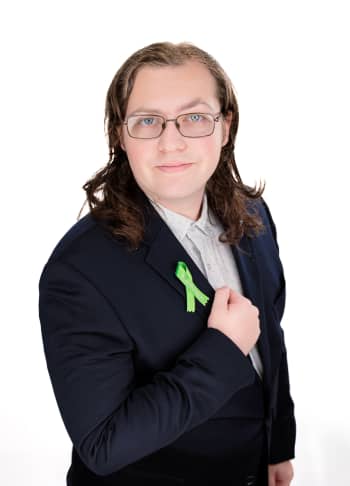
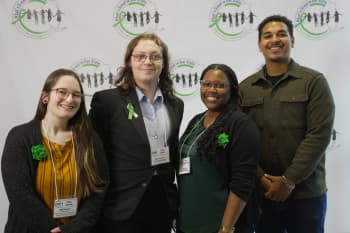
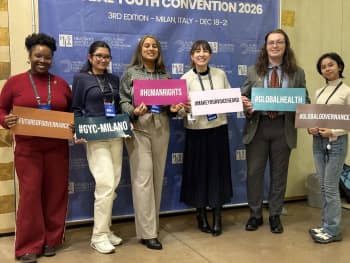

The Moment I Stopped Waiting
Personal development often begins with a misconception: that growth starts when we finally feel ready. We imagine readiness as confidence, certainty, or a clear signal that the time is right. But more often, transformation begins in a far less dramatic way—in the quiet moment when we realize that waiting has become its own form of fear. The moment I stopped waiting was the moment I stepped into my true self. It did not arrive with perfect clarity or a dramatic sign. It came quietly, in the middle of all my doubts, when I realized that waiting had become another form of fear. I had been telling myself I needed more time, more proof, more confidence, or some kind of permission to begin. But the truth was, no one was coming to tell me I was ready. I had to decide that for myself.
In that moment, the belief that dissolved was the idea that readiness looks like certainty. I used to think being ready meant having no fear, no questions, and no chance of failure. But I learned that readiness is much less polished than that. Readiness looked like taking a step forward even while my voice shook. It looked like trusting myself before I had all the answers. It looked like choosing movement over perfection.
I stopped doubting, questioning, and hesitating. Not because every uncertainty disappeared, but because I finally understood that growth does not begin after fear ends. It begins the moment we move despite it. Stepping into my true self meant accepting that I was already enough to start, even if I still had things to learn along the way. Stepping into a fuller version of yourself is rarely about receiving permission from the outside world. It is about recognizing that you may already have enough to begin. Confidence is often built in motion, not in advance. Clarity tends to follow action, not precede it.
In that sense, the moment we stop waiting is not just a decision; it is a turning point. It marks the shift from passively hoping for change to actively participating in it. That moment changes everything. We no longer see ourselves as someone waiting for the right time; rather someone capable of creating it. And in doing so, I discovered that becoming who I was meant to be was never about permission from the outside—it was always about trust from within. That may be one of the most powerful lessons personal development can offer: the right time is not always found. Sometimes, it is created.
Article written by Reah Hagues, Managing Editor/ © I Am Ready Magazine
The Woman She Became
Nikki Hillhouse — Interview Feature / © I Am Ready Magazine
Nikki Hillhouse — Interview Feature / © I Am Ready Magazine
Nikki Hillhouse's Journey Beyond Stroke, Survival, and Finding Herself Again
Written by Indre Ratkele, Editor-in-Chief
I have known Nikki for more than a year, and from the very beginning I was drawn not only to the thoughtful articles she writes for multiple publications, but also to the calm and compassionate way she connects with people.
Over the past year, I have had the pleasure of recording several podcasts with Nikki, and we also collaborated on a special Christmas project. Through each conversation and collaboration, I came to know someone who gives so much of herself in service to others.
Nikki is one of the hardest-working people I know. Whether through coaching, retreats, workshops, meditation, writing, or simply offering a listening ear, she is always looking for ways to support others on their own healing journey.
What I admire most about Nikki is her quiet strength. She never seeks recognition or attention. Instead, she leads with compassion, kindness, and authenticity. She has an incredible ability to make people feel heard and understood, and I believe that comes from everything she has experienced herself.
When you first meet Nikki, it is difficult to imagine the challenges she has overcome. Yet behind her calm presence is a woman who has faced some of life's most difficult moments. Her story is one of resilience, healing, hope, and transformation. It is the story of a young mother whose life changed in an instant when she suffered a stroke at just thirty-one years old. More importantly, it is the story of a woman who refused to allow that moment to define the rest of her life.
As our conversation unfolded, Nikki shared her journey with remarkable honesty. She spoke openly about loss, chronic pain, rebuilding her confidence, and finding purpose through adversity. It is a story that I believe will resonate with anyone who has ever faced illness, grief, uncertainty, or a chapter of life they never expected.
Without a doubt, Nikki is one of the strongest women I have had the privilege of interviewing. I hope her story reminds you, as it reminded me, that even our most difficult experiences can become the beginning of something extraordinary.
When I asked Nikki how experiencing a stroke at just thirty-one years old had affected her life, her answer made it clear that the greatest impact reached far beyond her physical recovery.
"Having a stroke at 31 turned my whole world upside down," she told me. "One minute I was trying to juggle life, responsibilities, and motherhood, and the next I was being forced to confront my own mortality."
Like many of us, Nikki never imagined something so life-changing could happen at such a young age. The stroke didn't simply interrupt her daily routine—it changed the way she saw herself. She went from being fiercely independent to needing help with even the simplest tasks. Alongside the physical challenges came another kind of loss: the grief of saying goodbye to the woman she had been before the stroke.
Listening to Nikki, I found myself reflecting on how little we speak about this kind of grief. We often associate grief with losing someone we love, yet illness can also bring profound loss. We grieve our health, our independence, our confidence, and sometimes even the future we imagined for ourselves.
For Nikki, recovery was not measured only by physical rehabilitation. Chronic pain, exhaustion, and the emotional aftermath became part of everyday life. Relationships also changed. As she explained, not everyone understands the invisible battles that continue long after the initial crisis has passed.
Professionally, everything she had known suddenly came to a halt.
"I felt lost and disconnected from myself," she shared. "My confidence disappeared, and I questioned my worth because so much of our identity is tied to what we can do. When illness strips that away, you're left asking, 'Who am I now?'"
That question stayed with me.
How many of us unknowingly define ourselves by our careers, responsibilities, or the roles we fulfil for others? When those roles are suddenly taken away, we are forced to rediscover who we are beneath everything we have built around ourselves.
Looking back now, Nikki sees the stroke differently. While she would never wish for it to happen, she recognises that it became the beginning of a deeper awakening. It forced her to slow down, examine her life, and confront beliefs, stress, unresolved pain, and the ways she had abandoned herself simply trying to survive.
"Over time," she reflected, "I stopped seeing myself as broken."
Those simple words capture the beginning of her transformation.
Rather than becoming the end of her story, the stroke became the catalyst for a completely different life—one rooted in healing, authenticity, and purpose.
To understand Nikki's journey, I wanted to understand the person she was long before the stroke.
She told me about growing up in Scotland as one of five children in a close-knit working-class family.
"We didn't have a lot financially," she said, "but we had love, laughter, and a sense of togetherness."
Nikki described herself as the quiet, sensitive child who often retreated into her own world. Raised within the Catholic faith, she grew up surrounded by strong values, many of which were shaped by her mother's unwavering belief and commitment to her family.
She also spoke with great admiration about the women who influenced her life.
"I came from a family of strong women—my mum and my nana especially—and I can definitely see where I got some of my stubbornness and stoic nature from."
Although love was never lacking, Nikki explained that emotions were rarely discussed openly. Like many families of that generation, difficult feelings were often hidden rather than shared. Looking back, she now recognises how much that shaped her relationships and the way she viewed herself as she grew older.
Rather than repeating that pattern, Nikki made a conscious decision to change it.
"It's one of the reasons I chose to break that generational pattern—to become more open, more emotionally aware, and to create deeper connection instead of silence around pain."
Her childhood also came to an unexpected turning point when she became a mother at just sixteen years old.
"Overnight, life became much more serious, and I had to grow up very quickly."
Although those early responsibilities shaped her confidence and relationships in many ways, Nikki also believes they gave her something that would later become invaluable.
Resilience.
Compassion.
And the strength she would need during the years that followed.
Her story reminded me that life's greatest challenges rarely appear without preparation. Looking back, it seems every chapter of Nikki's early life quietly equipped her for the battles she had yet to face.
Looking back, Nikki believes the most difficult part of her journey wasn't simply surviving a stroke. It was losing the person she believed herself to be.
"The stroke changed me physically," she explained, "but emotionally it left me feeling broken, frightened, and disconnected from who I was."
Long before the stroke, Nikki had already experienced health challenges. As a child she lived with asthma, and looking back she believes those early experiences left her feeling as though she could never completely trust her own body. When the stroke happened at thirty-one, those feelings intensified. Chronic pain, exhaustion, and the emotional impact of trauma became part of her everyday reality, making it increasingly difficult to recognise the woman she once knew.
There were years when simply getting through the day required enormous strength. While people around her saw someone trying to carry on with life, Nikki was quietly fighting battles that were invisible to everyone else.
Perhaps the most courageous part of our conversation came when Nikki spoke openly about reaching her lowest point.
"At one point in my life, everything became so overwhelming that I reached a place where I didn't want to be here anymore. It was one of my darkest moments."
Those words are difficult to read, yet I believe they are incredibly important. Too many people experience those thoughts in silence, believing they have to cope alone or fearing that others won't understand. Nikki's willingness to share this chapter of her life may encourage someone else to reach out for help or simply realise they are not alone.
Looking back now, Nikki describes that period as the moment she hit rock bottom emotionally. Yet it was also where something slowly began to change.
"It was that breaking point that eventually led me to healing, self-discovery, and rebuilding my life from the inside out. Looking back now, I can see the breakdown became the breakthrough."
Nikki Hillhouse — Interview Feature / © I Am Ready Magazine
Nikki Hillhouse — Interview Feature / © I Am Ready Magazine
I found myself reflecting on those words long after our conversation had ended.
How often do we see breaking down as failure, when in reality it can become the beginning of rebuilding? Sometimes life strips away everything we thought defined us so that we can begin again with a deeper understanding of ourselves.
For Nikki, one of the greatest turning points came when she realised she wasn't completely powerless.
"For a long time I felt like everything was happening to me, and I was just trying to survive it," she said. "But slowly, something shifted. I started to understand that I had more influence in my healing than I'd ever believed."
That change in mindset became the foundation of everything that followed.
Nikki made the courageous decision to take back ownership of her healing journey. After years of prescribed medication that left her feeling numb and disconnected, she recognised it was no longer supporting the life she wanted to live.
"I made a very conscious decision to take my power back," she explained. "I would rather live with the reality of chronic pain than continue with years of doctors' appointments and medication that left me feeling numb and disconnected from myself."
For Nikki, that decision wasn't about rejecting medical advice. It was about listening to herself and trusting what she needed in order to heal.
That choice opened the door to a completely different way of living.
Meditation.
Breathwork.
Holistic practices.
Learning to slow down instead of constantly pushing through.
Most importantly, learning to listen to her body instead of fighting against it.
"Everything slowly began to shift from there," Nikki reflected.
Listening to her story reminded me that healing is rarely one defining moment. More often, it is a collection of small choices made day after day. Choosing hope over fear. Choosing self-compassion over self-criticism. Choosing to believe that life can still hold meaning, even after everything has changed.
Today, Nikki no longer measures herself by what illness took away from her. Instead, she chooses to focus on everything her journey has taught her.
The woman who once questioned her worth has become someone who now helps others rediscover theirs.
And perhaps that is one of the most powerful transformations of all.
Everything Nikki has experienced has shaped the work she does today. Listening to her speak, it became clear that she doesn't help people because she has all the answers. She helps them because she understands what it feels like to lose yourself and wonder if life will ever feel whole again.
When I asked Nikki what motivates her to continue supporting others, her answer came from a place of lived experience rather than professional expertise.
"What motivates me is remembering what it felt like to be in my lowest moments and not know where to turn. I know how isolating it can feel when you're struggling on the inside but still trying to function on the outside."
She explained that during some of the darkest chapters of her own life, she didn't feel seen or truly heard. That experience stayed with her and ultimately became one of the driving forces behind the work she does today.
"I never want others to go through that same sense of isolation or to feel like they are navigating things alone. I want to offer something different—not from a place of fixing, but from walking alongside others as they find their own way back to themselves."
Those words perfectly capture Nikki's approach. She doesn't believe people need to be rescued. Instead, she believes they need to be supported, understood, and reminded that they already have the strength to heal.
As our conversation continued, I asked Nikki what she believes her deeper purpose in life is today.
Her answer reflected everything we had spoken about throughout the interview.
"My deeper purpose is helping others come back to themselves when life has taken them far away from who they are. I know what it feels like to be lost in pain, survival, and disconnection from your own body and sense of self, and that's what allows me to meet people with real understanding rather than judgement."
One sentence particularly stayed with me.
"I don't see my role as fixing anyone. It's more about holding space and gently reminding people that they are not broken—even if life has made them feel that way."
I believe there is something incredibly powerful in that perspective. So often, when life changes unexpectedly, we begin to believe there is something wrong with us. We measure ourselves against who we used to be and quietly convince ourselves that we will never be enough again. Nikki's story reminds us that healing doesn't begin by fixing ourselves. It begins by accepting ourselves with compassion and allowing space for growth.
A beautiful expression of that journey is Nikki's recently published teaching memoir, Beyond the Mirror. More than simply telling her story, the book weaves together her personal experiences with the lessons she has learned through healing, self-discovery, and rebuilding her life. Her hope is that readers will feel less alone and find encouragement as they navigate their own challenges.
As our interview drew to a close, I asked Nikki how she approaches difficult seasons of life today.
Her answer reflected just how much her perspective has changed.
"I don't try to push through everything anymore. I've learned to slow down and really listen to what's happening in me, rather than reacting or spiralling into fear."
Today, meditation, breathwork, energy healing, quiet moments in nature, and simply sitting in the garden with a cup of tea have become important parts of her daily life. More importantly, she no longer sees challenges as signs that life is falling apart. Instead, she sees them as opportunities to pause, reflect, and reconnect with herself.
One of Nikki's favourite quotes, by Wayne Dyer, beautifully reflects this mindset:
"Change the way you look at things and the things you look at change."
It is a simple sentence, yet after hearing Nikki's story, I realised how perfectly it describes her journey. She could not change what happened to her, but she changed the way she responded to it. In doing so, she transformed not only her own life but also the lives of the people she now supports.
Before we finished our conversation, I asked Nikki what advice she would offer someone facing illness, adversity, or a life-changing diagnosis.
Her response was heartfelt.
"Don't try to push through it all alone. I did it the hard way and I don't want that for you."
She encourages people to be gentle with themselves, to take each day one step at a time, and to allow themselves to rest without guilt. She also shared a simple breathing exercise that has helped her through difficult moments: breathe in for a count of four, hold for two, and slowly breathe out for six. Sometimes, she explained, something as simple as focusing on your breath can help bring you back to the present moment.
Most importantly, Nikki wants people to know they never have to carry their struggles alone.
"Please reach out—to a friend, a doctor, or a therapist. My door is always open."
As I reached the end of our conversation, I found myself reflecting on the woman Nikki has become. Not because of the stroke, but because of the choices she made afterwards. She chose healing over bitterness. Hope over fear. Purpose over pain.
Without question, Nikki is one of the strongest women I have had the privilege of interviewing. Her story is not simply about surviving adversity; it is about rediscovering yourself when life asks you to begin again.
I hope every reader who turns these pages finds something of themselves within Nikki's journey. Whether you are navigating illness, grief, anxiety, or simply a season of uncertainty, may her story remind you that healing is possible, hope is never lost, and your circumstances do not define your future.
Thank you, Nikki, for sharing your journey with such honesty, vulnerability, and courage. Thank you for using your experiences to help others find hope, strength, and the confidence to believe in themselves again.
Perhaps there is no better way to end than with Nikki's own words:
"Remember... all things are possible."
If Nikki's story has resonated with you, you can connect with her through her website, coaching programmes, retreats, or by reading her teaching memoir, Beyond the Mirror. Wherever you are on your own journey, Nikki offers a compassionate space to reconnect with yourself and discover that healing is possible.
Website: nikkihillhouse.com
Present for Life
Jackie Banks' Journey Beyond Alcohol
Written by Indre Ratkele, Editor-in-Chief
Some people enter our lives in ways we could never have planned.
I first met Jackie Banks at a workshop we both happened to attend. Looking back now, it feels like one of those moments that reminds us how life often has plans far greater than our own. We had both signed up for the same event, stepped outside our comfort zones, and entered an unfamiliar environment expecting nothing more than a valuable experience.
Neither of us knew that we would leave with something much more meaningful.
We laughed later about how strange and beautiful it was that our paths crossed in that room. Whether we call it God, the Universe, divine timing, or simply life unfolding exactly as it should, I have always believed that certain people are placed in our path for a reason.
From the moment we met, conversation flowed effortlessly. Jackie later offered me a lift home and what could have been a short journey became a heartfelt conversation about life, challenges, healing, relationships, meditation, personal growth, and the experiences that shape us.
What struck me most was how naturally trust appeared between two people who had only just met.
We both agreed on something that day: you never know who is waiting around the next corner.
As our friendship grew, I had the opportunity to hear more of Jackie's story. Listening to her speak about her life, I felt immense respect for her honesty and openness. There was no attempt to hide the difficult chapters. Instead, there was a willingness to share them in the hope that someone else might benefit from what she had learned.
Jackie grew up in a loving family with her older sister. Her childhood was happy, full of laughter, community, and strong family values. Drinking was never a major part of her upbringing. Like many people, alcohol entered her life socially and gradually became accepted as part of normal adult life.
During her twenties and thirties, drinking was simply associated with socialising, celebrations, and spending time with friends. It was later, while raising her two sons and living alone, that alcohol quietly took on a different role.
“The nights could be quite long,” Jackie shared. “I'd come home from work and pour a glass of wine just to chill out.”
One glass became two. Then drinking became most days rather than occasional days.
Unlike many addiction stories, there was no dramatic collapse. No public crisis. No moment where everything suddenly fell apart.
Jackie describes herself as a “middle-lane drinker.” Someone functioning, working, raising a family, managing responsibilities, yet increasingly aware that alcohol had become a habit she no longer wanted in her life.
The turning point came through love.
When Jackie discovered she was going to become a grandmother, something shifted inside her immediately.
Sometimes transformation begins with pain.
Sometimes it begins with purpose.
For Jackie, it began with the desire to become the best grandmother she could possibly be.
She wanted to be present. Reliable. Available. She wanted her family to know they could trust her completely.
“I wanted to be a hands-on nanny,” she explained. “I wanted my daughter-in-law to feel totally safe leaving her baby with me.”
Looking back, becoming a grandmother gave Jackie something many people searching for change struggle to find: a reason bigger than themselves.
Today, family remains at the heart of everything she does. She speaks proudly of her sons, Dan and Tom, and their partners, Charnie and Jordan. Becoming a grandmother to Ronnie and Wade reinforced her desire to be fully present—not just for the big milestones, but for the everyday moments that make life so meaningful.
It wasn't simply about giving something up.
It was about becoming someone.
Someone her family could always depend on.
Around the same time, one of her closest friends was also questioning her relationship with alcohol. The two women found themselves having honest conversations about habits they had accepted for years.
Her friend suggested attending a therapy session together.
Jackie agreed.
Neither woman realised that a single appointment would quietly divide their lives into a before and after.
They walked into that session carrying years of routines, beliefs, and coping mechanisms.
They walked out having made a decision.
No more alcohol.
For Jackie, that decision became the beginning of a completely different life.
As the months passed, she began noticing remarkable changes. Her energy improved. Her sleep improved. Her anxiety reduced. She became more focused, healthier, and more active.
She started going to the gym regularly, taking better care of herself, and experiencing life with a clarity she had not felt for years.
“You start thinking, what on earth was I doing drinking?” she reflected. “It never solved anything. It just pushed things aside until tomorrow.”
Yet while Jackie was moving forward, her friend found herself pulled back into old habits.
What followed was heartbreaking.
One holiday led to one drink.
One drink became many.
The cycle returned.
Jackie watched helplessly as addiction slowly tightened its grip on someone she deeply cared about.
What struck me throughout our conversation was the absence of judgment in her voice.
She never spoke with anger.
She never spoke with blame.
Only compassion.
She understood what many people do not.
Addiction is not simply a lack of willpower.
It is not weakness.
It is not a character flaw.
It is a struggle that can consume every area of a person's life.
Even when others stepped away, Jackie remained present.
She checked in.
She listened.
She cared.
Eventually alcoholism took everything from her friend.
Her health.
Her relationships.
Her opportunities.
And ultimately, her life.
One of the most emotional moments of our conversation came when Jackie spoke about reading her friend's journal after her passing.
Among the entries was a sentence she will never forget: “I am grateful for my friend Jackie who checks in on me.”
Those words remain with her today.
Perhaps more than anything else, losing her friend strengthened Jackie's commitment to helping others.
During Covid, Jackie completed training as a sober coach. At the time, she viewed it as a way to learn more and potentially help people one day.
After losing her friend, that qualification took on a completely different meaning.
It became a mission.
Today Jackie works with people who want to change their relationship with alcohol. Some want to stop completely. Others want to cut back or understand their habits more clearly.
Her approach is practical, compassionate, and deeply human.
She begins by listening.
She helps people identify goals.
She explores triggers, routines, and support systems.
Most importantly, she creates a space where people can speak honestly without fear of shame or criticism.
What touched me most was learning that she also supports people during their most vulnerable moments.
The moments when someone is overwhelmed.
The moments when someone feels trapped.
The moments when one phone call, one text message, or one conversation could change everything.
“Just get in touch and we'll chat,” she says.
Simple words.
Yet for someone struggling, they can mean everything.
If losing her friend reinforced the importance of her mission, what happened next reinforced the importance of life itself.
On the morning of her friend's funeral, Jackie woke feeling unwell.
Initially she assumed it was stress.
Perhaps anxiety.
Perhaps emotion.
She had no idea her body was trying to tell her something far more serious.
As the day progressed, she collapsed.
Her partner Barney immediately recognised something was wrong.
An ambulance was called.
Within hours Jackie found herself surrounded by medical professionals.
She had suffered a heart attack.
The experience became another turning point.
A reminder that life is precious.
A reminder that tomorrow is never guaranteed.
A reminder that dreams should not be postponed indefinitely.
Today Jackie speaks openly about feeling as though she has been given a reset.
She worries less.
She appreciates more.
She focuses on what truly matters.
Family.
Health.
Connection.
Purpose.
Joy.
She speaks with immense gratitude about Barney, her partner of more than twenty years, who supported her through recovery and continues to stand beside her.
She also speaks lovingly about her parents.
Her father is living with dementia, a reality that brings challenges but also perspective.
Rather than focusing only on what dementia has taken away, Jackie chooses to focus on what remains: the opportunity to spend meaningful time with both of her parents, create memories, and appreciate the bond they continue to share.
Perhaps that outlook is one of the reasons family means so much to her today.
Whether she is spending time with her parents, supporting her sons Dan and Tom, celebrating life with Charnie and Jordan, or creating precious memories with her grandsons Ronnie and Wade, Jackie has learned that life's greatest treasures are often found in the simplest moments shared with the people we love.
Gratitude has become one of the guiding forces in her life, reminding her to cherish every conversation, every family gathering, and every opportunity to be fully present with the people who matter most.
That gratitude has inspired her latest challenge.
Jackie is currently training for the Yorkshire Three Peaks Challenge to raise money for Alzheimer's research.
It is another example of how she continues to transform personal experiences into purposeful action.
One thing Jackie said stayed with me long after our interview ended.
“Giving up drinking is the ultimate upgrade.”
At first glance, it sounds simple.
But when you listen to her story, you understand exactly what she means.
Sobriety gave her more than it took away.
It gave her health.
It gave her energy.
It gave her confidence.
It gave her clarity. It gave her presence.
It gave her purpose.
Most importantly, it gave her more life.
Today Jackie attends events, enjoys social occasions, dances, laughs, travels, spends time with family, and embraces opportunities without feeling that alcohol is missing from her experience.
Instead, she feels fully present within it.
As I sat across from Jackie during our interview, I found myself admiring something difficult to describe.
Her honesty.
Her openness.
Her calmness.
Her peace.
I have always paid attention not only to what people say but also to how they make others feel.
Jackie radiates acceptance.
She radiates understanding.
She radiates compassion.
People facing addiction do not need more judgment.
They do not need more criticism.
They do not need more shame.
They need support.
They need hope.
They need someone willing to sit beside them and remind them they are not alone.
Jackie offers exactly that.
I am deeply grateful that she chose to share her story with I AM READY Magazine. What began as two women attending the same workshop became a friendship I never expected, yet one I deeply value.
Perhaps that is the lesson at the heart of this story.
You never know who is waiting around the corner.
You never know what opportunity, friendship, lesson, or blessing may be waiting for you when you simply say yes.
And sometimes the people we meet unexpectedly become exactly the people we needed to meet all along.
Continue the Journey with Jackie Banks
If this conversation resonated with you and you would like to learn more about living an alcohol-free life, please connect with Jackie below.
🌐 Website
www.soberlifestyle.co.uk
📞 Mobile
+447843 411852
📧 Email
jackie@soberlifestyle.co.uk
📘 Facebook
Jackie Banks
📷 Instagram
@sober_lifestyle_with_jackie
Written by Indre Ratkele, Editor-in-Chief
© I Am Ready Magazine
Five Unseen Choices That Change Everything Over Time
Growth is rarely a straight path.
It unfolds gradually, often beneath the surface, through choices that seem small in the moment but become deeply significant over time. It calls for patience, self-awareness, and the courage to keep moving forward, even when certainty is absent.
Along the way, not every decision will be perfect, and not every lesson will arrive when expected. Yet every experience carries something valuable. Every challenge invites reflection. Every setback offers perspective. Every season contributes to a deeper understanding of who we are.
Over time, I came to understand that growth is not about reaching a final destination. Nor is it about striving to become someone entirely different or seeking a state of permanent certainty. It is about becoming more aware of yourself, strengthening your values, and learning to navigate life with greater clarity, resilience, and acceptance.
Perhaps the most meaningful shift occurs when we stop measuring life solely by outcomes and begin appreciating the wisdom gained through the journey itself.
For me, the greatest breakthrough came when I stopped blaming myself for past mistakes and decisions. Instead of carrying regret as a burden, I began learning to accept and love myself through every chapter of my life.
I came to understand that, beyond all the spirituality, awakenings, expectations, and opinions of others, I am simply a human being. I am here to live, to learn, to understand, and to grow. I am here to explore the questions that matter most: Who am I? Who do I want to become? And who am I no longer?
Over time, I stopped searching for approval and started giving myself the love, compassion, and understanding that no one else could provide in quite the same way. Not out of selfishness, but out of acceptance. I began to make peace with my choices, honour my authenticity, and trust my own journey.
I realised that peace does not come from having all the answers. It comes from accepting yourself fully—the parts you celebrate, the parts you are still healing, and the parts that continue to evolve.
And beneath all the ideas, philosophies, lessons, and reflections, there remains a simple truth:
We are human beings here to experience life, to learn from it, and to grow through it.
Many of these insights have come not from having all the answers, but from taking time to reflect on the experiences, challenges, and quiet moments that have shaped my perspective. Some lessons arrived through success, others through disappointment, and many through ordinary moments that revealed their meaning only with time.
If these reflections have resonated with you in any way, thank you for sharing this part of the journey with me. Perhaps our paths are different, but the questions we ask, the struggles we face, and the lessons we learn remind us that we are all simply human beings trying to understand ourselves and our place in this life.
And perhaps that understanding itself is enough.
With love,
Indre Ratkele
1. The Meaning of “Never Give Up”
I have heard it so many times—never give up.
It has become almost automatic, repeated without question, as though persistence alone guarantees the right destination.
For a long time, I was hard on myself. I believed that every path I chose had to be the right one, the only one, and that changing direction somehow meant failure. So I kept going, no matter what. I pushed through frustration, exhaustion, and doubt because I thought that was what strength looked like.
I never gave up, but the cost was high. It left me tired, disconnected, and carrying the weight of expectations that were not always my own.
Looking back, I realise that I was not really listening. I was so focused on what others told me, on who I thought I should be and what I thought I had to do, that I had stopped hearing myself. Perhaps I had also stopped hearing life itself.
And then there came a moment when everything became quiet.
I felt separated from the noise, stripped of distractions, and left with only myself. In that silence, I could finally hear my own heart. I could hear the gentle whispers of life, of something greater than myself, guiding me not through force, but through trust.
I stopped trying to control everything and started moving with life rather than against it. I began to dance with the universe instead of fighting it.
And something beautiful happened.
Doors opened that I could never have planned. Amazing people entered my life. Opportunities appeared in unexpected ways. Things that once felt like constant struggle began to unfold with a sense of ease. Not because life became perfect, but because I was no longer trying to force it.
Perhaps "never give up" was never meant to mean never change direction.
Perhaps it means staying true to what matters most while allowing yourself to evolve.
There is a different kind of persistence—one that listens, adapts, and trusts. Less resistance, more awareness. Less control, more surrender. Less striving, more alignment.
So perhaps the question is not whether I should keep going.
Perhaps the question is whether I am willing to listen closely enough to know how.
And maybe true perseverance is not about refusing to change course.
Maybe it is about having the courage to keep moving forward while remaining open to where life is quietly leading us.
Because sometimes the greatest breakthroughs do not come from pushing harder.
Sometimes they come when we finally become still enough to hear ourselves again.
2. When Motivation Disappears
There are days when nothing moves.
No inspiration. No energy. No desire to create. Just resistance. And in those moments, it is easy to wonder where everything has gone.
For a long time, I believed motivation was the answer. But I came to realise that motivation is unreliable. It comes and goes.
And that is when something else became visible.
Commitment.
Not pressure or intensity, but dedication, responsibility, and accountability.
Today, I no longer commit lightly. Before promising something to others, I first reflect on it with myself. Is this aligned with my values and future goals? Is this something I truly want to do? Am I willing to honour this commitment even when the excitement fades?
Only when the answer is yes do I commit.
And once I do, motivation is no longer the question.
When inspiration comes, I welcome it and create beautiful things. But I no longer depend on it. I have learned that commitment runs deeper than motivation.
Growth is rarely exciting all the time. Sometimes it feels repetitive, lonely, and unseen. But perhaps that is where character is built.
Motivation will return. Inspiration will return.
The question is not whether they will come back.
The question is whether something will still be there when they do.
And for me, that something is commitment.
Because motivation comes and goes, but staying true to myself and honouring the commitments I consciously choose is a choice.
And choices, repeated over time, quietly shape our lives.
3.The Things I Never Thought I Could Do
One of the greatest discoveries I have made is that so much of our potential lies in the things we have never done before.
For a long time, I tried to belong in places where I never truly belonged. I limited myself to what I knew and to what others believed I was capable of. I avoided trying new things because I lacked confidence, experience, or the right skills.
And perhaps even more than that, I believed some of the things others had told me about myself.
But something changed when I stopped being afraid of being a beginner.
I started trying things I had never done before, and I discovered abilities I never knew I had. I found that I was capable of things others once said I wasn't. More importantly, I found that I was capable of things I once believed I wasn't.
If someone had told me a year ago that I would be writing interviews that would move people to tears, I would never have believed them.
And yet, here I am.
What I once saw as uncertainty became one of my greatest gifts.
I discovered that I have the ability to see the beauty, strengths, and values in others, and I find great joy in helping people recognise those gifts within themselves.
Looking back, I often wonder why I was so afraid to try.
Because perhaps the greatest miracles are hidden in the things we have never done before.
And maybe that is why life keeps inviting us into the unknown.
Not to prove ourselves.
But to discover ourselves.
Sometimes the person we are becoming is waiting just beyond the things we are afraid to try.
And when we finally take that first step, we often look back and wonder:
"What took me so long?"
Because perhaps our greatest potential has been there all along, quietly waiting for us to believe in possibilities we have not yet explored.
4. Speak Your Truth
It took me time to learn how to speak my truth.
Not only to others, but first to myself.
To stop pretending. To stop saying yes when I meant no. To stop hiding what I truly wanted, what I valued, and how I saw the world.
For years, I feared rejection. I wanted to be accepted, understood, and loved. But eventually, I realised that the last thing I wanted was to be accepted for someone I was not.
I no longer wanted to hide my challenges, my mistakes, or the experiences that shaped me. They taught me, humbled me, and helped me grow.
So I made a commitment to speak my truth, regardless of whether everyone understood it.
To say yes when I truly meant yes.
And to say no when I truly meant no.
Because how can we go wrong by expressing what we feel and communicating what we genuinely need—not only to those around us, but to life itself?
I have come to believe that life keeps presenting the same lessons, challenges, and even people until we become clear about what we want and what we no longer accept.
Until we finally say:
"This no longer feels right for me."
"This is what I desire."
"This is what I deserve."
Because we teach others how to treat us.
And through our choices, boundaries, and standards, we show life what we are willing to tolerate and what we are no longer willing to tolerate.
Looking back, I can see how much my life changed when I stopped abandoning myself.
Today, my life is filled with beautiful blessings, supportive people, and opportunities I once could only imagine.
Not because I became someone else.
But because I stopped pretending to be someone I wasn't.
And perhaps speaking your truth is not about convincing others.
Perhaps it is about honouring yourself enough to live honestly.
Because the greatest freedom I have found is not in being accepted by everyone.
It is in finally being able to accept myself.
5. Thinking Differently
Over time, I began to honour something I had spent years questioning—my own authenticity.
I stopped trying to think like everyone else, live like everyone else, or measure success by someone else's standards. I started to appreciate my different way of seeing life, my awareness, and the lessons that shaped my understanding.
We often admire the beautiful lives we see online or hear about from those rare individuals who seem to live with purpose and peace. But I began asking myself a different question:
Am I willing to think, act, and live differently?
Because extraordinary lives are rarely built through ordinary habits.
So I started making choices that felt aligned with who I am. I wake up at 3 a.m. to meditate and begin my day with intention. I write in my gratitude journal, not only for the blessings, but also for the challenges that have taught me so much. I remain committed to my goals, even when no one is watching. I work, I learn, and I continue showing up for the life I want to create.
And something beautiful happened.
The more grateful I became for what I already had, the more beauty I noticed around me. Not because life suddenly became perfect, but because I had changed the way I saw it.
I no longer feel empty when I am alone.
There are moments when I sit quietly on my sofa and tears come to my eyes—not from sadness, but from gratitude. Gratitude for how far I have come. Gratitude for the lessons, the struggles, and the person I have become through them.
I have realised that feeling fulfilled does not always come from having more.
Sometimes, it comes from finally recognising that you are already full within yourself.
And perhaps that is one of life's greatest gifts:
Not needing the world to complete you, but learning to appreciate it from a place of wholeness.
Look for another Angle
By Wade Simmons, Writing Contributor
Like most people, as a child I often dreamed of being a family man and creating a stable, fulfilling life. From watching prehistoric cartoon families to imagining futuristic utopias, the vision of building a meaningful future was always inspiring.
However, in today's world, I cannot help but notice how much is happening across society. From challenges within our communities to rapid changes in both the corporate and private sectors, humanity is advancing at an extraordinary pace through technology. While some argue that new opportunities are being created, the reality I see is one of widespread layoffs and many college graduates struggling to determine their next steps.
As a child, I dreamed of building a meaningful future; as an adult, I find myself questioning what that future now looks like.
I am not one to criticize my peers. These circumstances have been difficult for many people to navigate, and everyone faces their own unique challenges.
Last year, I had the privilege of meeting my friend Karina at a networking event. What helped us connect was that, like me, she had high hopes for her career. However, the path she envisioned was not the one she ultimately found herself on. After being led to believe she would be working for a particular company, communication suddenly stopped, and the organization chose a different direction.
There are moments in life when circumstances feel deeply personal, as though they have happened only to you. Then, with time, you realize there are countless others who have experienced similar situations. I understand that feeling myself—the feeling of being prepared, only to discover that what seemed like a stable path can quickly change when reality sets in.
Years ago, circumstances were different. That is one reason I avoid comparing generations or time periods too heavily. Every era presents its own unique set of challenges. Today, we face rising costs of living, rapidly evolving technology, and a pace of change that often feels faster than society can comfortably absorb.
As human beings, we cannot afford to be oblivious to what is happening around us. The fragility of some systems is becoming increasingly visible, and certain cracks are beginning to show. While I see nothing wrong with progress—and indeed, progress is necessary—I also believe in the importance of balance and thoughtful boundaries.
What interests me most is how we, as people, navigate this process of change. To every entrepreneur, whether you attended college, trade school, or no school at all, I would offer this advice: do not become discouraged. Find your lane. Discover your niche. We live in a very different world than previous generations, and that may require us to view opportunities from a different angle.
One principle I will always hold onto, regardless of the business venture I pursue, is the importance of valuing people. Companies, institutions, and entire systems ultimately depend on the contributions of individuals. That is something I believe we should never forget.
As technology continues to transform our world, human value remains irreplaceable. Progress may shape the future, but people will always be the foundation upon which that future is built.
© I Am Ready Magazine
I Am Ready is a space for those who understand that transformation begins long before it becomes visible. It is a magazine that honors the quiet, decisive moments where courage meets reflection, and intention meets action.
Through feature interviews, essays, and insights, we explore the journeys of individuals who embrace authenticity, resilience, and self-leadership. We celebrate not just achievement, but the inner discipline, awareness, and choices that precede it.
Led by Editor-in-Chief Indre Ratkele, our team curates stories of real people and global thought leaders — those who inspire through integrity, commitment, and the courage to become. Every edition invites readers to pause, reflect, and step into readiness, cultivating a life aligned with purpose and authenticity.
I Am Ready is more than a magazine. It is an invitation to stand at the threshold of possibility, to embrace the inner journey, and to recognize that everything meaningful begins within.
Passionate storytellers and creators, the people shaping each page of I Am Ready Magazine — together, we create, guide, and illuminate the journey of becoming.
Founder, Editor-in-Chief, and Content Director: Indre Ratkele
Partnerships Director: Terraine LeBeau
Managing Editor: Reah Hagues
Professional Writer: Catherine Gallacher
“We do not chase external change; we live from an internal truth that shapes everything around us.” Indre Ratkele
Advertise with Us | Contribute | Inspire
I Am Ready Magazine welcomes advertising for courses, programs, coaching services, books, or any other impactful products. To explore these opportunities, please contact our Founder and Editor-in-Chief, Indre Ratkele, at contact@indreratkele.com.
If you are passionate about writing articles in the personal development field, we have open spaces for contributors—reach out to Indre to share your voice.
Have an inspiring transformative journey to share? Inspire readers worldwide by reaching out to Indre—your story could change lives.
The content of this publication is provided for informational and inspirational purposes only. While every effort has been made to ensure accuracy, the publisher makes no representations or warranties regarding completeness and accepts no liability for any actions taken based on the information contained herein.
© 2026 I AM READY Magazine. All Rights Reserved.
Founder, Editor-in-Chief, and Content Director — Indre Ratkele
Founder, Editor-in-Chief, and Content Director — Indre Ratkele
Partnerships Director | Terraine LeBeau
Partnerships Director | Terraine LeBeau
Professional Writer | Catherine Gallacher
Professional Writer | Catherine Gallacher
Managing Editor | Reah Hagues
Managing Editor | Reah Hagues
DDXDD
 Built with Shorthand