I Am Ready is a personal development magazine exploring the inner shifts that shape real transformation. We spotlight thinkers, guides, and leaders in personal growth — not merely to celebrate achievement, but to illuminate the moments of awareness, discipline, and choice that precede it. This magazine is for those who understand that true change begins within, often long before it becomes visible.
We also celebrate those who have completed their transformation journey and are building meaningful lives and businesses. We honor the courage, resilience, and quiet dedication of real people who have worked for years, often unseen, overcoming fear, judgment, and rejection. These individuals create, uplift, and inspire through their authenticity and commitment to others.
Our mission is to share their stories — their challenges, achievements, and contributions — so the world can learn from, appreciate, and celebrate them. By presenting these real journeys, I Am Ready empowers readers to see that everything is possible, offering space for clarity, intentional growth, and courageous living.
I AM READY — Editorial Manifesto
I Am Ready is a personal development magazine for those who know that change begins long before results appear.
It is for individuals standing at the threshold of transformation — not chasing motivation, but cultivating readiness. Readiness to let go of old identities. Readiness to choose discipline over comfort. Readiness to step into responsibility, purpose, and self-leadership.
Each edition brings together powerful perspectives from global speakers, coaches, mentors, and business owners — not to glorify success, but to explore the internal shifts that made it inevitable. Through reflective guidance, practical frameworks, and deeply human conversations, I Am Ready invites readers to slow down, look inward, and make the quiet decisions that reshape a life.
This is not a magazine about who you could become.
It is about who you are ready to be.
I Am Ready Magazine — © 2026
Hello,
I’m Indre Ratkele, Editor-in-Chief & Founder of I Am Ready Magazine.
Welcome to Edition Three—a journey of courage, connection, and authentic stories that remind us of the power within every human experience.
There are moments in life when we discover something that becomes far greater than we ever imagined. For me, I Am Ready Magazine has become exactly that.
As we welcome you to our third edition, I find myself reflecting on a journey that continues to inspire me, challenge me, and remind me of the incredible power of human connection.
This publication has become a source of purpose and inspiration in my life. It is the reason I wake up at 2 a.m., 3 a.m., and even 4 a.m.—not because I have to, but because I am filled with excitement, gratitude, and love for what we are creating together.
I no longer measure my time by the hours on a clock. When there is a story waiting to be written, a connection waiting to be made, or something meaningful that needs to be created, I do not see it as a burden. I see it as a privilege.
Everything I create, every story we share, and every moment dedicated to this publication brings me a profound sense of harmony, inner peace, and balance. It has positively influenced every area of my life—from my professional journey to my personal relationships and my own continued growth.
I share this with you in our third edition because I believe authenticity can always be felt.
There are some things that cannot be replicated or manufactured. Genuine passion cannot be pretended. Purpose cannot be imitated. The energy behind something created with love and intention reaches people in a way that words alone cannot fully express.
That is the feeling we hope you experience throughout these pages.
My incredible team and I dedicate our time, creativity, and hearts to every element of this publication. From the stories we feature and the conversations we create to the articles, photography, and community we continue to build, every decision is guided by one shared purpose: to create a meaningful platform where people feel seen, heard, and valued.
For me, this is what true alignment with your life purpose feels like.
Editions One and Two showed us just how deeply people value honesty, authenticity, and genuine connection. Together, we created something that continues to remain with me—the privilege of witnessing beautiful human moments, the courage of individuals sharing their truths, and the powerful connection that emerges when people are given the space to be truly seen.
It was a feeling I had never experienced before.
And I believe this is only the beginning.
Edition Three continues the mission of I Am Ready Magazine while expanding our reach and welcoming even more inspiring voices from around the world. Within these pages, you will discover the journeys of remarkable individuals who have faced significant challenges, achieved extraordinary milestones, overcome personal obstacles, and chosen to use their experiences to encourage and support others.
This edition takes us deeper into the human experience, exploring the stories, emotions, challenges, and transformations that often remain unseen.
It is an edition built on courage.
Our contributors have trusted us with their most meaningful stories. They have shared not only their achievements, but also the experiences that shaped them—the moments of uncertainty, resilience, healing, and growth that have contributed to who they are today.
Some have chosen to share deeply personal photographs that reflect their individuality, strength, and vulnerability. As Editor-in-Chief, I cannot imagine a greater honour than knowing that I Am Ready Magazine has become a safe and trusted space where people feel empowered to share their journeys, express their truth, and reveal the experiences that have shaped their lives.
That trust is something we value deeply.
To every contributor who has opened your heart and shared your story, thank you.
To every reader who chooses to spend time with these pages and connect with these journeys, thank you.
To my incredible team, whose dedication, creativity, and belief in this vision continue to bring I Am Ready Magazine to life, thank you.
This magazine exists because of every person who has contributed, supported, and believed in its purpose.
My hope is that within these pages you find inspiration, courage, reflection, and perhaps a reminder that your own story matters. Wherever you are on your journey, know that growth is possible, transformation is always available, and you are never alone.
Thank you for being part of the continuing story of I Am Ready Magazine.
I Love You,
Indre Ratkele
Editor-in-Chief
Dreams Don’t Expire:
The Journey of Big Business Levi
Written by Wade Simmons, Contributing Writer
Edited by Reah Hagues, Managing Editor
Creative Direction by Indre Ratkele, Editor-in-Chief
BIG BUSINESS LEVI
BIG BUSINESS LEVI
Dreams don’t always fall in line exactly how one may envision, but that doesn’t necessarily mean that things aren't working out. Time may have the propensity to fly by, and as life goes by, sometimes it could cause some to question if their dreams are really being fulfilled. Levi, or as some may know him as “Big Business Levi,” has been relentless in pursuing his dream as a pro wrestling manager (on the independent scene) and actor.
“If it’s meant for me, then it’s going to be, because I’m going to make it happen,” he says!
Levi, aged forty-eight, has always had a passion for pro wrestling and acting since early childhood. Wrestling managers such as Bobby Heenan and “Slick” both had an impact on young Levi, and actors Jake Nicholson and Billy Dee Williams were his inspirations.
BIG BUSINESS LEVI | INDEPENDENT WRESTLING MANAGER | ACTOR
BIG BUSINESS LEVI | INDEPENDENT WRESTLING MANAGER | ACTOR
Later in life, he made the decision to step into the ring when he walked through the doors of Chicago Style Wrestling back in 2015. While training, Levi found his niche as a pro wrestling manager.
Levi has gone on to manage various wrestlers in the Chicagoland area. He also has done background acting work as an “extra” on “Men of Steel,” “The Chi,” “Empire,” and “Chicago PD.” Levi has gone from being inspired to becoming an inspiration himself!
“To inspire people is to work hard and be transparent about the journey,” he says. “Transparency is a key factor in helping others.”
Almost every dream has been tested because tests are most definitely a part of life.
“When you're going through obstacles, you learn valuable lessons that are beneficial to your journey.”
Yes, each path really is indeed a journey—a trek that comes with experiences that can be unique.
BIG BUSINESS LEVI WITH ECW/WWE LEGEND TOMMY DREAMER
BIG BUSINESS LEVI WITH ECW/WWE LEGEND TOMMY DREAMER
This is why comparing one's success to another can be dangerous. Levi believes your path was destined for you, so we trust the process.
“I've seen many of my peers who are doing great things in the pro wrestling world, making their mark in the industry, and I am very happy for them,” he alludes.
Some people may often believe that your dream has to look a certain way based on other people's success, especially in instances where some people may have seemingly passed you by. The reality is things happen differently for people, and you are not too old to still achieve your dream. Levi has been on the independent wrestling scene for over a decade, where he plans to continue doing what he loves!
BIG BUSINESS LEVI'S FIRST CHICAGO STYLE WRESTLING CARD
BIG BUSINESS LEVI'S FIRST CHICAGO STYLE WRESTLING CARD
Big Business Levi’s Advice to His Younger Self
“If I could go back in time and talk to my younger self about pursuing my dreams, I would tell him to stay focused and never let anyone get in his way or get into his head and tell him what he can or cannot do.
Work extremely hard toward your goals, and always keep God first through thick and thin. Whatever you start, make sure you finish it. Don’t quit, and never let your right hand know what your left hand is doing.
Do not procrastinate. Reach for the moment when it presents itself, right then and there, and don’t wait on others. Go out and get it yourself, because no one else will. If it’s going to be, then it’s up to you.
Only you can make it happen.”
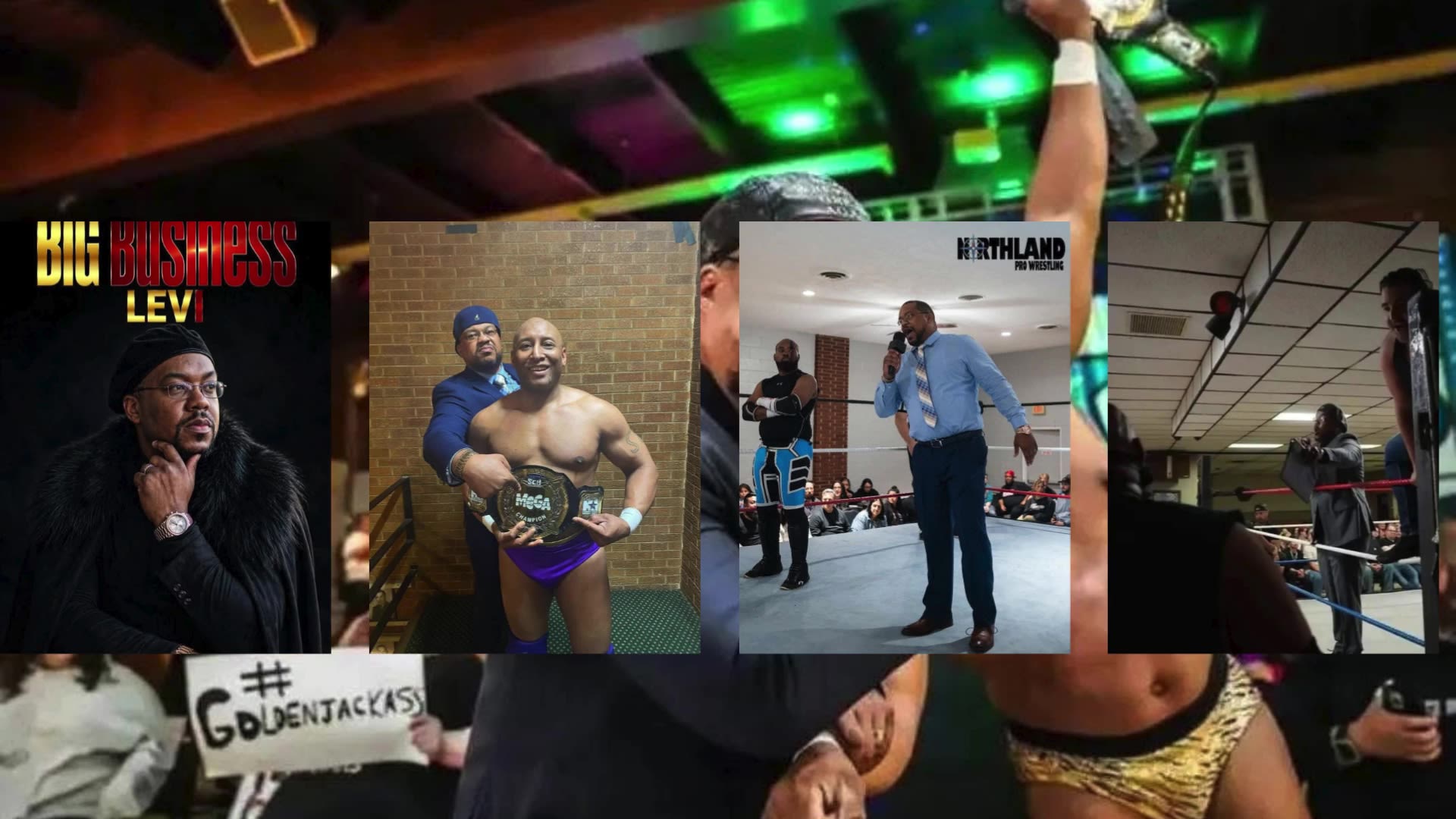
Big Business Levi – Photo Gallery
Big Business Levi – Photo Gallery
I Am Ready Magazine — © 2026
The Day I Stopped Waiting
It wasn't one day at all.
Professional Writer | Catherine Gallacher
Professional Writer | Catherine Gallacher
Catherine Gallacher 💚
Certified Empowerment Result Coach™
Helping people understand the conversations they carry silently beneath pressure, performance and modern life.
Nobody ever tells you you're waiting.
That's what makes it so difficult to recognise.
Waiting rarely looks like standing still.
It looks responsible.
Productive.
Committed.
Busy.
From the outside, life appears to be moving.
You meet your responsibilities.
You keep your promises.
You solve problems.
You become the person everyone else can rely on.
And quietly...
Almost without noticing...
You begin putting parts of yourself on hold.
Not forever.
Just until life calms down.
Just until you've learned a little more.
Just until you feel more confident.
Just until you're certain.
Only later do you realise that "just until" can quietly become years.
I know.
Because I lived there too.
There isn't one day I can point to and say,
"That's when everything changed."
Life rarely works like that.
Change doesn't usually arrive with fanfare.
It arrives disguised as ordinary decisions.
A conversation you almost didn't have.
An opportunity you nearly turned down.
A dream you almost convinced yourself was unrealistic.
Looking back, my life wasn't shaped by one extraordinary leap.
It was shaped by hundreds of ordinary moments when I quietly chose not to stay where I was.
This year I turned sixty.
People often ask whether reaching sixty changes how you see life.
It does.
Not because it makes you feel older.
Because it makes you feel honest.
You stop measuring your life by titles.
Achievements.
Qualifications.
You begin asking different questions.
Did I really live?
Did I become who I was capable of becoming?
Or did I spend too much of my life waiting?
Those questions don't always have comfortable answers.
I've lived with a disability that has shaped me in ways I never expected.
I've spent decades sitting beside people during some of the hardest moments of their lives.
I've driven humanitarian aid into a war zone.
I've built a business.
Written books.
Found my voice on stages.
People often see those moments.
They rarely see what came before them.
The hesitation.
The doubt.
The conversations that happened entirely inside my own head.
"What if I fail?"
"What if I'm not enough?"
"Who am I to think I could do this?"
Those thoughts didn't disappear.
I simply stopped giving them the final vote.
For years I believed confidence came first.
I don't believe that anymore.
Confidence isn't where the journey begins.
It's what quietly grows after you've taken the step you thought you couldn't.
We wait for confidence.
Confidence waits for movement.
That changes everything.
There came a point when I realised something that was difficult to admit.
I wasn't actually afraid of failing.
I was afraid of becoming someone who never tried.
Failure is an event.
Regret becomes a companion.
Failure teaches.
Regret quietly keeps asking,
"What if?"
I knew which one I wanted to carry.
Looking back now, I can see that purpose wasn't something I found.
It was something I kept walking towards.
Every difficult conversation.
Every uncertain decision.
Every time I chose courage over comfort.
The biggest shift came when I realised I could continue helping to build someone else's vision...
or become brave enough to build my own.
That decision eventually became StepUpcmg.
Not because I'd suddenly discovered my purpose.
Because I'd finally stopped ignoring it.
The same decision led me to write.
To speak.
To create.
Not because I felt extraordinary.
Because I finally accepted that ordinary people can do extraordinary things when they stop waiting for permission.
© I Am Ready Magazine
© I Am Ready Magazine
One lesson surprised me more than any other.
Being self-led doesn't mean walking alone.
It means learning whose voices deserve space in your life.
There is extraordinary strength in finding people who don't tell you who to become.
People who remind you who you've been all along.
The right community won't live your life for you.
But they will sometimes help you take the next step when your own confidence hasn't quite caught up.
Never underestimate the people who see something in you before you can see it yourself.
Sometimes they're simply holding a mirror.
Today I no longer ask,
"Am I ready?"
I've discovered there is no magical point where readiness suddenly arrives.
Instead I ask,
"What's the next step?"
Not the whole journey.
Not the whole answer.
Just...
the next honest step.
Because purpose didn't arrive all at once.
It quietly unfolded every time I chose movement over waiting.
Curiosity over certainty.
Purpose over permission.
If you're reading this while waiting...
Waiting to feel confident.
Waiting for certainty.
Waiting until life feels less complicated.
Waiting for someone else to believe in you.
Can I gently offer you something I've only understood after sixty years?
Life has been inviting you forward all along.
Perhaps you don't need another qualification.
Another year.
Another sign.
Perhaps the permission you've been searching for...
has always been yours to give.
One day you'll look back and realise something that only makes sense in hindsight.
The day you stopped waiting wasn't the day everything became easier.
It was the day you finally decided your life was worth fully living.
And perhaps...
that's what I AM READY has meant all along.
Written by Catherine Gallacher, Professional Writer
Photography & Images by Catherine Gallacher
Creative Direction by Indre Ratkele, Editor-in-Chief
Catherine Gallacher 💚
Certified Empowerment Result Coach™
www.realisedcatherinegallacher.net
© I Am Ready Magazine
Navigating Grief: A Passion for Support
Written by Wade Simmons, Contributing Writer
Edited by Reah Hagues, Managing Editor
Creative Direction by Indre Ratkele, Editor-in-Chief
Grief has a way of affecting everyone in very different ways (and yes, I do believe everyone does grieve in their own way). I’ve had the privilege of serving in the death care industry for almost 16 years, and it has truly been my honor. Life is one of those things where we love enjoying the great times and when things are going amazingly, but there are also times when we have experiences that are not always as pleasant.
I’ve been asked often what inspired me to pursue a path in funeral service education. My answer is simple: it is a gift of service I believe God put in my heart from early childhood. In 2005, my grandfather Hubert Gafeney made his transition. He was seventy-seven years old, and I was only thirteen. I remember when it was time to do the approval to make sure he looked presentable for his funeral service. My uncle Tim and I were the only family members that I recall going to see him. My grandfather looked just like himself, and as I look back over it, that was a memory I will always cherish. The same funeral home that prepared my grandfather’s body for his funeral service would actually be the exact same funeral home that I would begin working at as a senior in high school, where I ended up serving for thirteen years to follow.
Being passionate about what you do always makes a difference, and grief isn’t always “one size fits all.” I will never tell a person how they should or shouldn’t feel about death or celebrating the life of a loved one, because it is an individual thing. Grief isn't something that just goes away, but it is a feeling that can be identified sometimes in different phases. Being able to help people tell their loved ones’ stories is important, and often is a memory that lasts a lifetime for the living; it takes patience.
My childhood dream of being a funeral director and embalmer has not come without its challenges. GOD indeed blessed me to get through mortuary college back in 2018, and for me, that was very challenging.
Wade Simmons, Contributing Writer/ © I Am Ready Magazine
Wade Simmons, Contributing Writer/ © I Am Ready Magazine
One of the things we learned was about the different stages of how people grieve. No matter how someone grieves, it takes a certain level of empathy and compassion to comfort others dealing with grief. I think it's perfectly okay to let people express their true feelings through grief, and that showing outward emotions is okay.
Some people grieve by crying, others while laughing, and some may just hold it in and focus on life. Regardless of that, it’s okay to give people the appropriate respect to grieve their loved one in the way that is healthy for them.
Recently, I had the privilege of going with my family to visit my grandfather's grave, and the thought dawned on me that I have heard people ask, “Why visit a grave when the person is no longer there?”
While I can understand that statement, something that visiting his grave reminded me of is that sometimes people may actually find harmony in taking a moment to reflect at their loved ones’ grave. For some reason, being there actually brought back so many memories of my grandfather and even caused me to reflect on how every day God gives us, it is a reminder that each day is a gift, and also that it is okay to reflect on those who lived before us. There are a variety of cultural views and beliefs about death; however, no matter how different these beliefs and cultural perspectives may be, we all experience grief, and we all feel something when a loved one transitions.
© I Am Ready Magazine
SHE DIDN'T JUST SURVIVE — SHE LEARNED TO SHINE
Interview with Shannon Donohoe - Simpson
Written & Interviewed by Indre Ratkele, Editor-in-Chief
Creative Direction by Indre Ratkele, Editor-in-Chief
📸 Photo credits: Rima Dickson — cancer journey photos | Meredith Rose — all other photos
Shannon Donohoe - Simpson/ © I Am Ready Magazine
Shannon Donohoe - Simpson/ © I Am Ready Magazine
How much can I carry, God?
By Indre Ratkele
How much of this weight did You believe these shoulders could hold?
Why this grief?
Why this pain?
Why does every new dawn seem to arrive with another mountain to climb?
My soul cannot breathe.
She screams in silence,
too weary to find a voice,
too gentle to let the world hear the sound of her breaking.
Some wounds leave no scars,
only invisible knives that return, day after day,
until smiling becomes an act of courage rather than joy.
Is this all that remains for me?
A smile I wear so my children remember light,
even when I am surrounded by darkness.
A smile so no one else has to carry my sorrow.
The lesson feels too painful.
I am no longer certain I can bear it.
I no longer know if there are dreams waiting beyond this season.
Sometimes I wonder if You have forgotten me.
And then I become angry.
Perhaps it is easier to believe You turned away
than to understand why You remain silent.
How could You?
I am Your child.
How could You watch me fall,
again and again,
without reaching out?
Yet somewhere beneath the questions,
beneath the anger,
beneath every tear I never let anyone see,
a whisper refuses to disappear.
Perhaps You never promised a life without burdens.
Perhaps You promised that even when I could no longer carry them,
You would carry me.
I prepare for every interview long before I sit down with the person. I research, listen, read and learn about their work, achievements, struggles and journey — not simply to know the facts, but so that when we meet, I can listen beyond them. My purpose is to help you feel the story behind what you read: what a person has survived, carried, achieved, lost and become. I want to listen not only with knowledge, but with my heart.
And something happened with Shannon that I cannot quite explain.
The first time we met, I did not know I would eventually be writing her story. Yet something between us seemed to silently confirm that we were meant to meet, and that there was something deeper there than words could immediately explain. Later, Shannon asked me to write the interview, and I was deeply grateful that she trusted me with it.
By then, I had already spent time listening to her Toolbox Tuesday series and exploring the work she shares publicly. There are hundreds of episodes. Hundreds of Tuesdays. Four years of showing up. And what struck me most was not simply the consistency. It was the honesty.
I saw a woman sometimes beautifully put together, sometimes laughing, sometimes full of light — and sometimes raw and vulnerable, yet still turning on the camera and pressing record. That stayed with me.
Because we live in a world where so much of what we see is carefully edited. We are surrounded by polished photographs, perfect moments and carefully constructed versions of people's lives. Yet behind the beautiful photographs, there can be enormous pain. Shannon does not seem interested in hiding that. She seems determined to say: this is me. All of it.
And perhaps that is where her story truly begins.
Shannon Donohoe Simpson is a truth-teller, storyteller and joy-bringer who believes happiness is created from within. Drawing on her own journey through adversity and transformation, she helps people reconnect with themselves, reclaim their joy and find meaning in life’s hardest seasons. With warmth, humour and honesty, Shannon reminds us that we cannot always choose what life brings, but we can choose how we meet it — and turn our struggles into something meaningful.
As you read these pages, I hope you will feel Shannon’s story as deeply as I did while speaking with her. And perhaps, somewhere within her words, you will find a little of the peace you needed — something you needed to hear, to understand, or simply to remind you that you are not alone, no matter what you may be going through.
When I ask Shannon about childhood, there is an immediate hesitation. Not because she does not have memories, but because she knows how powerful truth can be.
“I was a little bit triggered,” she tells me. “Because I'm still like, oh, do I say the truth? Because I don't want to hurt people's feelings.”
She describes growing up in what she calls a very typical 1970s home. Her mother stayed home and cared for the children. Her father worked hard and was, in her words, a workaholic. There were beautiful memories — space, family gatherings and big Christmas parties — but there was also another message running underneath everything: “You were to be seen and not heard.”
Girls had their roles. Boys had theirs. Children did what they were told. And for Shannon, that lesson would become significant much later in life.
Because when something happened to her as a child that should never happen to any child, she did not feel able to speak about it. She had been taught, in effect, to be a good girl: to be quiet, to fit the role and to keep things inside.
Shannon tells me she was sexually abused by her grandfather when she was young. The experience was buried for years beneath shame, fear and silence.
There is something devastating about the simplicity of the sentence: “I couldn't speak my truth.” And yet those words become one of the central threads of Shannon's entire life, because so much of her later journey would be about finding that voice.
I want to pause here and acknowledge something deeply personal.
I have enormous respect for Shannon for having the courage to speak publicly about an experience that so many people carry in silence. The more people I interview, the more stories of childhood sexual abuse I hear, and the more deeply I understand how profoundly these experiences can affect a person's life.
We need to become better at listening. Better at believing. Better at supporting one another. And, above all, better at protecting children — while ensuring that when harm has occurred, those who have experienced it are not left to carry it alone.
Shannon's willingness to speak is, in itself, an act of breaking the silence. By sharing what happened to her, she brings attention to the long shadow these experiences can cast, while reminding others that their stories deserve to be heard.
For me, that is one of the most powerful parts of her story: she found the voice she once believed she could not use, and now she is using it to help others find theirs.
At 34, Shannon was diagnosed with cancer. Her children were only one year old. At the same time, her family was facing enormous challenges. Her husband had broken hands. One of her twins was being assessed because he was not developing as expected. Eventually, her son Nolan was diagnosed with autism.
It is difficult to imagine all of those realities occupying the same room: cancer, two tiny children, a husband with two broken hands, a child whose development was raising serious concerns, and a mother trying to understand how she was going to keep moving.
I ask Shannon what she believed during that time. Did she have faith? Did she believe there was light at the end?
Her answer is surprisingly simple: “I just knew I wanted to live.”
Her children were only one. That was enough.
She received financial support through critical illness insurance, and the first thing she did was hire a coach — a woman she had previously known through her therapeutic recreation studies. That coach supported her throughout a year of surgeries, chemotherapy and treatment. Shannon describes the support almost physically: every week, her coach would pick her back up, “put me back on the shelf,” only for Shannon to fall again and be picked up again.
But there was something else Shannon did that became one of the most important lessons of her journey. She asked for help.
She used a community support platform where people could help with rides to chemotherapy, meals and childcare. “I've just never been afraid to ask for help,” she says.
And then she tells me something that has stayed with me. People are often willing to help others, but we are strangely afraid to ask to be helped. “People want to help,” she says. “People do.”
Her story is a reminder that strength does not always look like carrying everything alone. Sometimes strength is saying: I can't do this by myself.
THE CHILDREN WHO GAVE HER A REASON TO KEEP GOING
There is one image from that period that is almost impossible to forget: Shannon sitting at her kitchen table. She had no hair. She was going through chemotherapy. Her son was being assessed, her husband had two broken hands, and her twins were only one.
Then a woman named Jennifer, who had been following her children for a year, sat across from her and began to cry. She told Shannon she was pretty sure Nolan had autism.
Shannon remembers thinking: How do I get through this?
There was no perfect answer. There was simply resilience, determination and the instinct to keep going. “I just wanted to be there for my kids and alive for my kids,” she tells me.
And perhaps this is where I admire Shannon most — in the extraordinary devotion she gave to her children, even while facing cancer treatment, fear, exhaustion and an uncertain future. She wanted to live. She wanted to be the mother her children would remember with pride. She wanted to know that, whatever happened, she had done everything she could to keep going, keep trying and keep supporting them.
Her son's journey became one of the most moving parts of our conversation. For years, Shannon devoted herself to supporting him through his autism journey, with therapists coming into their home five days a week. Despite being told that he might not progress or accomplish much in life, he graduated from school two years early, at sixteen, and is now in college, working towards becoming an accountant, investing his money, and building a future of his own.
When Shannon speaks about him, the pride in her voice is unmistakable. She describes him as kind, loving and beautiful — a young man who has exceeded the expectations others once placed upon him.
“When you pour every resource and every ounce of love that you have into your kids,” she tells me, “amazing things can unfold.”
But her daughter, Abigail, carries another beautiful part of Shannon's story. Now grown into the confident, radiant and intelligent young woman Shannon proudly describes, Abigail edits her mother's Toolbox Tuesday videos. She is not simply watching her mother from the sidelines; she is participating in the woman her mother is becoming.
Her son watches too.
They are both witnessing Shannon step into a new chapter — not because she is formally teaching them how to be brave, but because they can see her living it.
For years, motherhood was Shannon's centre. She homeschooled her children, stayed at home and gave them everything she had. She does not regret that choice. But she is also honest about what it cost her.
“Staying at home with my kids was hard on me because I didn't get to shine. I didn't get to show the world who I was.”
Now, she says, “It's time for me to shine.”
And perhaps what makes that sentence even more beautiful is knowing that her children are there to see it.
They have watched their mother survive. Now they are watching her thrive.
FROM SURVIVAL TO SURRENDER
There is a spiritual dimension to Shannon's story, but it does not seem to be about having all the answers. For her, spirituality is about trusting that something larger than herself is guiding her.
She tells me she used to live with enormous fear. She wanted to control everything. She was terrified of the unknown. Eventually, she realised how exhausting that was.
“If I can just surrender and trust that there's something bigger than myself,” she says, “it's almost like you can take a deep breath and let go.”
The important words are let go. Not give up. Not stop caring. Let go of the desperate need to control what happens next.
Shannon says she spent years looking over her shoulder, regretting things and wishing she had done them differently. Now she sees her life differently.
“I used to believe everything was happening to me. And now I know that everything happens for us.”
That is not a sentence I hear as an attempt to make painful experiences sound beautiful. Shannon does not romanticise what happened to her. She has lived through things no person should have to live through.
But she has reached a place where she can look backwards without allowing the past to dictate the rest of her life. She tells me she would not be who she is today without the experiences she has survived.
She is not celebrating the darkness. She is celebrating the woman who found her way through it.
THE MOMENT THE PAST RETURNED
When Shannon's first marriage was ending, something buried inside her suddenly came to the surface.
She describes lying in bed during a massive panic attack, unable to breathe. Her first husband was standing in front of her, and then memories of her grandfather came flooding back into her body. For years, they had been suppressed. Suddenly, they were there.
She asked her husband to call her mother and take her to hospital.
That moment became an opening. The past was no longer silent. She began to understand connections between the experiences she had endured, the emotions she had suppressed and the person she had become.
Later, at a retreat through the Callanish Society, Shannon says she experienced another profound realisation: she came to understand her cancer and her suppressed emotional trauma as deeply connected. This is Shannon's personal understanding of her experience and healing journey — the meaning she came to draw from what had happened to her.
And in that moment, she broke down.
“It all makes sense.”
That sentence feels less like an explanation and more like the moment when years of disconnected pieces finally began to form a picture.
Shannon speaks openly about what followed the abuse. She describes not knowing how to process what had happened and, in her own experience, becoming sexually promiscuous, struggling to say no and carrying increasing shame.
Eventually, she found herself in a six-month women's survivors programme with nine other women who had experienced sexual abuse. One woman's story suddenly made Shannon recognise herself: “I do the exact same thing.”
That recognition became a turning point. She began to see how sexual abuse can distort a person's relationship with their own body, boundaries and sense of worth.
And she began to understand something she now speaks about publicly: how many women continue functioning on the outside while something inside them is screaming.
“We suppress it all because we've got to just look good and move through our day,” she tells me. “And get through it all until something physical shows up and stops us in our tracks.”
For Shannon, cancer became that interruption. “Cancer forced me to look within.”
She describes being so physically unwell that she could not escape herself. There was nowhere to run. Nowhere to hide. “Just me.”
And that became part of the healing. “Having to really look within.”
This is perhaps where Shannon's story becomes most extraordinary. Because when I listen to her, I do not hear someone who wants to be defined by what happened to her. I hear someone who has learned to feel more deeply because she has known what it means to feel almost nothing at all.
She tells me, “We actually can't experience the full capacity of joy unless we've been through the depths of the depths.” And then: “I have never experienced joy in my life like I do today.”
I understand what she means.
There is a strange truth about darkness. When you have known it, light becomes different. You notice it. You appreciate it. You do not take it for granted.
I felt this very strongly while listening to Shannon. I felt her pain, but I also felt her gratitude. I watched her speak with compassion and, at times, a sparkle in her eyes that told me something words could never fully explain.
Her eyes did not look like the eyes of someone who wanted to remain a victim. They looked like the eyes of a woman who had lived. And lived deeply.
“I've been through the journey,” she tells me, and that experience now allows her to connect deeply with people who are suffering. “I'm that beacon that can show them that they can do it too.”
Healing did not mean that life suddenly became easy. In fact, another devastating chapter came later.
Shannon's marriage ended after 18 years. By then, she had changed profoundly. She had been consciously reducing her drinking, knowing that she could not continue with the same routine because it was no longer serving her. It took time, and she does not pretend that it was easy. She was putting in the effort to reduce her drinking step by step, gradually making changes to her daily routine.
Her husband did not want to make the same journey. Shannon did not want the marriage to end. And yet, somewhere inside, she knew it was not working.
She describes those days as some of the darkest of her life. “I've never experienced a broken heart like that.” Then comes one of the most unexpected things she says during the entire interview: “I would do my chemotherapy again over going through that heartbreak.”
Eventually, at a dance in the Comox Valley, she lay on the floor crying. The dance was called “Heroes.” She went to the DJ and said, “Marty is my hero.” Marty was her former husband. He had been brave enough to end the marriage when she had not been brave enough to do it herself.
Two and a half years later, Shannon can look back and say that the divorce has been one of the hardest and most transformative experiences of her life. She is grateful. She has grown. She has changed. And she has learned to feel grief without trying to rush it away.
“There are new things that come up all the time that you're like, oh, I didn't grieve that yet. I didn't grieve that loss yet.”
So she gives herself permission to feel it, to grieve it, and somehow to hold gratitude alongside the grief.
LEARNING TO LOVE THE WOMAN IN THE MIRROR
I ask Shannon about something many women who have experienced breast cancer understand intimately: what happens to your relationship with your own body?
Losing her breasts affected her deeply. After her divorce, the thought of returning to the dating world brought another layer of vulnerability. How do you step back into intimacy when a part of your body that society has taught you to associate with femininity is no longer there?
After her breast cancer journey, Shannon faced another difficult chapter in her relationship with her body. She experienced what she describes as breast implant illness, adding another layer to an already profound physical and emotional journey. For her, it became part of a deeper understanding of her body, her health and the importance of listening to what her body was telling her.
Rebuilding that relationship with herself has been a process.
She speaks about surrounding herself with supportive people, attending women's circles and retreats, nourishing and moving her body, spending time outdoors and developing daily rituals. She journals, reads, works on her mindset and sets intentions. And, importantly, she has learned to practise compassion towards herself.
Shannon proudly shares that four months ago, she stopped drinking completely. Today, she says she feels an incredible sense of joy and peace in her day-to-day life without alcohol.
The transformation did not come through one enormous moment. It was built through small decisions repeated over time: a morning routine, a walk, a book, a conversation, a circle of women, asking for help, learning to feel, learning to stop running and learning to stay.
“It's our mindset,” she tells me. “So if we can get up and set our own days with intention.”
She describes how changing the lens through which she looks at the world can change the way she shows up in it.
“It shifts everything. It really does.”
“I’m that beacon that can show them that they can do it too.”
Shannon Donohoe - Simpson
TOOLBOX TUESDAY: THE COURAGE TO KEEP SHOWING UP
Then there is Toolbox Tuesday. Hundreds of episodes. Every Tuesday. For four years.
It began because Shannon knew she was meant to share her heart and speak her truth. Yet there have been many days when she did not want to turn on the camera. Days when she was exhausted, hurting or simply did not feel like showing up.
And still, she did.
What makes Toolbox Tuesday so powerful is that Shannon never intended it to be a collection of perfect motivational messages. It became a place where the whole spectrum of being human could exist.
Some days she is happy. Some days she is sad. Some days she is exhausted. Some days she is angry. And all of it is welcome.
“This is me. This is raw me. All of it.”
In a world increasingly filled with carefully edited lives — and now, in the age of artificial intelligence, where even knowing what is real can feel complicated — Shannon believes people are starving for truth.
Perhaps that is why she continues to show up. Because people do not always need someone telling them that everything is wonderful. Sometimes they need someone brave enough to say: this is hard.
And then: I am still here.
But Shannon's message goes beyond simply sharing her own story. She wants people who are struggling to know that they do not have to find their way through it alone.
She speaks openly about the importance of asking for help — something she describes as both deeply vulnerable and incredibly brave. There are people, communities, coaches, circles and resources available, she says, but we have to be willing to reach out.
Having experienced her own moments of feeling defeated and unable to see the light, Shannon understands what it means to sit in that darkness. And perhaps that is why she can now become a beacon for others.
She tells me that when people are in those moments when they feel so low and cannot see a way forward, she wants to show them that they can get through it.
There is something deeply moving about that transformation.
The woman who once spent so much of her life suppressing what she felt is now using her voice to help others feel less alone.
The woman who once tried to carry everything herself now encourages others to reach for support.
And the woman who knows what darkness feels like can stand in it with someone else and say: I know. I've been there. You can get through this.
Change does not always happen in one dramatic moment. Sometimes it is simply showing up tomorrow, and then the next day. Asking for help. Speaking your truth. Allowing yourself to feel. Choosing, little by little, not to hide.
“Brave enough to be our true authentic selves.”
Perhaps that is the heart of Shannon's message.
You do not have to do it alone. You simply have to be brave enough to take the next step.
THE WOMAN I SAW
While listening to Shannon speak, I kept thinking about the photographs she had chosen to share.
Some were beautiful in the conventional sense. Others revealed something much deeper. They made me pause and ask myself: Is this safe to share with the world?
Not because Shannon had asked me to hide them. She had trusted me. I wondered whether people would see only the photograph, or the woman behind it — the pain, courage, vulnerability and healing.
That stayed with me throughout the interview, because this was never simply about publishing Shannon’s story. It was about witnessing it. I wanted her to recognize not only everything she had survived, but everything she had become.
Her story is not about a perfect life. It is about a woman who has walked through cancer, sexual abuse, motherhood under extraordinary pressure, her son’s autism journey, childhood wounds, divorce, loss and years of suppressing her emotions.
And yet, there is light — the kind that becomes visible when you have known darkness.
I saw both in Shannon. I saw the woman who has cried, been afraid and been broken open by life, but also the woman who laughs, loves, creates, speaks her truth and continues to show up, allowing people to see her as she truly is.
Perhaps what moved me most is that Shannon has learned we do not have to hide difficult moments. We can feel them, speak about them, ask for help and allow others to walk beside us.
Her experiences have also given her a profound ability to recognize suffering in others. When she speaks about people who feel defeated and cannot see a way forward, she tells me:
“I’m that beacon that can show them that they can do it too.”
I think that is one of the clearest descriptions of the woman I saw.
Not someone standing above others and telling them how to live, but someone who has walked through the darkness herself and can quietly say:
I know. I’ve been there. You can get through this.
Before our conversation, I listened, researched and tried to understand the facts. But when we finally spoke, I realized the facts were only the beginning.
The real story was the woman behind them.
Shannon, I saw your pain, but even more than that, I saw your strength, compassion, love for your children and the courage it takes to continue showing up. I saw a woman who no longer wants to hide — who has discovered that vulnerability is not weakness, but truth.
Perhaps that is why our conversation felt like something more than an interview. It felt like a connection between two human beings who understand that darkness exists, but who have also learned how beautiful the light can be when you find your way back to it.
I am deeply grateful for the trust you placed in me — to tell your story, share your photographs and hold space for the vulnerable parts of your life.
Thank you for reminding us that we do not have to be fearless. Sometimes, we simply need to be brave enough to take the next step.
Little by little.
Day by day.
Together.
And after everything you have carried, survived and learned, perhaps there is only one thing left to say:
Shannon — now it is your time to shine.
Connect with Shannon
Discover more about Shannon Donohoe - Simpson, her work, insights and latest updates through her website and social media channels.
Website
shannondonohoesimpson.com
Facebook
Shannon Donohoe Simpson
LinkedIn
Shannon Donohoe Simpson
YouTube
Shannon Donohoe Simpson
Instagram
Shannon Donohoe Simpson
Brave Enough Conference
For more information about the Brave Enough Conference, including event details, tickets and registration, visit the official Eventbrite event page:
Brave Enough Conference — Tickets & Information
I Am Ready Magazine — © 2026
A Found Passion for Service
Written by Wade Simmons, Contributing Writer
Edited by Reah Hagues, Managing Editor
Creative Direction by Indre Ratkele, Editor-in-Chief
The world is enormous and so full of inspirational people. One of those individuals happens to be Detrina McCoy, a talented funeral service worker from Chicago who has been on her journey to ensure that she gives the same level of care to families, much like the funeral home gave her family when her father transitioned.
“At the age of ten, I wanted to be a funeral director when my father passed,” said Detrina. “When I was a child, I thought they just took the body and left it somewhere, not realizing all the care that goes into being a funeral director,” she added.
Detrina has been serving at a local funeral home in the Chicagoland area and is currently a funeral director and embalming intern. This type of career path definitely requires patience. “I love the funeral directing side the most so far,” she mentioned. “During their loved one’s service, I like being present and sitting in on arrangements so I am able to be there with the families,” she added.
Handling grief is definitely something that takes a person who genuinely realizes that they have to allow others the appropriate space to express themselves in a way that is healthy for them, and that looks different for each individual.
Detrina experienced her own father’s transition, and that experience inspired her to pursue her own dream. She is a graduate of the SIU Mortuary Science program and is a powerful example that dreams can come true; you just have to be willing to work toward them.
Her words of wisdom are, “You are not a product of your environment, and anything worth having doesn't come easy.”
I Am Ready Magazine — © 2026


Detrina McCoy/ © I Am Ready Magazine
Detrina McCoy/ © I Am Ready Magazine

Detrina McCoy/ © I Am Ready Magazine
Detrina McCoy/ © I Am Ready Magazine


Detrina McCoy/ © I Am Ready Magazine
Detrina McCoy/ © I Am Ready Magazine

Detrina McCoy/ © I Am Ready Magazine
Detrina McCoy/ © I Am Ready Magazine
“I COULDN’T CHANGE HER PAST. BUT I COULD HONOUR HER STORY.”
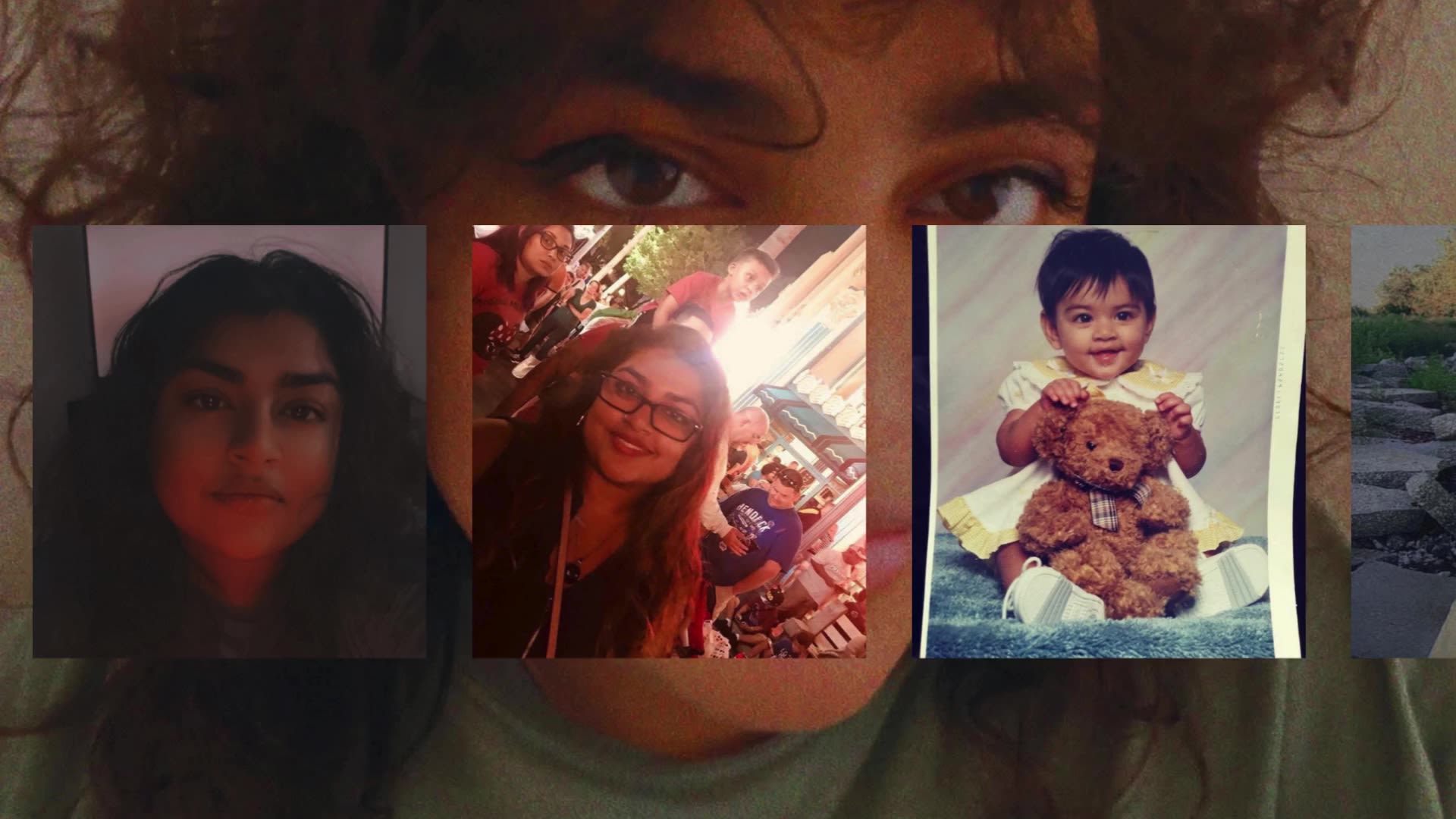
Tasiyah Hodge
From Heartbreak to Healing
A conversation with Tasiyah Hodge about childhood trauma, breaking cycles, healing, forgiveness and choosing to live fully
Written & Interviewed by Indre Ratkele, Editor-in-Chief
Creative Direction by Indre Ratkele, Editor-in-Chief, I Am Ready Magazine
Tasiyah Hodge/ Interview Feature/ © I Am Ready Magazine
Tasiyah Hodge/ Interview Feature/ © I Am Ready Magazine
A Story I Feel Honoured to Tell
There are some interviews you prepare for professionally, and then there are interviews you prepare for emotionally. This was one of those interviews for me.
It is incredibly meaningful, both personally and professionally, to have the opportunity to interview Tasiyah Hodge. I first met her mother, Laziena Hodge, around six months ago, when I interviewed her for a previous edition of the magazine. What began as a professional interview quickly developed into a much deeper personal and professional connection. That relationship eventually brought me to this moment: sitting with her beautiful daughter and hearing the story of the same family from another perspective.
There is something particularly powerful about being trusted with a story that involves an entire family. Behind every difficult experience are people who have lived through it, carried it, and tried to make sense of it in their own way. When Laziena trusted me enough to speak openly about some of the most painful experiences surrounding her family, I understood that interviewing Tasiyah would carry a significant responsibility.
At the same time, I felt that this interview could become something much bigger than a conversation between two people. I believe that families can learn from one another, particularly when difficult experiences are brought into the open with honesty, compassion and care. Stories like Tasiyah’s may speak not only to adults, but also to parents, children and families at different stages of life. Sometimes hearing another family speak openly about pain can help someone else recognize that they are not alone, that their experiences matter, and that difficult chapters do not necessarily have to define the rest of their lives.
I already knew some of what had happened. I knew there had been betrayal, abuse, childhood pain and experiences that no child should ever have to endure. Because of what I had previously learned through my conversation with Laziena, I found myself asking a deeply personal question before I ever sat down with Tasiyah: How could I best honor and support the little girl within this story in the way she deserved?
I spent the week before meeting Tasiyah thinking about the interview and the responsibility that came with it. I then spent weeks writing, returning to our conversation, reflecting on what I had heard and considering every word carefully. I wanted the finished story to be truthful and respectful, while remaining as close as possible to Tasiyah’s own experience and to what I personally witnessed sitting across from her.
So, welcome to this journey.
This is not an easy interview. Some of the experiences Tasiyah shares are deeply painful, and some may be difficult to read. But this is also a story about a young woman who has spent years trying to understand what happened to her, what she carried forward from it, and what she could ultimately choose to do with her life.
As you read, I invite you to meet not only the difficult parts of Tasiyah’s story, but also the woman she has become.
Tasiyah Hodge/ Interview Feature/ © I Am Ready Magazine
Tasiyah Hodge/ Interview Feature/ © I Am Ready Magazine
Meeting Tasiyah
Tasiyah Hodge is 25 years old and a very beautiful young woman. She is a first-generation American whose family comes from Guyana in South America and has Indian-Guyanese roots. She speaks openly about her family history, even about the parts she does not know for certain.
But as I sat listening to her, what stayed with me was not where her family came from. It was how much this young woman had already carried in her life.
“I had a very rough upbringing,” Tasiyah told me.
Her mother was only 19 when she had her, and Tasiyah has spent a great deal of time trying to understand the generations before her and how pain can be carried from one generation to another. Her grandmother had experienced an abusive first marriage, and Tasiyah began to recognise how unprocessed pain can shape the people who come after us.
Her biological parents divorced when she was around four years old. She was born in Florida and later moved to Ohio with her mother and stepfather. She has no relationship with her biological father today, but some of her earliest memories of him remain incredibly vivid.
She remembers being only two or three years old, being held by him while hearing screaming and feeling her little body shake. She later understood that her father had been abusive towards her mother.
And then there were the experiences that are almost impossible to hear about as a mother and as a woman.
Tasiyah shared that she experienced sexual abuse when she was around three or four years old. She also described another deeply painful sexual experience involving a girl her own age when she was around ten, something she did not tell her mother about until she was 16.
I found this part of our conversation particularly difficult to sit with. I was not only listening as an Editor-in-Chief. I was listening as a woman and as a mother, and I could not help thinking about the little girl Tasiyah once was.
A child should be worrying about school, friends, playing, laughing and discovering who they are. They should not be trying to understand fear, abuse or the behaviour of adults around them.
As I listened to Tasiyah, I kept thinking about that little girl and wondering how different her childhood might have been if she had been given the safety, protection and understanding every child deserves.
But I was also thinking about the woman who is sitting in front of me today, and about her mother, Laziena, whom I have come to know so well. I have seen how deeply Laziena loves her children, how much she wants to protect them and how openly both mother and daughter now speak about their experiences and support other families.
There is something deeply beautiful about witnessing what they have done with the pain they have lived through. They have not allowed it to be the end of their story. In different ways, both women have turned their experiences into a purpose: to speak, to support, to create understanding and, hopefully, to help other children, mothers and families feel less alone.
I cannot know how many people their stories will reach or how many lives they may touch, but I believe that when two women are willing to speak openly about what happened to them, something changes. Perhaps somewhere, another mother will listen. Perhaps another child will find the courage to speak. Perhaps another family will realize that they do not have to suffer in silence.
That is one of the reasons this interview felt so important to me. Behind every story of childhood trauma is a child who once needed someone to notice, to listen and to say, you are safe, you are believed, and none of this is your fault.
And sitting across from Tasiyah now, I could see that little girl was still somewhere within the woman in front of me.
Becoming the Protector
And yet, when Tasiyah talked about her childhood, she was not sitting in front of me as the frightened little girl I had imagined from the story. I was sitting opposite a 25-year-old woman who, in my experience, had developed an extraordinary ability to speak about difficult experiences with calmness, honesty and reflection.
Tasiyah was academically successful and describes herself as one of the smartest students in her class. She graduated eighth in her class, which she recalls being made up of roughly 300 to 400 students.
She was also the oldest of three children. Her younger brother and sister are twins, nine years younger than she is. For the first several years of her life, she was effectively an only child, but when the twins were born, her role changed dramatically.
She became what she describes as a “second mom.”
As I listened to her, I found myself thinking about how beautiful it can be for an older sister or brother to learn to care for younger siblings. There is something very special about children learning to love, support and protect one another. In many families, being the older child naturally comes with a sense of responsibility, and I do not see that responsibility as something negative. In fact, I think it can teach children some of the most beautiful qualities we carry into adulthood.
But there is also a line.
Children can help one another, but they should never have to carry responsibilities that belong to the adults around them. Sometimes, without anyone intending for it to happen, that line can become blurred.
For Tasiyah, it was more than simply being a protective older sister. At an age when she should have been allowed to simply grow up alongside her younger siblings, she felt responsible for protecting them from some of the things she herself had experienced.
Looking back now, she can see how much responsibility she had taken on and how deeply it shaped the way she understood herself.
She became the person who comforted others. The person who listened. The person who tried to keep everyone together.
In many ways, she was learning to become the safe person she herself had needed.
When Survival Became Anger
By around 16, the emotional weight Tasiyah had been carrying began to turn into anger. She describes herself as angry, avoidant and increasingly isolated, moving in and out of online relationships and struggling to understand what to do with everything she was feeling.
Around 17, she says her stepfather pushed her into a sexual relationship that lasted approximately a year and a half. The relationship became deeply complicated. Tasiyah describes herself as effectively becoming his emotional wife, carrying his emotional needs while also being pulled into adult family problems. She was asked to read her mother’s messages and gather evidence relating to her mother’s alleged infidelity.
Once again, Tasiyah became the person carrying everyone else’s emotional world.
This part of her story was particularly difficult for me to hear because, in a different way, I recognized something in it. I grew up in a family with a stepfather and a complicated environment, and I remember what it felt like to believe that I had to fight for my place within my own family. I know that feeling of disappointment, confusion and wondering where you belong.
Of course, our experiences are not the same, and I would never want to compare them. But listening to Tasiyah touched something very personal in me. I could feel the pain of that little girl who had been asked to carry things that were never hers to carry. I found myself wanting to protect her.
And yet, sitting beside the 25-year-old woman she has become, I realized something beautiful: she has learned to protect herself.
Eventually, Tasiyah moved out just before turning 19, while still in her final year of high school. She initially moved in with a toxic boyfriend, a relationship that would last around seven years. She worked, sometimes holding as many as three jobs, and eventually had her own house, but emotionally she was still struggling. She describes her boyfriend as almost a carbon copy of her father, with the same kind of belittling behavior and patterns she had tried to escape.
People told her she was a strong woman. They told her the past was the past and that she needed to move on. But the past does not simply disappear because other people are ready for you to leave it behind.
During her senior year, her boyfriend began noticing that Tasiyah would suddenly end phone calls whenever her stepfather entered the room. He kept asking questions, and eventually she broke down during her first period at school and told him everything.
The school became involved, as did the police. That same day, her boyfriend picked her up, helped her collect some essential belongings and helped her leave home. There was also a confrontation with her stepfather in the school parking lot, where Tasiyah told him that if he did not tell her mother what had happened, she would.
According to Tasiyah, it took approximately a week before her stepfather finally told her mother.
Then her mother called her crying.
She told Tasiyah that she needed to hear the truth from her daughter because she would rather believe her than him.
That moment stayed with me. As a mother, I felt incredibly moved by Laziena’s decision to stand beside and support her daughter at such a devastating moment. I can only imagine what it must have felt like to hear something so painful about your own family, but in that moment, she chose to support her daughter.
And I think that matters enormously.
For so long, Tasiyah had been trying to protect everyone else. Now, finally, someone was protecting her.
Looking at her today, I could see how much that little girl had survived. But I could also see the woman she had become — a woman who had found her voice, who was learning to protect herself, and who was beginning to understand that her past could be part of her story without becoming the whole of it.
Finding Her Way Back
When the truth about her stepfather finally came out, Tasiyah’s mother supported her and helped the family enter therapy. For mother and daughter, it became the beginning of finding their way back to each other.
There had been another difficult moment several years earlier, when Tasiyah was 16 and told her mother about the sexual experience she had had at ten. Her mother stopped speaking to her for around a month. Later, she explained that she had been devastated and simply did not know how to support her daughter after the thing she had feared most had happened.
It did not erase the hurt, but it helped Tasiyah understand her mother differently. When her mother later stood beside her through the disclosure about her stepfather, something between them began to soften.
Therapy itself was complicated. Tasiyah had already seen around 18 therapists within a year, as her stepfather repeatedly changed them. She says he also wanted to listen to her sessions and read her journals, leaving her without the privacy and safety she needed. Therapy became associated with being watched rather than being heard.
The real turning point came around 2021, when her mother found a personal-development and experiential course and spent almost two years encouraging Tasiyah to attend. Eventually, she went with her sister.
For the first time, Tasiyah began looking not only at what had happened to her, but at the meaning she had given those experiences and the patterns she was carrying into adulthood. She realized that, in some ways, she had recreated relationships that reflected her childhood.
“Holy shit, I recreated my father’s relationship,” she remembers thinking.
It was a painful realization, but also a powerful one. She began to understand that she was not broken. She had been using the tools she had learned as a child to try to protect herself as an adult.
One sentence she shared with me stayed with me long after our conversation:
“I am not the cause for the childhood that I endured. I am the byproduct of unprocessed trauma.”
For Tasiyah, healing has meant learning to feel grief, sadness, anger and fear without allowing those emotions to control her life. She has learned to listen differently, to stay present in difficult conversations and to build relationships with her family that are different from the patterns she grew up with.
As she spoke about this, I noticed a calmness in her that was difficult to reconcile with some of the experiences she was describing.
I remember sitting across from her and thinking about the difference between the little girl contained within those stories and the young woman sitting in front of me.
She had not erased her past. She had learned to understand it — and, perhaps most importantly, to stop letting it decide who she would become.
Returning to the Places That Shaped Her
Recently, Tasiyah undertook another deeply personal exercise. She began working through what she describes as “becoming my dad” — recognizing the anger that surfaced when, as the oldest daughter, she found herself carrying responsibilities she associated with the father she did not have, even simple things like changing tyres.
There was a voice inside her saying, “If you were here, I wouldn’t have to do this. If I actually had a dad, I wouldn’t have to do this.”
Her uncle, who was only 16 when Tasiyah was born and has remained close to her throughout her life, suggested that she return to places connected to her childhood and create different memories there.
So she did.
She drove through the places where she had grown up, thinking about the different versions of herself who had lived there — the 13-year-old who was hurting, the 15-year-old who had become quiet and the 17-year-old who carried so much anger.
Eventually, she found herself sitting at a pier beside a beautiful lake near where she had grown up. It was sunset.
She began writing a letter, but after three lines, she tore it up. She realized she had done versions of this work many times before. Perhaps another letter was not what she needed.
What she needed was simply to sit with the 17-year-old version of herself and allow that girl to exist.
She did not cry. She did not become overwhelmed with anger. She did not dissociate. Instead, something quieter happened. She realized she was no longer the person she had been seven years ago, or even the person she had been yesterday.
For me, this was one of the most profound parts of our conversation. I have spoken with many people who have lived through painful experiences, and I have come to understand how easy it can be to believe that moving forward means forgetting.
Tasiyah made me think about it differently. Perhaps moving forward can also mean becoming willing to listen to the parts of ourselves that have been asking to be heard.
She speaks about her inner child and inner teenager, and about learning to give those younger versions of herself the love, compassion and understanding they needed.
She is not pretending that what happened did not happen. She is learning to acknowledge it without allowing those experiences to define who she is today.
From Who She Was to Who She Is Becoming
As I listened to Tasiyah talk about the life she is building now, I began to see another part of her story: the little girl who once needed protection has grown into a young woman whose work is increasingly centered around caring for others.
Shortly before our interview, Tasiyah completed her esthetics training and became a licensed esthetician. She is also studying massage therapy and expects to complete the program around December or January, depending on her required hours.
Her vision goes far beyond having a treatment room. She wants to bring aesthetics, massage and other forms of wellbeing together, creating spaces where people can begin to understand themselves differently.
Tasiyah believes the body can sometimes reflect what we carry emotionally. She speaks about things such as skin, scars, eating habits, exercise and even the way we move as possible expressions of what someone has experienced. Her goal is to help people explore what “survival mode” means for them personally and, ultimately, to create spaces where people can feel safe enough to begin that work.
Alongside her studies, Tasiyah has worked as a CNA since she was 19, spending weekends caring for disabled clients and someone living with dementia. She speaks about this work with genuine warmth. She told me about sitting with an elderly woman over breakfast, simply talking about life and listening to her experiences.
For Tasiyah, care giving is more than employment. It is connection.
She has learned to meet people where they are, to offer patience and presence, and to understand that sometimes care begins simply by making another person feel seen.
As she spoke, I could not help noticing the connection to the little girl we had been talking about throughout our conversation. The child who once needed someone to protect her has grown into a woman who wants to create safety and care for others.
Her long-term dream is to build her own studio after completing massage school and, eventually, a wellness retreat where people can access different forms of support and well-being in one place. She also hopes to continue her education in areas connected to dermatology and psychology.
When I asked whether she believed her childhood experiences had influenced the path she is on today, her answer was immediate.
“One hundred per cent.”
As a child, Tasiyah imagined becoming a veterinarian or pediatrician. By the time she was 18, however, university was financially difficult, and after leaving home she was responsible for supporting herself.
Her path changed, but her desire to care for people did not.
Instead of following the future she had imagined as a child, she began building something through practical work, education and experience — and, perhaps without realizing it at first, turning some of the pain she had carried into a desire to help other people feel cared for, understood and safe.
Watching her now, I found myself thinking about the distance between the little girl she once was and the woman she is becoming. Her story has not simply been about surviving what happened to her. It has also been about deciding what she wants to do with the life that came afterwards.
I listened and found myself thinking: this girl has all my heart and soul. I am so proud of the woman she has become and of the love, capacity and compassion she has for other people.
Tasiyah Hodge / Interview Feature / © I Am Ready Magazine
Tasiyah Hodge / Interview Feature / © I Am Ready Magazine
Breaking the Cycles and Finding the Courage to Be Seen
The idea of breaking cycles is also at the heart of the podcast Tasiyah created with her mother, Breaking the Cycles.
The podcast provides a space for people to talk openly about the cycles they have experienced and, in some cases, broken. The conversations touch on difficult subjects including sexual abuse, financial abuse and domestic violence.
But I also know that the podcast became something deeply meaningful for Tasiyah and Laziena themselves. It gave mother and daughter a safe space to open up, speak about their experiences and have conversations that may not always have been easy to have elsewhere. In many ways, it became another part of the journey of rebuilding their relationship.
The purpose is not to sensationalize people’s experiences, but to create a space where people can be witnessed, heard, loved and cared for.
Laziena suggested the podcast after Tasiyah turned 19 and after some of the abuse had come to light. Her message was simple: people also need to hear your story.
I spoke with Laziena about this when I interviewed her, and I already understood how important the idea of the podcast was to both of them. Sitting with Tasiyah and hearing her speak about it made me even more aware of what they had created together.
I am incredibly proud of both mother and daughter for finding the strength to turn something so painful into a space that supports not only each other, but other people too.
At first, Tasiyah was not ready. The trauma was still too fresh. But over time, she became increasingly comfortable with being vulnerable in public and sharing more of her story.
That journey became particularly significant when she decided to participate in this interview.
Tasiyah told me that being in front of a camera has not always been easy for her. She has struggled with body positivity and with being seen, particularly when the podcast moved from audio into video.
Then she read the magazine feature about her mother.
Something about seeing Laziena’s story written down made her consider whether she might be ready to step outside her own comfort zone.
So she did.
As I sat across from her, I found myself thinking that courage does not always look dramatic. Sometimes it is simply sitting in front of another person and telling the truth.
And that is what Tasiyah did.
She allowed herself to be seen — not only as the daughter whose story had been shaped by what happened to her, but as the woman she has become and the woman she is still becoming.
Forgiveness and Moving Forward
Our conversation eventually came back to forgiveness.
Tasiyah has reached a place where she can speak about forgiving the people who hurt her, not because what happened was acceptable, but because she no longer wants those experiences to control the rest of her life.
For her, forgiveness does not mean forgetting or pretending. It means choosing what she wants to do with her life now.
This stayed with me because, as I listened to her, I kept thinking about the woman sitting across from me. She was confident, beautiful, thoughtful and calm, speaking about experiences that could easily have defined her entire life, yet she was also speaking about education, work, family, business, wellness, creativity and the future.
I did not feel that I was sitting opposite someone who had simply forgotten the past. I felt I was sitting opposite someone who had worked hard to change her relationship with it.
And that distinction matters.
A Mother, a Daughter and a Family Finding Their Way
Having already interviewed Laziena, I found myself in the unusual position of hearing the story of one family from two different perspectives.
There is something incredibly powerful about that.
Families can experience the same tragedy from completely different places. Parents can carry guilt, fear and responsibility, while children carry experiences they may not have the words to explain. Sometimes everyone is hurting at the same time, yet nobody knows how to reach the other person.
What moved me most was seeing that Tasiyah and her mother had found their way back to one another.
It did not happen because everything suddenly became easy. It happened through difficult conversations, therapy, support and, perhaps most importantly, a willingness to understand one another.
As a mother myself, that stayed with me.
I have thought a great deal about what it means for a parent to hear that their child has been hurt, particularly when the truth involves people and circumstances within the family. There is no simple way through something like that. But what I witnessed in Tasiyah and Laziena was a mother and daughter who, despite everything they had been through, chose not to remain separated by it.
And perhaps that is one of the most important parts of this story.
This is not a story about a perfect recovery, nor is it a story in which everything painful simply disappeared. It is a story about a young woman learning that her past does not have to dictate every part of her future.
Tasiyah is 25, and there is still so much ahead of her.
She is studying, working, creating and building a future that reflects the things she cares about. She wants to develop her own wellness space and, eventually, create a retreat where people can access different forms of care and support. She continues to learn, to work on herself and to understand the person she wants to become.
But beyond the plans and ambitions, what stayed with me was the woman sitting in front of me.
She was open. She was compassionate. She was thoughtful. She had an extraordinary capacity to speak about difficult things while still making room for love, family, hope and possibility.
I found myself thinking about the little girl we had spoken about throughout our conversation.
That little girl could not have known what her life would become. She could not have imagined the relationships she would build, the work she would do, the people she would care for, or the woman she would grow into.
And yet, sitting across from Tasiyah, I felt that little girl was still there — not as someone who needed to be defined by what happened to her, but as someone who deserved to be loved, heard and protected.
Perhaps that is what touched me most.
Tasiyah’s story is not important simply because of what happened to her. It is important because of what she has chosen to do with her life afterwards.
She is still becoming.
And I believe there is something deeply beautiful in that.
Tasiyah Hodge / Interview Feature / © I Am Ready Magazine
Tasiyah Hodge / Interview Feature / © I Am Ready Magazine
The Story Is Not the End
As I look at Tasiyah now, I see a young woman who has chosen to keep living fully.
She is still learning. She is still growing. She is still working through different layers of her story. But she has developed an understanding that the past does not have to dictate her future.
I also see the connection between mother and daughter.
Having had the privilege of hearing both women speak, I feel incredibly grateful to have witnessed their journey from both sides. Laziena trusted me with her story, and now Tasiyah has trusted me with hers.
That is a privilege I do not take lightly.
I hope readers receive this story with the same care with which it was shared. I hope anyone who has experienced abuse, trauma, family dysfunction, or deep emotional pain understands that they are not alone. I hope parents are reminded of how important it is for their children to know that they can be heard, believed and loved.
And I hope anyone living through a difficult chapter remembers that it is still only a chapter.
But most of all, I hope people remember Tasiyah herself.
Because the most powerful part of her story is not simply what happened to her. It is the person she has chosen to become.
Tasiyah shared a message that stayed with me: you are worth loving, no matter what stage of life you are in, even if you are living through what feels like the worst stage of your life.
Your past may explain parts of you, but it does not have to define you.
Your story matters. Your feelings matter. And the younger versions of you matter too.
You are allowed to become someone different from the person you had to be in order to survive.
For Tasiyah, the journey continues. She is not pretending that the past did not happen, and she is not saying that every day is easy. She is choosing to have a say in where her story goes next.
As I sat across from her, I found myself thinking about the little girl we had spoken about throughout our conversation and the woman sitting in front of me today.
I could see the strength, but I could also see the softness. I could see the compassion, the love she has for her family and the genuine desire she has to help other people.
And I found myself thinking:
This girl has all my heart and soul.
I am so proud of the woman she has become.
Not because her life has been perfect. Not because she has forgotten what happened. But because she has continued to choose love, growth, connection and life.
I hope that when you finish reading her story, you do not only remember what happened to Tasiyah.
I hope you remember who she has chosen to become.
Because the story is not the end.
It is still being written.
Connect with Tasiyah
Facebook: tasiyah.hodge
Instagram: the_entity_you_seek
I Am Ready Magazine — © 2026
KRISTINA HAMMER — THE WOMAN BEHIND THE GLOBAL LEADER
An intimate conversation about courage, leadership, friendship, family and becoming the woman you are meant to be
Written & Interviewed by Indre Ratkele, Editor-in-Chief
Creative Direction by Indre Ratkele, Editor-in-Chief, I Am Ready Magazine
📸 Photography by: Denis Khlynov, Professional Photographer
THERE ARE PEOPLE YOU MEET BECAUSE LIFE PUTS YOU IN THE SAME ROOM
There are people you meet because life puts you in the same room.
And then there are people you meet almost accidentally, only to realise much later that the meeting was anything but accidental.
I have known Kristina for more than two years now, and I feel privileged to write about her because she holds a very special place in my heart. Our story began through Natasha Graziano, widely known for her work as a motivational public speaker, mindset coach, author and social media influencer. Kristina had worked with Natasha before, and in 2024 we both joined the same program.
It was a program created for women who wanted to learn how to build and launch their own courses. The sessions were live, powerful and often completely unexpected. You never quite knew what Natasha had prepared for you the following week.
During one of those sessions, we were unexpectedly placed into separate rooms with another woman from the group. We were asked to present our courses to each other as though we were speaking directly to a camera.
For someone who finds speaking to a camera challenging, this was not exactly comfortable.
The woman in my room was Kristina.
We had perhaps eight minutes together.
Only eight minutes.
And somehow, after those eight minutes, we never really stopped talking.
What began as professional conversations about the program, our courses, the community, contacts and social media gradually became something much more personal. Day after day, conversation after conversation, I began to discover the woman behind the professional life. And the more I got to know Kristina, the more I understood why I admired her.
Our friendship grew naturally, but so did the ways in which she supported me. When I launched my own course, Kristina travelled all the way from Germany to Manchester to be there for me. She also bought my course, telling me that she wanted to support my business because that is what real friends do.
I have never forgotten that.
For me, these moments say something important about Kristina. She does not simply talk about supporting people; when she believes in someone, she shows up. She gives her time, her presence and her trust. And long before I knew the full story of her life, I had already begun to see the qualities I would come to admire most in her — her generosity, loyalty, warmth and genuine desire to see other people succeed.
A CHILDHOOD BETWEEN TWO WORLDS
When I ask Kristina about childhood, I expect perhaps a simple story.
Instead, I find the beginning of a much bigger journey.
“I just had a normal childhood,” she says, laughing.
Kristina was an only child and describes growing up in Ukraine surrounded by family, with her grandparents playing an important part in her life. Her childhood was loving and, by her own description, comfortable. Her grandfather had a small family logistics business, where her father and uncle also worked.
“We were good middle class,” she explains.
They had a car. They had a flat. She had a computer and internet. They had what they needed, and she remembers her childhood with warmth rather than hardship.
And yet, when she tells me about those early years, I find myself thinking about how much can change in a single decision.
When Kristina was thirteen, she moved from Ukraine to Germany with her parents, grandparents, uncle and other members of her family. It was not the story of a frightened child escaping a life she could no longer live. In fact, she remembers being excited. Germany represented possibility — a different future and a world beyond everything she had known.
But thirteen is such a particular age.
You are still becoming yourself. You are leaving childhood behind, but you are not yet an adult. Your friendships, your school, your language, your sense of belonging and the world you understand are all still forming.
And suddenly, Kristina had to begin again.
What strikes me is that she does not speak about this experience with bitterness. Instead, I hear curiosity and an openness to what came next. Perhaps that early experience of moving between two worlds helped shape something that I recognise strongly in her today: the ability to observe, learn and adapt, while still deciding for herself what truly belongs to her.
It is a quality I see throughout her professional life and particularly in the way she leads people. Kristina has never been afraid to enter a new environment, learn what she needs to learn and grow into the person the situation requires — without losing the person she already is.
WHEN UKRAINE BECAME PERSONAL AGAIN
The connection with Ukraine has never disappeared. When I ask Kristina about the war, her voice changes. It is not something distant that she watches from another country. It is personal.
Together with her husband, family, colleagues and people in their local community, Kristina helped three Ukrainian families come to Germany. They helped with accommodation, work and the practical difficulties of starting again. One family even lived with Kristina and her husband for a period of time.
This was not kindness as an abstract idea. It was practical, inconvenient, generous and deeply human. And that word — human — is one I kept returning to throughout our conversation.
BUILDING A CAREER — AND FINDING HER OWN WAY TO LEAD
Kristina's professional journey began early. When she arrived in Germany, her parents were working, but university life was not something they could simply finance for her. She had dreamed about studying in cities such as Munich, Berlin or Hamburg, but she also understood that becoming independent would mean taking responsibility for her own path.
She chose a dual-study program that allowed her to work and study at the same time — three months at university and three months in the company. The company paid her, while she gained practical experience in the field she wanted to build her career in. It was not simply a way of getting through university; it was the beginning of a professional life that she would continue building step by step.
She started in IT consulting as a SAP consultant and, from there, kept moving forward, taking on new responsibilities and increasingly senior positions. When I ask her how many promotions she has had, she laughs. Six? Seven? Eight? She does not really know.
“I didn't count,” she says.
And perhaps that tells me more about Kristina than a number ever could. She was never simply collecting titles. She wanted to do work she enjoyed, and then she wanted to do it very well. Her ambition seems to have come less from the need to prove something and more from a genuine desire to learn, improve and see what she was capable of.
That determination eventually took her into global leadership.
But there is another part of her professional story that I find even more interesting: how she learned to lead without becoming somebody else.
Kristina entered a professional environment where women were often a clear minority. During her studies, she remembers there being only a few girls among a much larger group of boys. She became used to it, but that did not mean she never had to think about how she was perceived or how she needed to communicate in a traditionally male environment.
Early in her leadership journey, Kristina sometimes tried to adapt to what she believed a strong leader was supposed to look and sound like — becoming more dominant or forceful in situations where it did not come naturally to her. Over time, she realised that strong leadership was not about imitating someone else’s style, but about understanding her own strengths and learning how to lead authentically through them.
“We each have our personality and each of us has a natural strength,” she explains.
That realisation seems to have become an important part of the leader she is today. She believes you can achieve the same result through different approaches, and that your leadership style should come from your own strengths rather than from trying to imitate somebody else.
This is something I particularly admire about Kristina. She has a naturally warm, approachable and humorous personality, while professionally she is incredibly strong. She is direct when she needs to be, strategic when decisions need to be made, and at the same time fair and empathetic towards the people around her.
I see this especially now that I have a team of my own. I understand much more clearly how much responsibility comes with leadership — not only the responsibility for results, but also for how people feel, how they are supported and how you make decisions that affect them.
Kristina manages a global team of people working in different parts of the world, across different cultures and environments. Yet she does not speak about leadership as though it is simply about managing performance. She thinks about the individual while still keeping the wider team in view.
That balance is difficult.
You have to be empathetic, but you also have to be fair. You have to listen to an individual person's circumstances, while remembering that your responsibility extends to the whole team. Sometimes the right leadership decision is not the easiest or most comfortable one.
I think that is where Kristina's understanding of leadership has become particularly strong. She has learned that kindness does not mean avoiding difficult decisions, just as strength does not require you to become hard.
There is still an expectation, especially for women, that in order to be taken seriously we have to become tougher, louder or more dominant. Kristina discovered something different.
You can be strong without becoming hard.
You can be decisive without becoming aggressive.
You can lead people across the world without losing the warmth and personality that make people want to follow you in the first place.
And perhaps that is one of the reasons I admire her so much. She did not build her career by becoming less of herself. She built it by understanding herself better.
LEADING ACROSS THE WORLD
Today, Kristina leads a global team with people working across Brazil, Mexico, Germany, Slovakia, India and China. Managing a team across so many different parts of the world requires strong communication, trust and the ability to keep people connected while still understanding that everyone brings their own personality and perspective.
What stood out to me in our conversation was Kristina’s understanding of the balance between empathy and fairness. For her, leadership is not simply about achieving results. It is also about creating an environment where people feel respected, supported and understood, while maintaining the responsibility of leading the team as a whole.
This is something I am learning myself now that I have a team. I care deeply about the people I work with and feel a strong responsibility for how I support them, how we work together and, ultimately, the results we achieve. Kristina has helped me see that being an empathetic leader also requires clarity and good judgement.
You can care about people and still be professional. You can lead with empathy while remaining fair, accountable and focused on the bigger picture.
That balance is something I deeply admire in Kristina. She leads globally, but never seems to lose sight of the human side of leadership.
WORKING SMARTER, NOT HARDER
One of the most honest parts of our conversation is when we talk about ambition and capacity. Kristina knows what it is like to reach a point where simply working harder is no longer sustainable.
As her responsibilities grew, Kristina realised that the next level of leadership could not come from simply working more hours. Growth required a different mindset: prioritising what truly mattered, delegating, building structures, developing people and trusting others with responsibility. The transition was no longer about how much she could personally deliver, but about how effectively she could enable others to succeed.
That is when she learned to ask a different question: how can I achieve the result without simply putting more hours into it? The answer was to rethink the way she worked, to become more efficient and to create solutions rather than constantly adding effort.
“Work smarter, not harder” can sound like a familiar phrase. In Kristina’s story, however, it comes from experience. Sometimes growth is not about squeezing more out of yourself. Sometimes it is about changing the way you work.
MENTORING: SHARING WHAT YOU HAVE LEARNED
Kristina’s approach combines elements of coaching and mentoring. She uses questions to help people find their own clarity, while also drawing on her own leadership experience to offer perspectives, practical guidance and lessons learned when they can help someone move forward.
Coaching, as she explains it, is often about asking the right questions and helping someone find their own answers. Mentoring allows you to bring something more: your own experience, the lessons you have learned, the mistakes you have made and, perhaps most importantly, the things you no longer need another person to learn the hard way. Kristina believes that if you have already faced a challenge, there is no reason for somebody else to have to face it without guidance.
Early in her career, Kristina experienced the impact of mentorship first-hand when her first mentor took her under his wing, shared his experience and invested in her development. That experience stayed with her. Having benefited from someone who was willing to guide her, she now feels a strong desire to pass that support on and help others grow through the lessons and experience she has gained along the way.
At the same time, her approach is not about creating dependency or telling people what decisions to make. Instead, she shares what she has learned while allowing the other person to remain responsible for their own journey. The aim is to help people become clearer, stronger and more confident in their own decisions.
That generosity is something I recognise very strongly in Kristina. For her, experience is not something to keep for yourself; it is something to share so that another person can grow a little faster.
THE SESSION THAT CHANGED HOW I LEAD
This is where Kristina's story becomes particularly personal for me.
I asked Kristina to host one of the leadership sessions she offers to women who are already in leadership or who have ambitions to become leaders. I wanted to experience her expertise not simply as my friend, but as someone whose leadership I genuinely admire.
I arrived with questions about situations in my own business, expecting perhaps some advice. Instead, Kristina started asking me questions.
What does a role-model leader look like to you?
What values do you want to embody?
What kind of leader do you want your team and community to experience?
The conversation quickly became much deeper than I expected. I felt completely comfortable speaking openly about my business, my worries and some of the situations I was trying to navigate. I never felt that I had to hide something or carefully choose what I could share. Kristina listened, understood the underlying concerns very quickly and then challenged some of the ways I was looking at those situations.
At times, I had become so focused on one possible solution that I had stopped seeing the bigger picture. Kristina helped me step back and look at the situation from different angles. She was able to give me direct suggestions, practical improvements and, in some cases, a completely different way of thinking about the issue.
It may not sound particularly magical on paper. But I think this is where experienced leadership becomes so valuable.
Having a strategic mindset means being able to step outside your immediate perspective, consider different possibilities and make decisions with greater clarity. It means thinking not only about what feels right in the moment, but what is fair and sustainable for yourself, your team and the wider business.
Those qualities develop with experience — but they can also be learned more quickly when someone who has already been through those situations is willing to share what they know.
That is what I believe Kristina brings to her mentoring. She does not simply listen and tell you to find your own answer. Where her experience allows, she can also share practical solutions and perspectives that help you see something you were previously too close to recognise.
And that can accelerate your growth enormously.
The session lasted around seventy minutes, but the impact stayed with me long afterwards. It was direct, honest, strategic and surprisingly personal. I was able to speak openly about fears and situations I had been carrying, and I left with a completely different perspective.
After our session I sat down and write everything we had discussed.
I wrote about the areas I needed to improve, the things I could change immediately and the decisions I had been avoiding. What surprised me most was how I felt afterwards.
Relief.
Freedom.
My mind had been constantly carrying the magazine, my team, content, people, finances and countless decisions at the same time. The session helped me create some space between all of those responsibilities. I began to separate personal emotion from professional decision-making and to look at situations with greater clarity.
I did not become a different leader overnight. But I became a more aware one.
And I think that is what leadership development really means to me now. It is not about becoming a perfect leader — because there is no such thing. It is about awareness, understanding and being willing to improve a little every day.
I am still learning, and I believe I will be for the rest of my life.
My own goal is to continue learning, expanding my team and growing the publication while becoming more capable of holding the responsibility and accountability that come with it. I believe strongly in collaboration, and I have seen my own magazine grow as more people have come together and contributed their knowledge, creativity and experience.
That is why Kristina's approach resonates with me so much. Her sessions support women at different stages of their leadership journey, but the underlying message is the same: you do not have to figure everything out alone, and you do not have to wait years to learn something that someone else can help you see today.
Our professional conversations have continued since that session, and I still learn from her.
Perhaps that is what a true mentor does. They do not simply give you answers. They help you see what you could not see while standing inside the situation — and then give you the confidence to move forward yourself.
Kristina is a mother to her beautiful son, Samuel, a wife to Jens Hammer, a global leader, and a woman with an exceptionally busy professional life. She tells me how she met her loving husband, sharing funny stories about the early days of their relationship—including the amusing story of how, at first, she chose not to reveal her real name to him.
Over time, however, their relationship grew stronger. Today, they are a team, a family and, above all, best friends. They enjoy walking together, spending Sundays as a family, raising their amazing son and supporting both sets of parents.
Kristina Hammer/ Spotlight Interview
Kristina Hammer/ Spotlight Interview
She is a career woman, a mother, a wife, a friend, a daughter… So I ask her how she manages to stay grounded amid the demands of such a full and busy life.
Her answer is not a perfectly structured routine. Instead, she speaks about meditation, breathing, walking with her husband, spending time in nature and practicing Pilates. More importantly, she says she has learned to enjoy the journey rather than constantly living for the next destination.
There will always be another target, another achievement, another milestone to reach, another thing to improve. If you spend your whole life waiting for the next destination, you risk missing the life you are actually living.
That idea seems to connect many aspects of Kristina’s philosophy. She is ambitious, but she does not want ambition to consume her. She wants to achieve, but she also wants to be present. She wants to lead, but she does not want leadership to come at the cost of her humanity.
Kristina Hammer / Indre Ratkele / The Woman Behind The Global Leader / © I Am Ready Magazine
Kristina Hammer / Indre Ratkele / The Woman Behind The Global Leader / © I Am Ready Magazine
When I ask Kristina what she would say to someone who is struggling, one of her strongest messages is simple: ask for help.
She believes we sometimes make life unnecessarily difficult by trying to do everything ourselves. Find people who have experience where you want to go. Find people who inspire you. Ask questions. Learn from those who have already walked the road.
She also understands that support does not mean carrying someone. The other person still has to walk. Real mentoring gives people perspective, confidence and tools — but it leaves them responsible for their own journey.
That is a philosophy I have personally experienced through our friendship. During difficult moments in my own life, Kristina has reminded me that I am human, that I do not have to be perfect and that mistakes do not make me less worthy of support. That generosity means more to me than I can express.
Kristina Hammer/ © I Am Ready Magazine
Kristina Hammer/ © I Am Ready Magazine
Kristina has built an impressive life. She arrived in Germany from Ukraine as a young girl and, step by step, built a career that has taken her into global leadership. Today she leads people across continents, carries enormous responsibility and continues to learn and grow.
But what I admire most is not simply what she has achieved. It is the balance she has kept along the way. She can be highly professional and still soft; strategic and deeply empathetic; direct when needed, but also funny, warm and approachable. She understands fairness and accountability, yet never seems to lose sight of the human being behind the role.
Kristina has supported my work, my course and my magazine. She travelled from Germany to Manchester to support me when I launched my course, trusted me with her story and has been there for me through difficult moments. These are the reasons I do not admire her only as a professional. I value her as a friend.
When I think about our friendship, I still come back to how it began. Two women placed together almost accidentally in a virtual room. Eight minutes. One conversation. And then a friendship that simply kept growing.
Kristina, thank you for trusting me with your story, for your honesty and generosity, and for the questions that have helped me see my own leadership differently. I hope that, through these pages, you can see yourself in the way I — and so many people who know you — see you: strong, supportive, funny, balanced, empowering and deeply human.
You have given so much to the people around you. I hope these few pages can give something back — even just a small reminder of how much you have achieved, how much you continue to give, and how many people are grateful to know you.
I admire the woman you have become — and perhaps even more, the woman you have remained: authentic, fair, curious, strong, soft and deeply human.
We invite you to connect with Kristina if you are navigating your own leadership journey, facing a moment of change or simply looking for greater clarity about the kind of leader you want to become. Explore her perspective on authentic leadership, follow her work, or reach out to start a conversation.
Instagram: itskristinaofficial
Email: itskristinaofficial@gmail.com
I Am Ready Magazine — © 2026
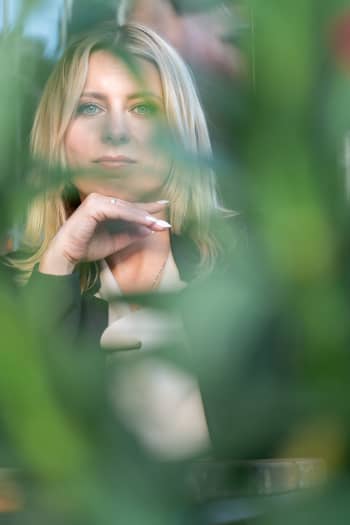
The Discipline of Becoming
Written & Creative Direction by Reah Hagues, Managing Editor, I Am Ready Magazine
Photography & Images by Reah Hagues
We often talk about success as though it is something we achieve. We set goals, create vision boards, write affirmations, and dream about where we want to go. Yet many people overlook one critical truth: becoming is not an event—it is a discipline. The journey toward becoming who we are meant to be is rarely about talent, luck, or opportunity alone. More often, it is determined by where we place our focus and whether our daily habits support or sabotage the person we hope to become. One of the greatest obstacles to growth is perspective. Many individuals move through life focusing on what they have lost rather than what they have learned. They replay mistakes instead of recognizing lessons. They measure their progress against someone else's timeline and become discouraged when their journey looks different. The problem is that when we focus solely on where we are, we lose sight of where we are going. Becoming requires a shift in perspective.
When we begin to see challenges as preparation rather than punishment, our entire outlook changes. The setbacks that once felt like roadblocks become stepping stones. The delays that seemed unfair become opportunities for development. Every person has patterns. Some patterns lead us toward growth. Others keep us trapped in cycles that no longer serve us. Many people unknowingly repeat limiting narratives and these narratives become self-fulfilling prophecies. What if the issue isn't your capability but your perspective? What if your greatest breakthrough starts with reframing the story you tell yourself?
Instead of saying, "I'm behind." consider: "I'm developing at the pace my journey requires." Instead of saying, "I failed." consider: "I learned what doesn't work." Reframing does not deny reality. It gives you the power to interpret reality in a way that promotes growth rather than stagnation. While motivation can get us started, discipline is what carries us forward. Motivation fluctuates yet discipline remains. The person you desire to become is built through consistent choices repeated over time. It is found in the early mornings when no one is watching. It is revealed in the decision to continue after disappointment. It is strengthened each time you choose purpose over comfort.
Many people celebrate outcomes but resent the process that creates them. We often judge our journey by our current location instead of honoring it for the growth it is producing. One of the strongest ideas in personal development is that achievement follows identity. Instead of asking: "What do I need to do?" Ask: "Who do I need to become?" Disciplined people don't constantly fight to be disciplined; they've adopted discipline as part of their identity. Healthy people don't just diet; they see themselves as people who value health. Successful leaders don't simply perform leadership; they become leaders in their thinking and actions.
Enforcing discipline upon ourselves can feel like a punishment; withdrawal of reward. Food discipline often means restricting or eliminating unhealthy food even if they are tasty and satisfy our craving for happiness through tastes we enjoy. Discipline is not punishment, rather an act of self-respect. The better we treat our bodies, the more we are appreciating, respecting, and acknowledging ourselves.
When we keep promises to ourselves:
· We build confidence.
· We build trust in ourselves.
· We strengthen our ability to pursue larger goals.
Lack of discipline rarely appears as a dramatic failure. More often, it shows up in small compromises. Skipping one opportunity. Avoiding one difficult conversation. Procrastinating one important task. Making one excuse after another. Over time, these small moments accumulate and quietly steer us away from our goals. Discipline, on the other hand, keeps us aligned with our vision even when progress feels slow. Every goal, dream, and aspiration represents a future version of yourself. The question is not whether that version exists, yet whether your current habits are creating a path toward that version or away from it. Becoming requires intentionality. It requires evaluating our habits, adjusting our mindset, and remaining committed even when results are not immediately visible. Growth is not always obvious. Sometimes the greatest transformations happen beneath the surface long before they become visible to others. Just as roots develop underground before a tree emerges above the soil, our discipline prepares us for the manifestation of our purpose.
Lack of discipline isn't simply about missed tasks; it's often broken trust with our selves. Trust that we deserve to rebuild. It is about choosing every day to align your actions with the person you desire to become. Your journey deserves respect. Your process deserves patience. Your growth deserves commitment. When you reframe your perspective, challenge limiting patterns, and embrace discipline, you stop chasing transformation and begin living it. Because becoming is not something that happens to you. It is something you choose, every single day.
I Am Ready Magazine — © 2026D
She Chose Life: The Journey of Carly Alyssa Thorne
STORY CREDITS
Interview: Carly Alyssa Thorne
Featured by: Indre Ratkele, Editor-in-Chief
Creative Direction: Indre Ratkele, Editor-in-Chief
Photography: Carly Alyssa Thorne (Personal Archive)
There are some people we meet who stay with us long after the conversation has ended. Not because they tried to impress us or because they spoke the loudest, and because, for a moment, they allowed us to see something real.
Carly Alyssa Thorne is one of those people for me. I had the privilege of meeting Carly and sitting with her several times. I had the privilege of listening to her life journey, learning about her experiences and, perhaps most importantly, looking beyond the many titles that describe her professional life.
Producer, director, actor, author, coach and speaker: these titles speak about a talented, skilled, creative and passionate woman. They speak about experience, ambition and a remarkable professional journey, and as I had the privilege of getting to know Carly more deeply, I began to see something else. Behind every title, there is a human being, and behind Carly's titles I met a woman who has carried vulnerability, pain, courage, resilience and an extraordinary desire to continue living, learning and helping others.
I admire Carly enormously, and not only because of what she has achieved. I admire the woman I encountered behind the achievements.
And perhaps this is where Carly's story needs to begin — not with another title, and with the reality of what she has carried throughout her life.
What the Titles Cannot Tell You
Carly was born in 1964 with Congenital Rubella Syndrome, after her mother contracted German measles during pregnancy. Her medical journey has been significant and lifelong. Carly has undergone 67 surgeries and continues to manage health challenges that are largely invisible to the people around her. She has described living with a port in her chest, requiring IV hydration in the morning and evening, experiencing night blindness and having to give constant attention to her body and health.
When I learned more about the extent of Carly's medical journey, I found myself thinking about the woman I had been sitting with. I saw a woman who was energetic, creative, professional, engaged and smiling. I listened to her speak with confidence about her work and about the people she wants to help. What I could not see simply by looking at her was the enormous amount of medical care, adaptation and strength that had been part of her life.
It reminded me how little we can sometimes know about another person's reality. We see the person in front of us, and we rarely see everything they have had to carry to arrive there.
Carly's illness and surgeries are an important part of her story, and they are only one part of the woman I came to know. Learning about everything she has experienced gave me a deeper understanding of the resilience I see in her. Despite significant health challenges, she has continued to create, work, learn, exercise, build businesses, support others and pursue new dreams. I cannot help and look at that determination with enormous respect.
And Carly's physical health is only one part of what she has carried. As our conversations continued, she opened up about her childhood, her family, abuse, relationships, depression and profound personal experiences that were much more difficult to hear.
This was when I began to understand that Carly's story is not simply a story of professional achievement or even medical survival. It is a story about continually finding the strength to begin again.
The Search for Belonging
Whenever I interview someone, I am interested in their childhood. I ask about it because I genuinely believe that our earliest experiences can give us many answers. Childhood can shape our values, our principles, the way we see ourselves, the relationships we build and sometimes even the challenges we later have to learn to navigate.
It can also help us understand the inner child that each of us carries throughout our lives. This is something particularly meaningful to me because one of my own purposes is to help people reconnect with and remember their inner child with love and compassion. I believe that sometimes, underneath the adult we have become, there is still a part of us that is waiting to be heard, understood, reassured and loved.
Carly's childhood made me reflect deeply. She grew up with material comfort and lived in different countries during her early life. There were beautiful homes, financial security and people working in the household. From the outside, one might imagine that she had everything a child could need.
And listening to Carly reminded me that having everything materially is not necessarily the same as having everything emotionally.
Her parents travelled extensively, and Carly described forming close attachments with people who worked in and around the home. She spoke about people who became, in different ways, like family to her. As I listened, I understood that family represented something much more profound to Carly than a house or a surname. It represented connection, safety, belonging and love.
This part of her story stayed with me because I kept returning to the simple human need to belong — to be loved, heard, seen and appreciated. As she spoke about her childhood and later relationships, I saw a woman who, perhaps for much of her life, had been searching for something very simple and very human: pure and unconditional love.
There is another detail from Carly's story that stayed with me: her decision to change her name. In 2004, she chose the name Carly Alyssa Thorne. She explained that people had already been calling her “Cat” because of her love of cats and because cats seemed to be naturally drawn to her. She also described moving to California and changing her name as a birthday present to herself.
Listening to this, I did not see it simply as a change of name. I saw another expression of identity and the freedom to consciously choose who you want to become. There was something powerful to me about a woman giving herself the opportunity to create a new chapter and, in her own way, name herself.
Perhaps this is another reason Carly's story made me think about the inner child. We spend so much of our lives becoming the person that circumstances, family, expectations and experiences teach us to be. Yet somewhere inside us there can remain a part that still knows what it needs, what it loves and what it wants to become.
For me, sometimes we have to return to that part of ourselves, listen to it and give ourselves permission to begin again. That is not about rejecting who we were, and about meeting ourselves again with greater love and compassion.
When Carly Chose Herself
Carly spoke openly about experiences that are not easy to hear and, undoubtedly, not easy to live through. Her story includes childhood abuse, several abusive relationships, sexual abuse, violence, stalking, threats and periods of profound emotional pain.
There were moments during our conversation when I simply sat and listened. As an interviewer, I know that my role is not to make another person's story about me, and when someone trusts us with something so deeply personal, I believe we should allow ourselves to recognize the weight of what we are hearing.
I found myself looking at the woman sitting in front of me and thinking about how much she had carried, how many times she had been forced to start again and how much of that pain had remained invisible behind the successful woman people see today.
Carly spoke about more than one abusive relationship. She described how her second marriage became verbally and sexually abusive, and then spoke in greater detail about her third and final husband.
When she first met him, she believed she had found someone stable. He had held the same job for 18 years, did not appear to have an alcohol problem and seemed, from the outside, to represent security.
Later, after he injured his back at work and was prescribed pain medication, Carly described his behavior changing. She said he began hiding pills, obtaining medication from different doctors and becoming increasingly violent.
What followed was not simply an unhappy marriage. She described being watched and followed, while people around her were also threatened. She told me about going to the post office and finding him directly behind her, sometimes tapping her on the shoulder and saying, “Oh, there you are.”
She later discovered that he had been watching her from across the street while she was doing Reiki and had threatened people who supported her, including her counselor, her best friend and her Reiki master.
These details were difficult for me to hear because the abuse had entered every part of her everyday life. It followed her outside and reached into her friendships, her support network and the places where she was trying to heal.
Eventually, the situation escalated further. After a drug test connected to an insurance policy showed substances in his system while Carly's test was clean, she explained that she had him removed from the deed to her house. He then became threatening, telling her that he would kill her and burn the house down.
Not long after, Carly walked into a women's self-help group carrying a large file containing information about what was happening. She told the woman there:
“Here's everything you need to know. If I don't wake up tomorrow, here's everything you need to know.”
That moment is difficult to forget. Documenting what was happening and asking another person for help had become part of her survival. The woman contacted the District Attorney's office, and Carly became involved in an operation that ultimately led to his arrest.
What struck me particularly strongly was Carly's explanation of why leaving was not simple. We often hear people ask, “Why didn't she just leave?” Carly's answer came from lived experience: “It's not so easy to leave like people think.”
She explained that when someone is abusive and stalking you, the moment you begin planning to leave can become more dangerous. In her case, she said she was being watched constantly because her husband was no longer working and had the time to follow her.
I think this is something worth reflecting on. Carly's experience challenges the simplistic way in which people sometimes judge those who remain in abusive relationships. From the outside, we see a decision that appears obvious. From inside an abusive relationship, fear, control, surveillance and threats can make that decision extraordinarily complicated.
Carly's story reminded me that compassion is often more important than judgment. We may never fully understand what another person has had to calculate simply to remain safe.
Her husband was eventually arrested, indicted by a grand jury and sent to prison, where he later died. And that was not the end of Carly's story. In some ways, it became the beginning of another chapter.
Carly told me that she had attempted suicide three times when she was younger and that, after everything she had experienced, she reached a point when she had to look honestly at herself and ask what she was doing with her life. She recognized that she could not continue living inside relationships that were harmful to her.
She sought help, worked on herself, took courses, worked with counselors and therapists, and even admitted herself to hospital during the period when she last attempted suicide.
Then she said something that, for me, became one of the central moments of our entire conversation:
“I chose life.”
Those three words carry an enormous amount of meaning when you understand what came before them.
For so much of her life, Carly had been a caregiver. “I've always been a caretaker,” she told me. Even when people were abusive towards her, she still took care of them.
That made me reflect on everything she had told me about her childhood. She had spent years looking for family, connection and love. She had learned to care for other people and to create relationships around herself. Later, she found herself continuing to give and care, even when she was being harmed.
Listening to Carly's experiences also made me reflect on how deeply caring for others can sometimes become part of who we are, and how important it can be to remember ourselves along the way. I found myself thinking about the delicate balance between giving to another person and still making space for your own needs, well-being and sense of self.
What I see in Carly today is a woman who has gradually learned to make space for herself as well. Choosing herself does not mean becoming selfish; it can simply mean recognizing that her own life, safety, well-being and future deserve care and attention too.
In another part of our conversation, she told me, “I don't need to have somebody. I'm perfectly fine being alone.” She described enjoying quiet, reading, writing and spending time with herself.
For me, that is a very different picture from the little girl who repeatedly had to create family wherever she went because she wanted to feel that she belonged. The journey between those two Carlys is enormous. One was searching outside herself for belonging; the woman I met has learned that she can also create a sense of safety and belonging within herself.
Carly did not simply survive what happened to her. She sought help, confronted patterns, rebuilt her understanding of herself and learned that her life was worth protecting.
She chose life. She chose to ask for help. And ultimately, she chose herself.
Perhaps that is one of the most remarkable parts of her journey. Even after experiencing enormous pain, Carly did not allow that pain to completely remove her capacity to care. She eventually began using what she had learned not only to rebuild her own life, and to help other people find their way forward.
The Smile That Stayed With Me
There is one image from our conversation that stayed with me. We spoke about painful experiences, and there were moments when, as I listened, I felt the weight of what Carly was describing. Yet even during some of the most difficult parts of her story, she smiled.
I do not interpret that smile as meaning that the pain was not real, nor do I believe that a smile can tell us everything about another person's emotional world. And I found myself wondering how much work it had taken to reach a place where she could speak about the past with such clarity and calm.
As our conversation moved between her personal journey and her professional life, I began to see that her ability to connect with people is not separate from Carly's work. It is at the heart of it.
Carly spoke openly about her experience as an actor, producer, director, coach and speaker, and about the people she works with and supports. One principle she shared with me resonated particularly strongly with my own approach to interviewing: people need space to speak.
An interview or podcast should not simply be one person talking over another. It should be a genuine conversation, with room to respond, empathize, question, challenge and, above all, listen.
This resonated with me because interviewing has never been only about collecting information. I can research facts, read biographies and prepare questions, and when I sit with someone, I want to understand the person behind the answers. I want to notice how they speak, listen to what is being said and sometimes pay attention to what is difficult to say.
I want to remember not only the information I gathered, and how the conversation felt after it ended.
Carly understands this language of listening. She spoke about body language, energy and the connection audiences develop with the people they watch. She understands that communication is not only about the words we choose; it is also about presence, attention and whether the other person genuinely feels heard.
Perhaps that is one of the reasons our conversations felt so warm and deep to me. I was not only listening to Carly's words; I was listening to Carly.
And perhaps this is also why her professional work makes sense when you understand her personal journey. Carly has spent much of her life learning about people, relationships, resilience, communication and the importance of being seen. Today, she brings those experiences into the way she works with others.
She does not simply speak to people; she pays attention to them. She observes, listens, asks questions and tries to understand what may be underneath what they are presenting to the world.
For me, that is where her professional experience and her life experience meet.
Helping People Find Their Way Back to Themselves
Carly's work today reflects the many dimensions of her life and experience. She works with people across what she describes as mind, body, business and spirit. Her coaching approach is not based on one identical formula for every person. Instead, she seeks to understand where someone is, what may be happening in different areas of their life and where they may feel stuck, before helping them ask important questions about who they are, what they value, which goals they may have left behind and what they want now.
I found the idea at the heart of her work particularly powerful: helping people remember who they are.
Many people come to a point in life when something has happened — a divorce, bereavement, illness, professional difficulty or another form of suffering — and they no longer feel connected to themselves. The person they once believed themselves to be may feel distant, while the identity they have built around a relationship, career, family responsibility or particular stage of life may no longer fit.
Carly describes her work as transformational breakthrough coaching because she meets people at these moments of transition and helps them find a way forward. She brings strategy to that work, and she also brings intuition.
Her approach recognizes that people are not simply a collection of problems that need solutions. They are individuals with histories, personalities, ambitions, fears, strengths and possibilities that may not always be immediately visible.
During our conversation, I could see how passionate she is when she speaks about helping people. There was light in her eyes and energy in the way she spoke. It was clear that this is more than a professional service she provides; it is something she genuinely cares about.
Knowledge, qualifications and strategy are important, and people also need to feel that the person supporting them genuinely cares about the outcome. They need to feel seen, heard and understood.
Perhaps this is why the idea of helping people remember who they are stayed with me. Carly's work seems to begin with seeing the person in front of her — sometimes more clearly than they are able to see themselves at that particular moment.
Seeing the person, not only the position
That same philosophy appears in another important part of Carly's work: her work with organizations.
She does not simply walk into a business and give the same advice to everyone. She interviews people, observes different strengths and traits, considers personalities and looks at whether individuals may be mismatched with the roles they are performing.
Not everyone is good at everything. That sounds obvious, and in organizations we often try to make people fit a position rather than asking whether the position truly fits the person.
Carly's approach is to understand the people first. Who sees the big picture? Who is analytical? Who brings energy to the group? Whose strengths may be underused? And who may simply be in the wrong role?
These questions matter because the title someone holds does not necessarily tell us what they are capable of. A job description can describe responsibilities, and it cannot always capture someone's natural abilities, personality, way of thinking or potential.
As someone who believes deeply in intuition and in the importance of understanding people beyond surface appearances, I found this fascinating. Carly combines her observations, experience and intuitive sense with a practical goal: helping individuals and organizations function better.
There is something quite powerful about that approach. Rather than immediately asking, “How do we make this person better at the job?”, she appears to ask a more fundamental question: “Is this the right place for this person to use who they are?”
The circumstances are different, and the underlying principle is remarkably similar: see the person first.
When Experience Becomes Purpose
Carly is clear, strategic and direct. She does not present transformation as something magical that happens without effort. She talks about practical choices, tailored programs and doing the work.
She also has an unusually broad professional background, bringing together creative work, media, wellness, communication and coaching. She has worked across entertainment as an actor, producer and director and has also supported people with their public presence, communication and professional development. She has contributed to multiple books and continues to develop new projects.
And what I admire most is not the number of titles, qualifications or projects. It is that she has lived through the subject of transformation herself.
There is a difference between speaking about resilience from a distance and speaking about it after life has demanded that you practice it.
Carly does not stand outside that conversation. She has been inside it.
Her own experiences give her another kind of understanding — the understanding that comes from having had to navigate change personally.
And this brings me back to the idea that stayed with me most strongly from our conversation: helping people remember who they are.
It is not simply about helping someone achieve a goal or overcome a problem. It is about helping them reconnect with something that may already be within them.
Sometimes transformation is not about becoming an entirely different person.
Sometimes it is about finding your way back to yourself.
Beyond the Perfect Biography
After our interview, I found myself reflecting on Carly's journey and on how easily we can look at someone's biography and believe we understand their life.
Producer, director, actor, author, coach, speaker, successful and accomplished — these words tell us something, and they can never tell the whole story.
Behind success can be illness. Behind confidence can be vulnerability. Behind a smile can be experiences we know nothing about. Behind an impressive biography is often a life filled with challenges, choices and moments that never appear on a professional profile.
We are all human beings before we are anything else.
That is what I hope readers see when they meet Carly through these pages. Of course, recognize her achievements, talent and experience, and also see the woman behind them — someone who has experienced pain and joy, fear and faith, loss and renewal.
What struck me most was her resilience. Not resilience as the absence of pain, and the ability to keep growing after life has changed you. Carly has faced experiences that could easily have defined her, yet she continues to choose growth, creativity, connection and the desire to help others.
A Message About Asking for Help
One of the strongest messages from Carly's story is the importance of asking for help.
We are often taught that being strong means managing everything alone. Sometimes, true strength is recognizing that we need support, speaking honestly and allowing someone else to stand beside us.
Carly's practical principle — do it, delegate it or delete it — captures this beautifully. We do not have to carry every responsibility ourselves. We can share the weight, let go of what no longer serves us and make space for what truly matters.
Asking for help is not weakness. Sometimes, it is the first step towards change.
Carly's story reminded me that we cannot always choose what happens to us, and we can choose how we respond, what we learn and what we create next.
Her life has included many colors — darkness and light, pain and possibility, loss and renewal. Yet she continues to move forward, learn, create and help others. She has chosen to work on herself, to believe that her future can be different and to turn difficult experiences into something that can benefit others.
Most importantly, she chose life.
I am grateful that Carly trusted me enough to share her story with I Am Ready Magazine. Beyond the interview itself, I valued the honesty, warmth and connection that came from our conversation. Some conversations give us information; others leave us with a feeling that stays long afterwards. This was one of those conversations.
For anyone ready to ask for help, develop their career, transform their life or strengthen their organization, Carly brings knowledge, experience, strategy and a genuine commitment to helping people move forward.
She does not simply speak about what she knows. She wants people to take action, grow and achieve meaningful results — to understand their strengths and potential, do the work and take the next step.
Sometimes, changing your life begins with something very simple: recognizing that you do not have to do it alone.
Connect with Carly
Discover more about Carly Alyssa Thorne, her work, insights and latest updates through her website and social media channels.
Website
carlyathorne.com
Facebook
Carlyalyssathorne
LinkedIn
Carlyalyssathorne
Instagram
Carlyathorne
I Am Ready Magazine — © 2026
There are interviews that stay with me long after the conversation has ended. Some inspire me, some make me reflect on the lives and experiences of others, and occasionally, an interview affects me personally in a way I did not expect.
Our conversation with Craig Sotkovsky was one of those.
What began as the story of a man who has lived through and transformed many difficult chapters became, for me, a moment of reflection on my own life and journey. I feel grateful that through I Am Ready Magazine, I have the opportunity not only to share the experiences and stories of the people we feature, but also to be personally touched by those conversations, reflect on what I hear and share those reflections with our readers.
I felt an unexplainable sense of ease speaking with Craig. There were moments when I simply paused before asking the next question — not because I was unprepared, but because his answers made me stop and think. I did not want this to be just another sequence of questions and answers. I wanted to understand the human being behind the story.
Craig has a calm, direct and deeply human way of communicating. The conversation flowed naturally, leaving space to listen, reflect and sometimes simply sit with what had just been said.
Craig Sotkovsky is a speaker, author, entrepreneur and advocate for personal transformation. Through his own life experiences, he speaks openly about resilience, healing, personal responsibility and the possibility of change.
I believe that, whatever challenges you may be facing, there may be something in this conversation for you. Craig has a way of speaking about the experiences that can keep us emotionally stuck and encouraging us to look at them from another perspective.
One of the ideas that stayed with me was his perspective on love and healing. Craig spoke about how we can look at painful memories and circumstances differently, even though we cannot change what happened. For me, this became a powerful reminder that perhaps healing does not always begin with changing the past, but with changing the way we relate to it.
I decided to try this for myself. I began looking at some of my own difficult memories and consciously approaching them with love rather than resistance, judgment or pain. At first, it felt unfamiliar. But something shifted. It opened a different emotional space within me and reminded me that we can revisit parts of our story without allowing them to continue defining how we feel today.
This is one of the reasons I wanted to share these reflections. Not because I believe there is one method that works for everyone, but because I believe we can all remain open to a different perspective. Sometimes we carry pain, betrayal, unworthiness or other emotions from chapters we believe we have already closed. Perhaps those chapters are not asking us to return to the past, but simply to see them differently.
Thank you, Craig, for bringing this perspective into our conversation. I hope that as you read these pages, you take what you need to hear, allow yourself to reflect, and remain open to whatever thoughts or emotions may arise.
You never know what a new perspective might unlock within you.
And sometimes one conversation, one thought or one new perspective can become the beginning of change.
Craig Sotkovsky/ © I Am Ready Magazine
Craig Sotkovsky/ © I Am Ready Magazine
A Story That Began With Adversity
Craig's story did not begin with success. It began with adversity — and throughout our conversation, he spoke with remarkable openness about the experiences that shaped him.
Childhood abuse, addiction, difficult personal circumstances, illness and the consequences of choices made at different stages of life all became part of a journey he has had to confront rather than simply leave behind.
What struck me most was that Craig does not speak about transformation as though the past disappears. He does not suggest that healing means pretending something never happened. Instead, he has learned to look at his experiences differently.
The central question, it seems, gradually changed from “Why did this happen to me?” to a much more powerful question:
“What can I become because of what happened?”
During our conversation, guilt and shame became an important subject. Craig reflected on how easily people can spend years beating themselves up for the person they once were. He knows what it is like to look back at past behavior and difficult decisions and to carry the emotional weight of them long after the circumstances have passed.
But he offered a perspective that made me stop and think:
“When you have that recall of the bad person that you were and then you look at it as the bad person that you were, you're not the same bad person.”
There is something important in that distinction. If you are able to look back with awareness, reflection and perhaps even regret, then something within you has already changed. The person looking back is not necessarily the same person who made those decisions.
Craig spoke about the need to recognize and celebrate incremental wins — the small changes that are often overlooked because we are so focused on some distant idea of complete success.
For him, transformation is not always one dramatic moment. It is found in the choices we continue to make, in the awareness we develop, and in our willingness to stop returning to the past only to punish ourselves.
“You have to celebrate incremental wins, small ones. Don't concentrate on the big idea.”
This became one of the strongest messages I took from our conversation. We can become so emotionally attached to our own stories that we continue to identify ourselves with the worst thing we did, the worst thing that happened to us, or the most painful chapter we have lived through.
But a story can be remembered without becoming a life sentence.
Craig speaks about what he calls alchemizing our experiences — finding a way to transform what once carried pain into understanding, growth and, eventually, something that can serve a greater purpose.
That does not mean every experience was good. It does not mean we have to be grateful for everything that happened. It means that perhaps we can eventually decide that what happened will not be wasted.
Later in our conversation, Craig described how, for a long time, he carried experiences from childhood that he had been taught simply to suppress. His response had been programmed, as he described it:
“Just suck it up and move on.”
But the memories did not simply disappear because he refused to speak about them. He explained that when something painful is recalled, the emotional and physical response can return again and again, even decades later.
For Craig, simply suppressing the past was not the same as healing it.
He had to find another way of understanding it.
And perhaps this is where his story becomes relevant to so many people.
We all carry different experiences. The details are not the same, the circumstances are not the same, and the consequences are not the same. But many of us know what it means to replay something in our minds, to judge ourselves for who we once were, or to remain emotionally connected to a chapter we desperately want to leave behind.
Craig's message is not that change is effortless. It is that change remains possible.
“You have to accept the things that you've gone through and be accountable and responsible for your healing because nobody's coming to save you. Nobody. You have to save yourself.”
It is a direct message, and perhaps not always an easy one to hear. Yet there is also something deeply empowering within it.
If we cannot change what happened, perhaps we can still influence what happens next. We can take responsibility for our healing. We can seek understanding. We can learn. We can change our patterns. And, little by little, we can stop allowing one chapter to define the entire book.
For Craig, the past is not something to erase. It is part of the person he has become.
And perhaps the real transformation begins when we can look at our own past — not with the desire to deny it or endlessly punish ourselves for it — but with enough honesty to say:
It happened. I went through it. I learned from it. And I am still here.
That, in itself, can be the beginning of becoming someone new.
Craig Sotkovsky/ Interview Feature/ © I Am Ready Magazine
Craig Sotkovsky/ Interview Feature/ © I Am Ready Magazine
When Survival Becomes Purpose
As our conversation moved deeper into Craig's life, there was a point when we had to speak about something that changed the way he saw almost everything: cancer, illness, mortality and what it means to continue moving forward when the physical and emotional weight becomes difficult to carry.
By the time I met Craig, I saw a man who was mentally strong, physically present and remarkably calm. That calmness did not come from having an easy life. It came from having lived through experiences that forced him to look closely at himself, his life and what truly mattered to him.
Craig spoke openly about his experience with rare carcinoid cancer affecting his lung, as well as the surgeries, complications and long periods of recovery that followed. His experience with cancer was not simply one isolated medical event. It became part of a much longer period of illness that changed his perspective on life, his priorities and what he wanted to do with the time he had.
He told me that 2020 involved multiple surgeries. In 2021, he underwent a knee ablation that resulted in three blood clots, an experience he said almost took his life.
He also described what happened before his lung surgery. During a biopsy, a tumor was nicked, resulting in a serious complication that left him in hospital for seven days.
The physical consequences continued. Following the complications from the knee ablation and the surgeries on his leg, Craig told me that it took approximately a year and a half for him to learn how to walk again.
Listening to him describe these experiences, I was struck by how much of his story sits beyond the medical facts themselves. These were not simply surgeries, complications and periods of recovery. They became experiences through which Craig was forced to reconsider his life, his identity, his relationships and what he wanted to leave behind.
And while he was facing cancer, undergoing surgeries and fighting to regain his strength, he was also thinking about legacy.
Craig told me that he started an entrepreneurial group in Atlanta during this period because he wanted to leave something behind. He wanted to create something that could continue to have value beyond his own circumstances.
What began as an entrepreneurial group gradually became something much deeper. Young adults came with their businesses, ambitions and ideas, but they also came with their stories. Beneath professional goals were often fear, pain, difficult experiences and personal struggles that were not visible on the surface.
Craig began recognizing patterns that felt familiar to him.
He understood what it was like to appear successful on the outside while carrying unresolved experiences on the inside. He spoke about receiving recognition, standing in front of large audiences and appearing to have achieved success, while internally still carrying the impact of what had happened earlier in his life.
That contrast became an important part of his understanding of transformation.
What stayed with me was that Craig did not wait for everything in his own life to be resolved before deciding that he could be useful to somebody else. He was still going through surgeries. He was still dealing with pain. He was still learning about himself. Yet during that period, he was creating something for other people.
There is something very human in that.
Sometimes we imagine that we have to reach the other side of our own struggles before we can have something of value to offer. Craig's story made me reflect on the possibility that purpose can also develop while we are still finding our way through our own lives.
He did not describe his experiences as something that had simply happened to him. Throughout our conversation, I heard a different relationship with his past — a willingness to look at what had happened, accept responsibility for his own healing and ask what he could learn from it.
That does not erase the pain.
It does not change what happened.
But it can change what we choose to do with what happened.
For me, this is where Craig's story moves beyond cancer and illness. It becomes a story about what we do with the time we have, what we choose to build while we are here, and how our most difficult experiences can sometimes become connected to the reason we continue moving forward.
Craig's decision to create something while he was fighting for his health stayed with me. He was not waiting for a perfect moment. He was living through an imperfect one and still asking what he could contribute.
And perhaps that is part of legacy — not simply what we leave behind when our life is over, but what we choose to give while we are still here.
Success Means Something Different
Cancer also changed Craig's definition of success.
When I asked him what success meant to him, his answer was simple:
In a world where success is often measured through money, status, recognition and achievement, Craig brought it back to something much more fundamental: being alive, being able to connect, to speak, to contribute and to help another person see their life differently.
Listening to him, I reflected on how easily we can overlook what we already have while constantly reaching for the next achievement. Craig has experienced addiction, trauma, loss, illness and cancer, yet he does not allow those experiences to define who he is today. Instead, he speaks about learning from them and transforming his relationship with them.
For me, this connects deeply with what I Am Ready Magazine stands for. I believe pain does not have to be the end of our story. We cannot change what happened, but we can begin to change how we carry it and what we choose to create from it.
When someone has lived through difficult chapters and still chooses to dedicate their life to supporting others, I see a different kind of success.
Perhaps success is not only what we achieve.
Perhaps it is also who we become through everything we have lived through — and what we choose to give back.
Fatherhood, Respect and Breaking Patterns
Throughout our conversation, I could feel the respect and love Craig has for his daughter. He spoke with pride about the relationship they have built and about the importance of communication, compassion and understanding between them.
Craig spoke about wanting his daughter to understand that people carry stories we may never see. When he was running his entrepreneurial group, he would sometimes take his daughter with him on Tuesdays and Thursdays so that she could listen to the stories of young adults and understand what other people were going through.
For me, this was a meaningful part of what he shared about fatherhood. He was not simply telling her that people have different struggles; he was allowing her to hear real stories and develop an understanding that there is often much more happening beneath what we see on the surface.
Craig also spoke about the difficult reality of his battle with cancer. As painful as it was for him to go through the illness, it was painful for his family too. His daughter and ex-wife had to see him go through difficult periods, including being in hospital.
His own childhood was very different from the kind of relationship he has tried to build as a father.
Craig spoke openly about being molested as a child, something he had carried silently for many years. He described how he had internalized the message to simply “suck it up and move on”.
As he came to understand his own experiences more deeply, he began to recognize how painful experiences from childhood can continue to affect us many years later. Memories can bring back emotional and physical responses long after we believe we have moved on.
What stayed with me was Craig's understanding of breaking patterns. He cannot change what happened to him, but he can decide what he carries forward and what he chooses to leave behind.
Perhaps this is one of the most important parts of fatherhood: not being defined by the patterns we inherited, but becoming conscious enough to choose differently.
Craig's story reminded me that transformation is not only about changing our own lives. It can also be about changing what we pass on to the people we love.
Emotional Attachment, Addiction and Freedom
One of the ideas that initially sounded unusual to me was Craig's approach to emotional attachment. He spoke about caring deeply without becoming desperately attached to outcomes, situations or other people.
At first, I had to stop and absorb it. As a mother and as someone emotionally invested in the people around me, I naturally looked at it through my own emotional lens.
But as he explained further, it became more understandable. You can love someone. You can care deeply. Yet you do not have to make your well-being entirely dependent on controlling what they do, what happens next or whether life follows the outcome you imagined.
Trying to control everything can create dependency. Dependency can create anxiety. And anxiety, when it grows, can become something even heavier.
This idea connected naturally with another part of our conversation: addiction.
Craig does not pretend that transformation means becoming a perfect human being or never facing temptation again. He spoke candidly about his history with addiction and about understanding his own relationship with drugs and alcohol.
He told me:
“One time is too much and a thousand is never enough.”
Craig also described having walked away from drugs and alcohol, explaining that he had been able to do so in his own way and that what worked for him was not necessarily a formula that should be applied universally to everyone else.
What connected these two parts of our conversation for me was the idea of freedom. Whether it is attachment to another person, an outcome, a habit or even the way we judge ourselves, sometimes freedom begins with understanding what is controlling us.
Craig emphasized the importance of understanding yourself rather than constantly punishing yourself.
Later in the conversation, he told me:
“You have to give yourself some grace.”
When I suggested that perhaps sometimes we give ourselves too much grace, he answered immediately:
“No, it's never too much. It's called self-respect for a reason. It's called personal development for a reason. It's called inner love for a reason.”
I stopped and reflected on that after the conversation.
Perhaps freedom is not about caring less. Perhaps it is about learning to care without losing yourself, to understand yourself without judging yourself, and to move forward without being permanently controlled by the past.
Reflection, Consciousness and Possibility
When I asked Craig whether there was something he particularly wanted readers to take from our conversation, he returned to what he described as his core message:
“I'm here to disturb the comfortable and comfort the disturbed.”
He spoke about authenticity and the masks people wear. In his view, we often meet people's representatives — the carefully managed versions they want the world to see — rather than the full human being behind the image.
Yet after living in different cultures and meeting people around the world, Craig has come to a simple conclusion about humanity:
“Nobody laughs or cries in a different language.”
That sentence reflects the root of his love for humanity.
Craig and I also spoke about consciousness, the subconscious mind, the quantum field and what he described during our conversation as “downloads” — ideas, insights or information that seem to arrive unexpectedly.
This part of our conversation was particularly meaningful to me because, for the past year, I have been studying and learning about the quantum field myself. It is a subject that has opened my mind to new ideas about consciousness, possibility, information and the relationship between our thoughts, awareness and the reality we create.
Craig shared a similar perspective. He spoke about the quantum field as a space of possibility and described his belief that we can connect with it to manifest and create the things we desire in our lives. In his view, we are not limited to simply accepting the circumstances we have been given. By becoming more conscious of our thoughts, beliefs, energy and intentions, we can begin to understand what may be possible for us.
Craig explained his understanding of these experiences through the language of frequencies, awareness and connection. He described the idea of tuning into a particular frequency: when you are dialed in, you become more aware and receptive, whereas when you stop paying attention, the “static” can return.
For Craig, this awareness is not something that happens once and then remains. It is an ongoing practice of paying attention to what is happening within us and around us.
For him, personal development requires continuous effort. It is about remaining conscious of our thoughts, our behavior and the patterns that influence the way we experience our lives.
We also spoke about the subconscious mind and the possibility of becoming more aware of the programming that operates beneath our conscious thoughts. Craig believes that many of the patterns we repeat are connected to experiences, beliefs and conditioning that we may not even realize are influencing us.
Rather than remaining trapped by those patterns, he believes we can begin to recognize them and, over time, “reprogram” the way we respond.
This connects closely with what Craig describes as “alchemizing” our stories — transforming the way we relate to experiences from our past so that they no longer have to remain a permanent source of pain, shame or limitation.
The idea is not to pretend that difficult experiences did not happen. It is about changing our relationship with what happened and becoming more conscious of the meaning, beliefs and patterns we have attached to those experiences.
Craig also spoke about the importance of what we allow into our minds. We live in a time when information is more accessible than ever. Social media, books, podcasts, videos and constant news can give us access to extraordinary knowledge, but they can also create noise, anxiety and fear.
He encouraged me to think about deliberately reducing some of that noise — putting the phone down, stepping away from constant news consumption and creating space to think.
Ultimately, Craig's perspective is about becoming more conscious of what we are focusing on every day.
What are we concentrating on? What information are we feeding ourselves? What stories are we repeating?
These questions may sound simple, but they can reveal a great deal about the way we are living.
Whether someone approaches these ideas spiritually, psychologically or philosophically, Craig's message is that awareness creates the possibility of choice. When we become conscious of the patterns, thoughts and information influencing us, we have a greater opportunity to decide what we want to continue carrying forward — and what we are ready to change.
For Craig, consciousness is not about reaching a final destination. It is about continuing to pay attention.
Every day, the work begins again.
I Am Ready Magazine invites you to open your heart, awaken your spirit, and listen to Craig Sotkovsky’s powerful message to humanity. A message of inspiration, hope, and awakening — inviting us to see the world differently and embrace the possibilities within us. Listen. Feel. Be inspired. Welcome the message. Welcome the inspiration.
A Moment of Meaning
I first came across Craig a few months before this interview, when I watched a podcast episode he had recorded with someone I was interviewing for the magazine. I watched the entire episode because I could not stop listening. I was drawn to his story, his openness, his perspective on life and the way he supported people through emotionally difficult conversations.
Somewhere deep inside, I remember thinking:
“One day, I will connect with Craig.”
And here we are.
Perhaps some people and experiences enter our lives before we fully understand why. Sometimes a connection begins long before the conversation itself.
Our interview did not feel like something that ended when we said goodbye. I gave myself time afterwards to reflect on what we had discussed, and I began slowly trying some of the ideas for myself.
Transformation is not something that happens because we have heard the right words once. It is something we continue to practice, question and experience.
I am grateful that Craig shared his experiences with me and spoke so openly about resilience, healing, addiction, childhood abuse, cancer, shame, fatherhood and transformation.
Most of all, I am grateful for a conversation that made me reflect rather than simply listen.
If Craig’s story or the ideas we explored resonate with you, take what you need from these pages and allow yourself to reflect. Sometimes one conversation gives us a new perspective, and sometimes that perspective becomes the beginning of something new.
If you are reading this while going through one of the most difficult chapters of your life, I hope something from this conversation stays with you.
Nothing that has happened to you has to become the final definition of who you are.
That does not mean every experience was meant to happen, nor should we romanticize trauma, illness or pain. But healing is possible, and the meaning we give to an experience can change as we change.
Craig has transformed his life not by pretending that the past never happened, but by refusing to allow it to become the end of his story.
As Craig said:
“You have to become a hero on this hero's journey instead of the villain.”
Thank you, Craig, for this deep conversation, your honesty and the work you continue to do to remind people that transformation is possible.
And thank you, reader, for spending your time with us.
The past may be part of your story. It does not have to be the end of it.
Connect with Craig
Discover more about Craig Sotkovsky, his work, insights and latest updates through his website and social media channels.
Website: craigsotkovsky.com
Facebook: myyucatan
Instagram: craigsotkovsky
YouTube: everybodypaysavig
Linkedin: craig-sotkovsky-001
Written & Interviewed by Indre Ratkele, Editor-in-Chief
Creative Direction by Indre Ratkele, Editor-in-Chief, I Am Ready Magazine
Making Use
of Obstacles
Credits ⭐
Article: Wade Simmons
Editor: Reah Hagues
Creative Direction: Indre Ratkele
Photos: © StoryWorkz (3 photos)
There may be obstacles, but that by no means has stopped David Mugabo, a talented animator, filmmaker, and actor in Vermont, who happens to be a great example of a person willing to be proactive and embrace a sense of deliberateness about his success.
While others may see success as glitz and glamour, David embraces a different point of view: “It’s not a specific destination, but success is what happens in between. You are the one doing the work,” David stated.
A very good reminder is that only the individuals doing the work understand the pinnacles they have reached and the obstacles that one has had to overcome.
While David is currently in the process of working on his animation story, he shared a word of encouragement. In a time where there is so much uncertainty in the work world, he has found ways to navigate through the changes that many industries, such as film and animation, are facing.
“The way I navigate through change, I keep up with what's going on around me,” he mentioned. “I go to film festivals and workshops,” he continued. Whether free or getting paid, “I’m willing to do the work.”
When others say there are no projects, there are about ten different things that I’m able to do. He is not allowing anything to stop him from going forward.
He is proof that one minor hiccup in the road is just a stepping stone.
David Mugabo/Animator/Filmmaker/Actor/Storyteller
David Mugabo/Animator/Filmmaker/Actor/Storyteller
David has now been building his second animation studio, while his first one was created in Africa, the place of David’s origins and humble beginnings. David counted the first studio as a learning lesson.
As David reflected on his time in Africa, he reflected on his early years of wanting to be an actor and filmmaker and how it all came to be.
David mentioned, “First, I never thought about being an animator, but I wanted to be an artist. I grew up in a house with one television.” David continued, “We mainly watched documentaries, so my ambition of being a storyteller came very early. When I was around four or five, I started drawing.”
He added that his ambition became his reality as a child because he put the time into developing his craft and getting better, not competing with others but trying to develop and improve his skill set.
David Mugabo/ © I Am Ready Magazine
David Mugabo/ © I Am Ready Magazine
When someone is passionate about what they do, it makes a big difference. The love and joy that come from being present and doing something you love can be very refreshing at times.
“For me, my inspiration is two things: the first is the passion of telling a story, and my faith in God,” David mentioned. “God allows me to keep connecting with people,” David added.
Also, David is very confident in his dream. When it comes to his goals, he doesn't take no for an answer because he believes what he does is going to work.
David also points out a few other keys to doing what he loves. “Recognize your gift,” he also pointed out, explaining how paying attention to real-life details influences his storytelling.
“Watch the sunset, watch your family, watch people interact with each other. So much information is in real life,” he mentioned.
David Mugabo/ © I Am Ready Magazine
David Mugabo/ © I Am Ready Magazine
I Am Ready Magazine — © 2026
Welcome to Indre's Reflections
Welcome to my reflections, a little section I share with you in every edition.
These reflections don't usually arrive when I am looking for them. They come unexpectedly, in the middle of ordinary days, through a conversation, a feeling, a small moment, or something I suddenly notice that makes me pause and think a little deeper about myself and about life.
So I share them with you, not because I have all the answers, but because perhaps something that makes me reflect may make you reflect too. Perhaps it will give you another way of looking at something, inspire you, lift you up, or simply remind you of something you already know but needed to hear again.
And maybe, just for a few minutes, these words can be your moment to pause, breathe, and reflect.
So here are my five reflections for this edition. I hope you find something in them that speaks to you.
“The moment your intuition recognises the truth, trust it. Walk away from anything that feels wrong, misaligned, or inconsistent with who you are. When you remain where you no longer belong, you create inner chaos—and prolonged chaos eventually disrupts your peace, clarity, and nervous system. Realign yourself, follow your intuition, and you will find your way back to balance, harmony, and success.”
-Indre Ratkele
1. Receiving
How much are you allowing yourself to receive? And do you actually understand that you are naturally a receiver? The universe is constantly delivering to us what we need, but many of us imagine that receiving has to come in a certain package, something material, something we can hold and say, “I received a gift.” Rarely do we say, “I received advice,” “I received support,” “I received kindness.” Yet the truth is, we are receiving every single moment.
The moment we start to notice and appreciate what is already coming towards us, something changes within us. We become more grateful, more open, and perhaps we allow ourselves to feel more of the beautiful emotions that are already around us.
The other day, I was walking home after a day that hadn't been particularly good. I had some challenges and wasn't feeling very happy, but that's another story. On my way home, I passed a few children, probably around eleven or twelve years old, and one of the boys suddenly said, “Miss, I love your outfit.” I actually stopped. It was the first time in my life I had received a compliment like that from a child I didn't know. I was wearing a cowboy jacket I've had for about five years, brown leather leggings and brown boots, so perhaps I did look a little interesting.
I smiled and said, “Thank you so much, I really appreciate your compliment,” and continued walking home. But I felt so inspired and happy. That little moment lifted my soul. I allowed myself to receive it fully. When I got home, I told my son what had happened and he simply said, “But Mum, you really do look beautiful.” Another compliment, another little moment that lifted me.
Why do I share this? Because when I compare how I felt before those moments and how I felt afterwards, it was like two different people inside me. Nothing about my circumstances had changed, but something within me had. Perhaps this was simply the universe sending me exactly what I needed that day — a few children, a kind compliment, and a reminder to see myself differently.
It doesn't really matter who gives it to you. What matters is how you allow it to make you feel.
So become aware of how much you are constantly receiving. Be grateful for the smile from someone in the grocery shop, the compliment on your way home, the support from a friend, the advice that arrives at the right moment, or even two pence you find on the street. Pick it up and say, “Thank you, I receive it.”
Because perhaps the more grateful we become for what is already coming into our lives, the more beauty we are able to notice.
And maybe receiving isn't about waiting for something big to arrive. Maybe it is simply learning to recognize the little gifts that are already here.
2. Freedom
I am nearly 38 years old, and it was only last year that I truly understood what happiness, alignment, and unconditional love mean to me.
For most of my life, I was searching, learning, making mistakes, healing, and trying to understand who I really was. Looking back, I realize that I was also carrying invisible chains—fear, expectations, attachments, people, habits, and the need to control things I could never truly control.
Eventually, I understood something simple:
For me, real happiness is freedom.
Freedom from needing to know what tomorrow will bring. Freedom from expecting people to behave a certain way. Freedom from trying to control every outcome.
I have learned to trust myself, follow my heart, listen to my gut, and accept that not everything will happen the way I expect. When it doesn't, I can adapt and keep moving forward.
Freedom doesn't mean that life never hurts. It means I no longer need to hold on to everything. I can love without possessing, make plans without being attached to the outcome, let go without feeling like I have lost everything, and allow myself to simply be.
It took me years to let go of pain, addiction, people, situations, and old versions of myself. I had to forgive myself and take full responsibility for my life.
Slowly, I became lighter.
Today, I wake up grateful and try to meet each day as it comes. I worry less, analyze less, and simply live more.
Maybe you are carrying something that is weighing you down. You don't have to let go of everything at once.
Start with one thing.
One worry. One fear. One expectation. One thing you are ready to forgive or release.
Because freedom doesn't happen overnight. It is a journey.
And for me, freedom is the greatest happiness I have ever experienced—being free within myself and free to meet life as it comes.
3. Results
When I look at where I am today, sometimes I think about the person I was years ago and how different my life looked. There were times when I felt completely defeated, when I was dealing with addiction, legal consequences and the pain created by the choices I had made. I had no idea what my future would look like. But even during those years, I kept working. I kept learning. I kept trying to build something better, often when nobody was watching and when I didn't even know whether all that effort would ever lead anywhere.
This magazine is one of the reasons I feel a responsibility to speak to you about it. What you see today as a finished project was not created when everything in my life was perfect. Quite the opposite. This magazine became part of my rebirth — part of years of personal development, learning, transformation, mistakes and rebuilding my life.
But throughout all of it, there was something I always had: I was willing to work. I could spend hours, days and nights learning new skills, reading, creating something, trying again and investing my time, money and energy into knowledge and experience. Sometimes I didn't know where those skills would take me. Sometimes nobody even knew I was doing it. But I kept going.
And that is probably my biggest advice to you: work in silence and let your results speak for themselves.
Learn something new. Take the course. Read the book. Meet inspiring people. Allow yourself to be a beginner. Try something you don't know how to do. And don't be afraid of rejection, because sometimes rejection is simply another opportunity to learn, grow and become.
When you look at this magazine, you see the finished result. What you don't see are the hundreds of hours my team and I have put into creating it. And what you also don't see are the years of learning before I ever started this project — learning how to design, build websites, write, create, organise and use different tools. Those skills didn't come with the magazine. They came before it.
That is how life often works.
Before people see the result, you may spend years building quietly. You may do it in circumstances that are far from perfect. You may feel lonely. You may feel disappointed that nobody believes in you. You may even wonder if there is any point.
Keep going.
Because every small step is still taking you somewhere.
One day, you may look back and realize that the things you were learning when nobody was watching became the exact things you needed when your opportunity finally arrived.
So don't worry too much about being seen while you are building.
Work. Learn. Grow. Invest in yourself.
And let the results speak when they are ready.
4. Ask for help
When I interview people, I often ask them the same question: “If there is one piece of advice you would like to share with our readers, what would it be?” What has surprised me is how often I hear the same answer: “Ask for help.”
Whatever you are going through in life, you don't have to walk through it alone. There are people who have walked the same path, experienced similar challenges, and faced difficulties you may not even realize they have overcome. There are also people around you who would be happy to support you if you simply have the courage to ask.
It is interesting because I think people are often much more comfortable helping others than asking for help themselves. We don't always want to admit that we are struggling. We can feel that asking for help makes us weak, that we should be able to figure everything out ourselves, or that we might become a burden to someone else. But asking for help doesn't make you weak. Sometimes, it is one of the strongest things you can do.
Every person I have interviewed has inspired me in some way. Their stories are different, their lives are different, and the challenges they have faced are different, but somehow they keep coming back to the same message: ask for help.
Maybe you already know this. Maybe you have heard it many times before. But perhaps you needed to hear it one more time today.
Whatever you are carrying, you don't have to carry it alone. Find someone you can talk to. Start the conversation. Say that you need support.
And you don't have to know exactly what you need before you ask. You just have to take the first step and say, “I need some help.”
Sometimes, one simple request for help can make the journey feel a little lighter.
5. Energy
I have come to understand that one of the most important things for my well-being — my physical, emotional and spiritual balance — is the energy I carry and protect. When my energy is grounded, when I listen to my needs and protect myself from what drains me, I have the resources and emotional space to create, live and enjoy my best life.
I had to learn how to distance myself from chaos, distractions, certain people, circumstances and situations that constantly took something from me. I became much more aware of how I feel and what I need. We all know this on some level, but I want to remind you: pay attention to your energy. Notice where you give it, who you share it with and how you use it. When you start protecting it, it can become one of your greatest gifts and completely change the way you experience your life.
Of course, I am still human. I still drain my energy sometimes. I can overwork, take on too many responsibilities, have a difficult conversation or simply push myself further than I should. The difference is that I now recognize it much earlier, and I have learned what helps me come back to myself.
I have my own rituals that help me reset. One of them is Violet Flame meditation, which I often use as part of my spiritual practice. There are many different Violet Flame meditations available on YouTube if you would like to explore it for yourself. For me, it has become a beautiful way of slowing down, releasing what I don't want to carry and feeling more protected and grounded.
I also love taking long baths with organic bath salts and essential oils. Sometimes I spend an hour simply disconnecting from everything, slowing down and giving myself permission to clear my mind and reconnect with myself. These rituals have become important moments of protection, release and peace for me.
And then there are the simple things that we all know, but sometimes forget. Drink enough water. Sleep. Rest. Go outside. Walk. Move your body. Eat properly. Give yourself time to breathe.
I have learned this especially through work. If I have ten thousand things to finish by the end of the week, it can feel productive to stay up late and sacrifice sleep just to get more done. But I have learned that when I work from a place of exhaustion, I rarely produce the results I want. Sometimes the most productive thing I can do is stop.
Sleep. Step back. Reset.
Then I wake up with a different mind, more energy and much more capacity to do what needs to be done. Sometimes resting for a few hours allows me to accomplish twice as much the next day.
For me, protecting my energy is not about avoiding life or every difficult situation. It is about becoming aware of what gives me energy and what takes it away, and learning to make conscious choices about where I put myself.
Your energy is precious. You only have so much of it each day.
So protect it. Listen to it. Give yourself permission to step away when you need to. Rest when you are tired. Say no when something doesn't feel right. Spend time with people who make you feel like yourself.
Because when your energy is balanced, you don't just have more energy to work.
You have more energy to live.
The Quiet Luxury of Self-Mastery
Written & Creative Direction by Reah Hagues, Managing Editor, I Am Ready Magazine
Photography & Images by Reah Hagues
In a world captivated by visibility, self-mastery remains one of life's most undervalued luxuries. We often associate luxury with the outward symbols of success—designer labels, prestigious titles, beautiful homes, and curated lifestyles. Yet some of the most successful people possess a different kind of wealth altogether. It is not displayed on social media. It cannot be purchased. It does not require validation. It is the quiet luxury of self-mastery.
Self-mastery is the ability to understand, navigate, and structure yourself when no one is watching. It is the discipline to remain committed when motivation fades and the courage to choose long-term fulfillment over short-term gratification. While the world celebrates achievements, self-mastery focuses on the person who achieves them. The greatest accomplishment is not conquering the world. It is learning to conquer yourself.
We live in a culture that often rewards appearance over substance. People are applauded for looking successful, yet fewer conversations center around becoming successful in the truest sense of the word. We admire confidence but rarely discuss the self-awareness required to build it. We celebrate achievement while overlooking the discipline that produced it. Luxury today is frequently associated with consumption, but true luxury is having mastery over your choices. It is the ability to refrain from reacting impulsively, to protect your peace even when chaos surrounds you, to remain focused when distractions compete for your attention. That kind of control is priceless.
Many people spend years attempting to control external circumstances while neglecting the internal habits that shape their outcomes. We cannot always control what happens to us but we can control how we respond. Self-mastery begins when we shift our attention from managing appearances to managing ourselves. It requires asking difficult questions:
- What triggers my negative reactions?
- What patterns keep repeating in my life?
- What habits are helping me grow?
- What habits are holding me back?
- Am I leading my life, or am I simply reacting to it?
Growth begins when honesty meets responsibility. The moment we stop blaming circumstances and begin examining ourselves, we gain the power to change.
We also often believe transformation occurs through major breakthroughs, life-changing opportunities, or moments of inspiration. While those moments can be significant, real transformation is usually much quieter. It happens in the habits we practice consistently and the choices we make repeatedly. It happens in the daily discipline bridging between who we are and who we aspire to become. It is choosing the morning routine when staying in bed feels easier. It is honoring commitments when no one is watching. It is completing the task long after the excitement has faded. It is showing up for yourself even on the days you do not feel motivated. The truth is that our lives are often shaped more by what we do every day than by what we do occasionally.
Every disciplined action sends a message to ourselves:
"I can trust myself."
Over time, that trust becomes confidence. Confidence becomes consistency. Consistency becomes character. And character becomes destiny.
The most successful people are not necessarily the most talented or the most fortunate. Often, they are simply the most committed to daily disciplines that align with their goals and values. Reading a few pages each day may eventually produce wisdom. Saving a little money consistently may eventually produce financial security. Making healthier choices daily may eventually produce wellness. The results may not be visible immediately, but daily discipline is always at work beneath the surface. Like a sculptor carefully shaping stone, each disciplined decision removes a little more of what does not belong and reveals more of who we are becoming.
One of the greatest indicators of progress is the ability to delay gratification. Modern culture encourages immediacy: immediate success, immediate results, immediate pleasure, immediate recognition. Yet meaningful growth unfolds slowly, because the healthiest relationships require time. Strong businesses, lasting confidence, and purpose all require time. Self-mastery teaches us to become comfortable with the process. It reminds us that becoming is often invisible before it becomes visible. The seeds planted today may not bloom for months or years, but they are growing, nonetheless.
One of the clearest signs of self-mastery is emotional maturity. Emotional maturity is present in the abilities to remain composed under pressure, listen without becoming defensive, disagree without becoming disrespectful, and forgive without forgetting your worth. Many people confuse emotional reactions with strength. In reality, true strength often appears as restraint. Not every battle deserves your energy. Not every opinion deserves your attention. Not every opportunity deserves your yes. Self-mastery gives us the wisdom to distinguish between what requires a response and what simply requires release.
Self-mastery creates a unique confidence. Not arrogance, not superiority. Complete confidence. The confidence that comes from keeping promises you made to yourself and showing up consistently. The confidence that develops when your habits align with your values. Unlike external validation, this confidence cannot be taken away because it is built internally. It is earned through repeated acts of integrity. Every workout completed, every difficult conversation addressed, every goal pursued despite fear, every distraction resisted. These small victories accumulate over time and become the foundation of self-trust.
As we mature, our definition of success often changes. Success is no longer about proving ourselves. It becomes about knowing ourselves, with less focus on recognition and more focus on alignment. Less about applause and more about peace. Less about status and more about purpose. The person who has mastered their emotions, habits, mindset, and choices possesses a wealth that cannot be measured by titles or possessions.
That is the quiet luxury of self-mastery.
The most important conversation you will ever have is the one you have with yourself. The most important leadership role you will ever hold is leadership over your own life. And the most valuable investment you will ever make is the investment in becoming the person you were created to be. Luxury is not always loud; sometimes it looks like discipline, other times like peace, restraint, or even growth. And sometimes, the most powerful thing a person can do is quietly master themselves while the world is busy seeking validation. Because true luxury is not found in what you own. It is found in who you become.
That is why daily discipline is one of the greatest forms of self-respect. It is the decision to honor your future self through your present actions. And perhaps that is the quietest luxury of all—not living by impulse, circumstance, or convenience, but by intention. Because self-mastery is not achieved in a day. It is practiced daily.
Self-mastery is not built in grand moments. It is practiced daily.
I Am Ready Magazine — © 2026
I Am Ready is a space for those who understand that transformation begins long before it becomes visible. It is a magazine that honors the quiet, decisive moments where courage meets reflection, and intention meets action.
Through feature interviews, essays, and insights, we explore the journeys of individuals who embrace authenticity, resilience, and self-leadership. We celebrate not just achievement, but the inner discipline, awareness, and choices that precede it.
Led by Editor-in-Chief Indre Ratkele, our team curates stories of real people and global thought leaders — those who inspire through integrity, commitment, and the courage to become. Every edition invites readers to pause, reflect, and step into readiness, cultivating a life aligned with purpose and authenticity.
I Am Ready is more than a magazine. It is an invitation to stand at the threshold of possibility, to embrace the inner journey, and to recognize that everything meaningful begins within.
Passionate storytellers and creators, the people shaping each page of I Am Ready Magazine — together, we create, guide, and illuminate the journey of becoming.
Founder, Editor-in-Chief, and Content Director: Indre Ratkele
Partnerships Director: Terraine LeBeau
Managing Editor: Reah Hagues
Professional Writer: Catherine Gallacher
Contributing Writer: Wade Simmons
“True passion, genuine inspiration, and a sense of purpose cannot be manufactured. When we work from the heart, our energy becomes authentic—it is felt, received, and celebrated.” Indre Ratkele
Advertise with Us | Contribute | Inspire
I Am Ready Magazine welcomes advertising for courses, programs, coaching services, books, or any other impactful products. To explore these opportunities, please contact our Founder and Editor-in-Chief, Indre Ratkele, at contact@indreratkele.com.
If you are passionate about writing articles in the personal development field, we have open spaces for contributors—reach out to Indre to share your voice.
Have an inspiring transformative journey to share? Inspire readers worldwide by reaching out to Indre—your story could change lives.
LEARN • GROW • DEVELOP
At I Am Ready Magazine, we believe that growth can begin in many different ways.
We proudly invite you to explore inspiring opportunities created by incredible people who have transformed their own lives and turned their experiences, knowledge and passion into something that can help others grow and create meaningful change.
Take a moment to explore, discover something that speaks to you and perhaps find your next step.
"j3333333
The content of this publication is provided for informational and inspirational purposes only. While every effort has been made to ensure accuracy, the publisher makes no representations or warranties regarding completeness and accepts no liability for any actions taken based on the information contained herein.
© 2026 I AM READY Magazine. All Rights Reserved.
 Built with Shorthand